
NEWS

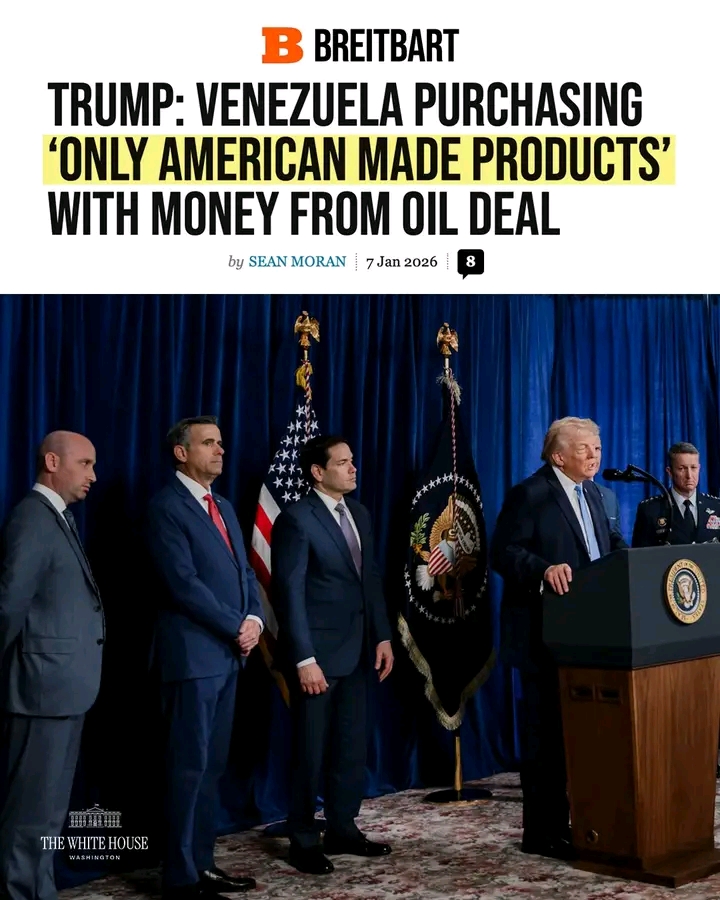
**Trump Claims Venezuela Will Buy Only U.S.-Made Products Using Oil Deal Proceeds**
Former U.S. President Donald Trump has asserted that Venezuela would purchase only American-made products using funds generated from an oil-related deal, a statement that has drawn attention amid ongoing debates over U.S. sanctions, energy security, and Washington’s approach to Caracas.
According to Trump, the arrangement would allow Venezuela to sell oil under specific conditions, with the proceeds effectively channeled back into the U.S. economy through the exclusive purchase of American goods. He presented the claim as an example of a tougher, transactional foreign policy—one he argues benefits U.S. workers and manufacturers while still addressing geopolitical realities.
### Context: Sanctions and Oil Politics
Venezuela has been under extensive U.S. sanctions for years, primarily targeting its oil sector, which is the backbone of the country’s economy. These sanctions were designed to pressure the government of President Nicolás Maduro over democratic backsliding, human rights concerns, and disputed elections.
In recent years, however, global energy market volatility—exacerbated by geopolitical conflicts and supply disruptions—has prompted Washington to explore limited and conditional easing of restrictions. Such measures have aimed to stabilize oil markets while maintaining leverage over the Venezuelan government.
Trump’s claim appears to reference this broader dynamic, though details of any agreement mandating exclusive purchases of U.S.-made products have not been publicly confirmed by U.S. or Venezuelan authorities.
### Economic and Political Implications
If implemented as described, an arrangement requiring Venezuela to spend oil revenues solely on American goods would be highly unusual in international trade. It could potentially benefit U.S. exporters in sectors such as agriculture, industrial equipment, and consumer goods. At the same time, critics argue that enforcing such a condition would be complex, difficult to monitor, and potentially at odds with international trade norms.
Politically, the statement aligns with Trump’s long-standing “America First” message, emphasizing domestic manufacturing and skepticism toward multilateral agreements.
Supporters see the approach as a way to maximize U.S. leverage, while opponents warn it could further complicate diplomatic efforts and humanitarian conditions in Venezuela.
Skepticism and Unanswered Questions.
Analysts have noted that Venezuela’s dire economic situation, limited access to global financial systems, and ongoing sanctions would make any such deal challenging to implement.
Questions also remain about enforcement mechanisms, legal authority, and whether U.S. companies would be willing or able to meet Venezuela’s import needs at scale.
Without formal documentation or confirmation, Trump’s claim remains a political assertion rather than an established policy.
Nonetheless, it underscores how Venezuela—and its vast oil reserves—continue to play a role in U.S. domestic politics and broader discussions about energy, sanctions, and foreign policy strategy.
As the U.S. approaches future elections and reassesses its global energy posture, statements like these are likely to keep Venezuela in the spotlight, blending economic concerns with sharp political messaging.

JUST BREAKING: Some Retirees to Receive Over $5,000 Monthly in Social Security by 2026 — Eligibility Criteria Revealed

¡Esta es la extraordinaria valentía de Irán 🇮🇷! 🔥 9:00 am: “Toda una civilización terminará esta noche”, dijo Trump. 9:10 a. m.: La gente común de Irán ha formado una cadena humana en el puente blanco. 🔥🔥 Si no tienen miedo a morir, no pueden ser derrotados. ¡Qué coraje increíble! 🔥

Pro-Iranian accounts on Twitter are flooding the platform tonight with AI-generated videos mocking Trump, including one showing him stepping off Air Force One waving a white flag after announcing a ceasefire deal critics say was so bad he appeared to negotiate with himself.

A major political shockwave just hit Washington as 24 members of Congress declare an EMERGENCY and demand the UNPRECEDENTED removal of President Trump from office.

BREAKING: Trump’s Shocking Revelation Sparks Viral Frenzy and Raises Questions About His Political Future

Is “getting the job done” more important than having a “nice” president?

Just In :Trump Sends Clear Message to Iran as B-52 Bombers Lift Off from UK Bases. See what happens next

Breaking News:Trump Suspends Planned U.S. Strikes on Iran for Two Weeks Amid Diplomatic Push. Full details here
Today I witnessed something because of Trump that I will never forget for the rest of my life. And that is exactly why I want to show you Trump’s real face today. Click here for full details

At a Monday press conference, Trump brought up past comments by North Korea’s Kim Jong Un about Joe Biden while discussing US troop deployment in South Korea.

Breaking Claim Sparks Concern: Viral Report Alleges Attack on U.S. Warships Near Strait of Hormuz. See what happens next
