
NEWS
Breaking News:Trump Faces Scrutiny Over FTC Firing and Limits of Presidential Power

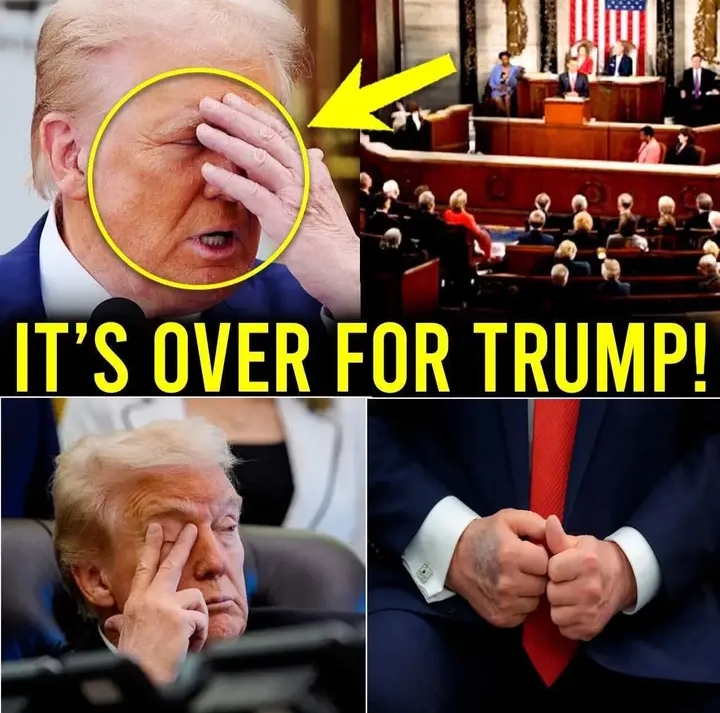
News: Former U.S. President Donald Trump has come under renewed legal and political scrutiny following reports surrounding the firing of a Federal Trade Commission (FTC) commissioner and broader claims about presidential authority over independent federal agencies.
The controversy has reignited a long-running constitutional debate about the separation of powers, the independence of regulatory bodies, and the principle that no individual—regardless of status—is above the law.
At the center of the issue is the FTC, an agency designed by Congress to operate independently of direct presidential control.
Independent agencies like the FTC, Federal Reserve, and Securities and Exchange Commission are structured this way to insulate key regulatory decisions from political pressure.
While presidents appoint commissioners, their ability to remove them is typically limited by law, often requiring cause such as misconduct or neglect of duty.
The reported firing has therefore raised serious legal questions.
Critics argue that removing an FTC commissioner without clear statutory justification undermines the agency’s independence and violates long-standing legal precedent.
Supporters, on the other hand, claim that the president must retain broad authority to oversee the executive branch, including agencies that exercise significant regulatory power.
Adding to the tension, federal judges have issued stark warnings in related legal proceedings, emphasizing that defiance of court orders could lead to severe consequences, including contempt charges or even arrest.
Such warnings underscore a foundational principle of American democracy: court orders are binding, and compliance is not optional. Judges have made clear that ignoring rulings—by any individual or institution—poses a direct threat to the rule of law.
Legal experts note that these developments go beyond a single personnel dispute.
They touch on fundamental constitutional questions: How far does presidential power extend? Where is the line between executive oversight and unlawful interference? And what safeguards exist to prevent the concentration of power in one branch of government?
The phrase “no one is above the law” has become a central refrain in this moment.
It reflects the judiciary’s role as a check on executive authority and a reminder that democratic systems rely on accountability at every level.
Whether the controversy results in lasting legal precedent or political fallout remains to be seen, but it has already intensified national debate over governance, institutional independence, and respect for judicial authority.
As the situation continues to unfold, its implications may shape future interpretations of presidential power and the resilience of the checks and balances that define the U.S. constitutional system.

ANDES STRAIN HANTAVIRUS: 3 DEAD, PASSENGERS SCATTERED — EXPERTS SLAM US FOR REPEATING COVID MISTAKES HANTAVIRUS OUTBREAK SPIRALS: SPAIN ORDERS 6-WEEK LOCKDOWN — BUT AMERICA’S LAX RESPONSE SPARKS PANIC..�

JUST BREAKING: Here’s Why Some Americans Will Receive Huge $5,108 Social Security Direct Deposits Within 10 Days

Middle East tensions continue to rise as Israel reportedly views Turkey as its next major regional challenge, with some officials referring to Ankara as “the new Iran.”

Breaking News: Missouri Supreme Court Hands Republicans a 7-1 House Map Victory for 2026 see what happens next

Elon Musk is joining President Trump on a major trip to Beijing, signaling a notable shift after the pair’s well-documented falling out in 2025.

BREAKING:Reza Pahlavi Declares Iran’s Leadership Weakening, Urges End to Islamic Republic.

VIRAL: Donald Trump’s Glamorous AI-Generated Proposal to Melania Trump Inside a Luxurious Met Gala Ballroom Has the Internet Buzzing

JUST NOW | This morning I woke up and started crying. And the reason is this photograph of JD Vance.

BREAKING : Here’s Who Will NOT Receive a Social Security Payment on Wednesday, May 13, 2026….

JUST BREAKING: Maximum Social Security Benefits for May 2026 Revealed by Retirement Age

REPORT: Elon Musk Could Join President Trump’s China Delegation — But No Official Confirmation Yet
