
NEWS
BREAKING: Congress Files Impeachment Articles Against Trump Over Venezuela Action, Citing Constitutional Violations.

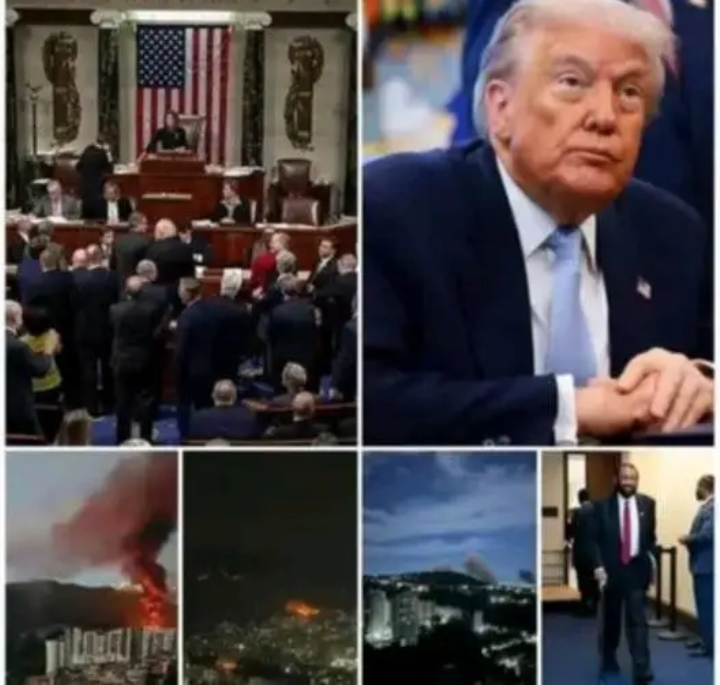
BREAKING: Congress Files Impeachment Articles Against Trump Over Venezuela Action, Citing Constitutional Violations.
In a dramatic escalation of political conflict in Washington, members of the United States Congress have filed articles of impeachment against President Donald J. Trump, accusing him of violating the Constitution by authorizing military action in Venezuela without congressional approval.
According to the impeachment filing, lawmakers allege that Trump’s decision to order military action — described by critics as an unlawful act of aggression against a sovereign nation — constitutes a serious breach of the Constitution and a direct affront to Congress’s exclusive authority to declare war.
Alleged Constitutional Violations.
The impeachment resolution centers on the claim that Trump exceeded his constitutional powers by initiating force against Venezuela without explicit authorization from Congress.
The Constitution grants Congress — not the president — the sole authority to declare war, and the filing argues that Trump’s actions also violate the War Powers Act, a statute designed to limit unilateral presidential military operations absent legislative consent.
Drafters of the articles characterize the military campaign not as a legitimate defensive or strategic operation, but as an illegal act of aggression that undermines the separation of powers.
Lawmakers say the president’s conduct — if left unchecked — could set a dangerous precedent allowing future presidents to bypass Congress in matters of war and peace.
Broader Political Backlash.
The impeachment filing follows widespread criticism from lawmakers across the political spectrum.
Democratic representatives have expressed alarm that the administration’s actions in Venezuela lacked transparency and failed to secure congressional input.
Some Senate and House members have called for an emergency War Powers vote to block further military action, warning that continued operations could deepen constitutional conflict.
Public protests have also erupted in several U.S. cities, where demonstrators argue the strike violated international law and the United Nations Charter by involving U.S. forces in Venezuela without explicit United Nations authorization or clear legal justification.
Trump Administration Defense
The White House has defended its actions, with senior officials arguing that the operation was necessary to counter alleged threats, including claims about Venezuelan involvement in drug trafficking and “narco-terrorism.”
However, critics have dismissed these justifications as unsupported and politically motivated.
Constitutional and Legal Debate
Legal scholars weighing in on the controversy note that the War Powers Resolution was enacted after the Vietnam War specifically to restrain presidents from engaging in prolonged military actions without congressional authorization.
An expert quoted in recent analyses has asserted that continuing military operations without such authorization — especially after statutory time limits expire — could itself be interpreted as impeachable misconduct.
Political Reality and Prospects.
While the filing marks a historic escalation of legislative oversight over executive war powers, observers caution that impeachment proceedings may face steep political hurdles.
Republicans currently control both chambers of Congress and have largely supported the administration’s approach to Venezuela, reducing the likelihood that an impeachment resolution could advance to conviction in the Senate.
Grassroots commentary also suggests that even some opposition members of Congress may be reluctant to pursue full impeachment absent broader bipartisan support.
“Then What next”
The resolution now moves to committee deliberations in the House of Representatives.
If the Judiciary Committee approves the articles, they could be brought to the full House for a vote.
Only a majority vote in the House would formally impeach the president and send the matter to the Senate for trial — a step that would require significant political momentum.
As this story develops, it remains a defining moment in the ongoing debate over presidential military authority, constitutional checks and balances, and the U.S. role on the global stage.

Just In : Jimmy Kimmel Deeply Offended and Demands Apology After Aaron Rodgers Jokes He’s on the Epstein List

Breàking News: In Honor of the King and Queen of the United Kingdom, who have just left the White House, soon headed back to their wonderful Country, I will be removing full details here!!

Just In : A FATHER. HIS CHILDREN. AND A MOMENT THAT DARED TO INTERRUPT THE SPOTLIGHT. The tension rose without

Just In : KEVIN HASSETT: IRAN’S ECONOMY IS “COMPLETELY ON THE ROPES” WITH HYPERINFLATION AND FOOD SHORTAGES AS TRUMP’S PRESSURE MOUNTS

Just In : Maxine Waters: “President of the United States is a killer. Full details here!!

Breaking News: “Total Shutdown: May 1 Protest Movement Urges Americans to Boycott Work, Spending, and Social Media”

Breaking News: Oprah Winfrey on George Floyd: “His family and friends say he was a gentle giant. His death has now shown us he had a giant soul. Read more

Just In: A Bond Forged Through Centuries: The King’s Powerful Tribute to a ‘Truly Unique’ Alliance in U.S. Congress”. Full details

Kathy Griffin: “I do not think that Donald won in a free and fair election. Something about it doesn’t smell right.” Full details here!!

Breaking News: Molly Ringwald Sparks Backlash with Controversial Remark About Trump Supporters. See what happens next

Just In : CNN Just ADMITTED Democrats Could LOSE California — For the First Time in 16 YEARS. Hit the link below
