
NEWS
Hot update:Opinion | A Political Paradox: When Cheaper Energy Becomes the New Villain

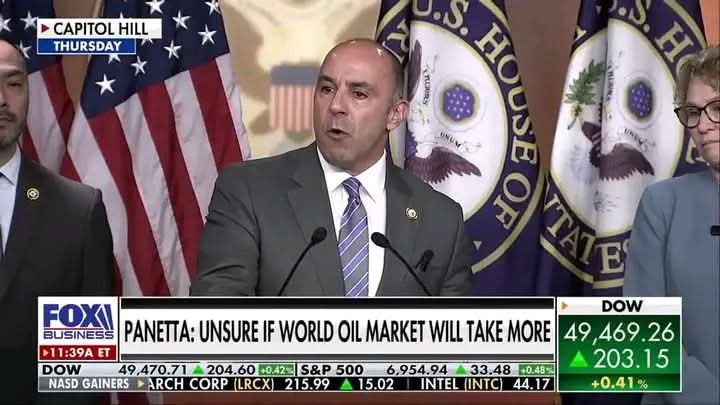
A striking new political argument is taking shape in Washington: some Democrats are now openly suggesting that too much oil production and lower energy prices are bad for America.
For many voters, the claim sounds counterintuitive—especially at a time when households are still grappling with inflation, high living costs, and economic uncertainty.
So how did lower gas prices and abundant energy supplies become controversial?
The Argument Democrats Are Making
Democratic lawmakers and progressive policy advocates advancing this view argue that sustained low energy prices discourage investment in renewable energy, undermine long-term climate goals, and lock the U.S. into fossil fuel dependence.
According to this line of thinking, cheap oil may feel good at the pump today, but it delays the transition to cleaner energy sources that supporters say are essential for America’s future.
Some also argue that overproduction can destabilize energy markets, reduce profitability for domestic producers, youand increase volatility down the line—leading to sharper price spikes later.
Why Critics Are Crying Hypocrisy
Opponents see something else entirely: a party drifting further away from everyday economic realities.
They argue that lower energy prices reduce transportation and food costs, ease inflation, and provide immediate relief to working families and small businesses.
“To tell Americans cheaper gas is bad for them is political malpractice,” one energy analyst said.
“Energy is an input cost for nearly everything. When it’s cheaper, the whole economy benefits.”
Critics also point out that Democrats previously blamed high energy prices on corporate greed or global instability—making the sudden critique of low prices appear contradictory.
Energy Independence vs. Ideology
The debate taps into a deeper ideological divide over U.S. energy policy.
Supporters of expanded oil and gas production argue it strengthens national security, reduces reliance on foreign suppliers, and gives America leverage on the global stage.
From this perspective, abundant domestic oil is not a liability but a strategic advantage.
Democrats counter that true energy independence lies in renewables, not fossil fuels, and that short-term economic gains shouldn’t outweigh long-term environmental risks.
The Political Risk
Politically, the argument is risky.
For millions of Americans, lower gas and electricity bills are not abstract policy concerns—they’re kitchen-table issues.
Framing cheaper energy as a problem may reinforce perceptions that Democratic priorities are driven more by ideology than by cost-of-living pressures.
As one voter put it bluntly: “If lower prices are bad, what exactly is good?”
A Debate Far From Over
The clash over oil and energy prices underscores a broader question shaping U.S. politics: should policy prioritize immediate economic relief or long-term structural change, even if it costs more today?
As the 2026 political season heats up, that question is likely to move from policy papers to campaign trails—and voters will ultimately decide whether cheaper energy is a blessing, a curse, or something in between.

ANDES STRAIN HANTAVIRUS: 3 DEAD, PASSENGERS SCATTERED — EXPERTS SLAM US FOR REPEATING COVID MISTAKES HANTAVIRUS OUTBREAK SPIRALS: SPAIN ORDERS 6-WEEK LOCKDOWN — BUT AMERICA’S LAX RESPONSE SPARKS PANIC..�

JUST BREAKING: Here’s Why Some Americans Will Receive Huge $5,108 Social Security Direct Deposits Within 10 Days

Middle East tensions continue to rise as Israel reportedly views Turkey as its next major regional challenge, with some officials referring to Ankara as “the new Iran.”

Breaking News: Missouri Supreme Court Hands Republicans a 7-1 House Map Victory for 2026 see what happens next

Elon Musk is joining President Trump on a major trip to Beijing, signaling a notable shift after the pair’s well-documented falling out in 2025.

BREAKING:Reza Pahlavi Declares Iran’s Leadership Weakening, Urges End to Islamic Republic.

VIRAL: Donald Trump’s Glamorous AI-Generated Proposal to Melania Trump Inside a Luxurious Met Gala Ballroom Has the Internet Buzzing

JUST NOW | This morning I woke up and started crying. And the reason is this photograph of JD Vance.

BREAKING : Here’s Who Will NOT Receive a Social Security Payment on Wednesday, May 13, 2026….

JUST BREAKING: Maximum Social Security Benefits for May 2026 Revealed by Retirement Age

REPORT: Elon Musk Could Join President Trump’s China Delegation — But No Official Confirmation Yet
