
NEWS
Breaking News:Iranian General Issues Stark Warning to Trump Over Possible Military Action

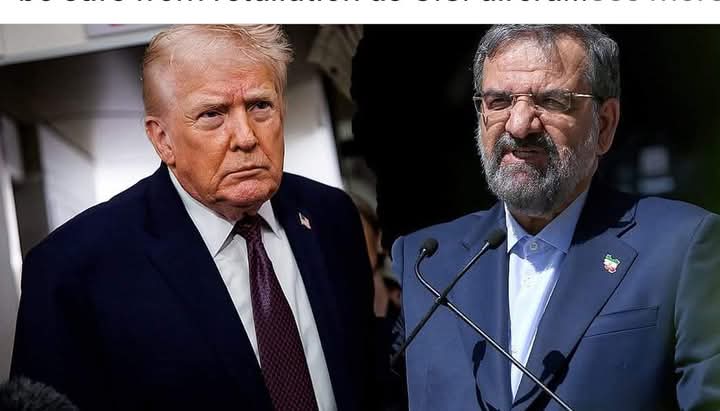
Rhetoric between Tehran and Washington escalated sharply after a senior Iranian military commander issued a blunt threat directed at former U.S. President Donald Trump, warning that Iran would “cut off” Trump’s hand if the United States carried out potential military strikes against the country.
The remark, delivered in fiery language, reflects the deep hostility that has defined U.S.–Iran relations in recent years.
Iranian officials framed the statement as a warning rather than a declaration of intent, emphasizing that any American military action would be met with severe consequences.
Still, the phrasing has drawn widespread attention for its intensity and symbolism.
Iranian state-affiliated media reported that the general’s comments were rooted in what Tehran views as a history of U.S. aggression in the region, including economic sanctions, military deployments, and past targeted operations.
Iranian leaders have repeatedly accused Washington of destabilizing the Middle East and violating international law, while insisting that Iran’s posture is defensive.
Trump, who has remained a central figure in U.S. politics since leaving office, has previously taken a hard line on Iran, particularly during his presidency.
His administration withdrew from the 2015 nuclear agreement, reimposed sweeping sanctions, and authorized actions that dramatically heightened tensions between the two countries.
Those decisions continue to shape Iranian rhetoric and policy today.
U.S. officials and analysts have condemned the threat as irresponsible and inflammatory, warning that such language increases the risk of miscalculation.
Security experts note that verbal escalation, even when symbolic, can harden positions on both sides and complicate diplomatic efforts aimed at preventing direct conflict.
The incident comes at a time of renewed uncertainty in the region, with concerns over nuclear development, proxy conflicts, and the potential for direct confrontation between Iran and the United States or its allies.
While neither side has announced immediate military plans, the exchange underscores how fragile the situation remains.
As global observers urge restraint, the latest threat serves as a reminder that personalizing geopolitical disputes—especially with violent imagery—can deepen mistrust and push already strained relations closer to a dangerous edge.
Whether the rhetoric cools or escalates further may depend on actions taken in the coming weeks, not just words spoken at a podium.

ANDES STRAIN HANTAVIRUS: 3 DEAD, PASSENGERS SCATTERED — EXPERTS SLAM US FOR REPEATING COVID MISTAKES HANTAVIRUS OUTBREAK SPIRALS: SPAIN ORDERS 6-WEEK LOCKDOWN — BUT AMERICA’S LAX RESPONSE SPARKS PANIC..�

JUST BREAKING: Here’s Why Some Americans Will Receive Huge $5,108 Social Security Direct Deposits Within 10 Days

Middle East tensions continue to rise as Israel reportedly views Turkey as its next major regional challenge, with some officials referring to Ankara as “the new Iran.”

Breaking News: Missouri Supreme Court Hands Republicans a 7-1 House Map Victory for 2026 see what happens next

Elon Musk is joining President Trump on a major trip to Beijing, signaling a notable shift after the pair’s well-documented falling out in 2025.

BREAKING:Reza Pahlavi Declares Iran’s Leadership Weakening, Urges End to Islamic Republic.

VIRAL: Donald Trump’s Glamorous AI-Generated Proposal to Melania Trump Inside a Luxurious Met Gala Ballroom Has the Internet Buzzing

JUST NOW | This morning I woke up and started crying. And the reason is this photograph of JD Vance.

BREAKING : Here’s Who Will NOT Receive a Social Security Payment on Wednesday, May 13, 2026….

JUST BREAKING: Maximum Social Security Benefits for May 2026 Revealed by Retirement Age

REPORT: Elon Musk Could Join President Trump’s China Delegation — But No Official Confirmation Yet
