
NEWS
BREAKING NEWS: Minnesota Governor Tim Walz Urges Residents to Document ICE Actions Amid Escalating Tensions

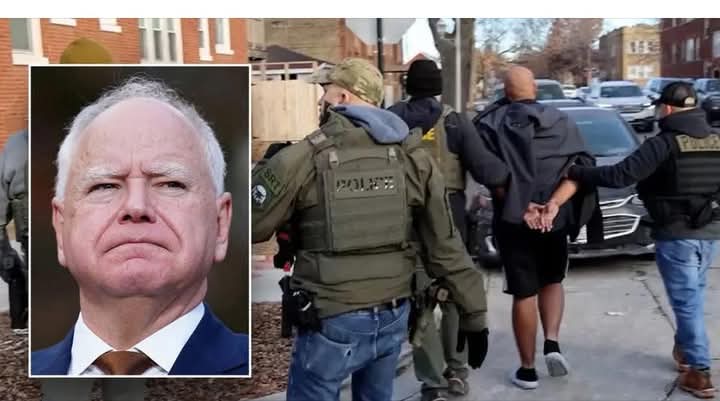
ST. PAUL, Minn. Minnesota Governor Tim Walz has delivered a highly charged appeal to residents in response to the ongoing presence of U.S.
Immigration and Customs Enforcement (ICE) agents in the state, urging them to document federal enforcement activity in their communities as part of efforts to “establish a record” and potentially support future legal action.
In a statement and recorded address late Thursday, Walz framed the situation as a deepening crisis following recent controversial ICE operations that have sparked protests and heightened political tensions.
He said Minnesotans have “an absolute right to peacefully film ICE agents as they conduct their activities,” and encouraged residents to carry their phones and record any interactions they witness in their neighborhoods.
Walz described the effort as a way to help create “a database of the atrocities against Minnesotans — not just to establish a record for posterity, but to bank evidence for future prosecution.”
Context: Federal Enforcement & Local Backlash
The governor’s remarks come amid widespread unrest following two high-profile shootings involving federal agents in Minneapolis.
The most serious incident occurred earlier this month when an ICE agent fatally shot Renee Nicole Good, a Minnesota resident, during a federal immigration enforcement operation.
That shooting has galvanized protest activity and drawn criticism from local officials who argue that the federal government’s actions have become disproportionate and harmful to local communities.
A separate incident this week involved another federal agent shooting and wounding a Venezuelan man during an enforcement action, adding to the volatility of the situation.
Governor Walz and Minneapolis Mayor Jacob Frey have both publicly condemned these operations, arguing that they have heightened fear and disruption rather than improving public safety.
Walz has repeatedly accused the federal deployment of escalating conflict rather than resolving it.
Political Backlash & Federal Response
Walz’s appeal to residents drew swift political pushback.
The White House criticized the governor’s statements, accusing him of inflaming tensions and mischaracterizing the role of federal agents — describing ICE officers as lawfully enforcing immigration laws and dismissing Walz’s comments as unhelpful to de-escalation efforts.
Nationally, the dispute has become tied to broader debates over federal authority, immigration enforcement, and local governance.
Meanwhile, former President Donald Trump has threatened to invoke the Insurrection Act to restore order in Minnesota, a move that would allow the use of federal military forces in response to unrest.
Trump’s comments underscore the extent to which the conflict has moved beyond local policing to a national political flashpoint.
Calls for Peaceful Documentation
Walz’s public call to film federal agents is rooted in his administration’s effort to hold law enforcement accountable through documentation and legal recourse.
Officials have positioned this guidance as part of a broader push for transparency and civil rights protection, rather than an incitement to harassment or confrontation.
Advocates point out that peaceful recording of public officials is a legally protected form of civic engagement.
However, political opponents argue that such rhetoric risks further antagonizing federal officers and inflaming divisions at a moment of already heightened tensions.
A Turbulent Moment for Minnesota
As protests continue in Minneapolis and other parts of Minnesota, local leaders are calling for calm even as they push back against federal actions they see as overreach.
The situation remains volatile, with ongoing debates about law enforcement conduct, civil liberties, and the proper balance between state and federal authority.
What began as isolated protests following specific enforcement actions has now become a broader contest over political power, community trust, and the future of immigration policy enforcement in the United States.

ANDES STRAIN HANTAVIRUS: 3 DEAD, PASSENGERS SCATTERED — EXPERTS SLAM US FOR REPEATING COVID MISTAKES HANTAVIRUS OUTBREAK SPIRALS: SPAIN ORDERS 6-WEEK LOCKDOWN — BUT AMERICA’S LAX RESPONSE SPARKS PANIC..�

JUST BREAKING: Here’s Why Some Americans Will Receive Huge $5,108 Social Security Direct Deposits Within 10 Days

Middle East tensions continue to rise as Israel reportedly views Turkey as its next major regional challenge, with some officials referring to Ankara as “the new Iran.”

Breaking News: Missouri Supreme Court Hands Republicans a 7-1 House Map Victory for 2026 see what happens next

Elon Musk is joining President Trump on a major trip to Beijing, signaling a notable shift after the pair’s well-documented falling out in 2025.

BREAKING:Reza Pahlavi Declares Iran’s Leadership Weakening, Urges End to Islamic Republic.

VIRAL: Donald Trump’s Glamorous AI-Generated Proposal to Melania Trump Inside a Luxurious Met Gala Ballroom Has the Internet Buzzing

JUST NOW | This morning I woke up and started crying. And the reason is this photograph of JD Vance.

BREAKING : Here’s Who Will NOT Receive a Social Security Payment on Wednesday, May 13, 2026….

JUST BREAKING: Maximum Social Security Benefits for May 2026 Revealed by Retirement Age

REPORT: Elon Musk Could Join President Trump’s China Delegation — But No Official Confirmation Yet
