
NEWS
BREAKING NEWS: Minnesota Judge Limits ICE Tactics During Minneapolis Protests.

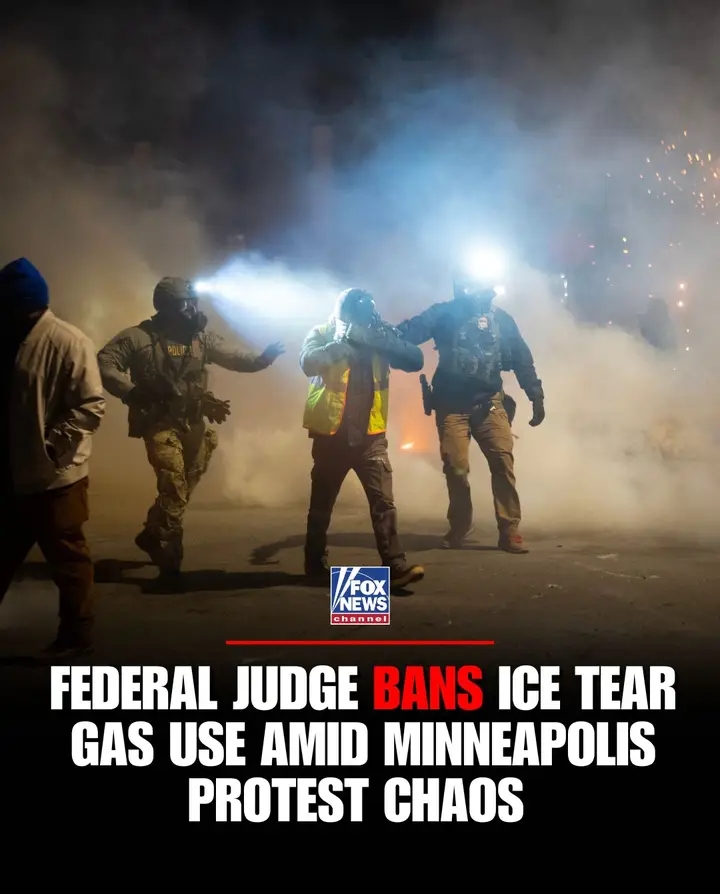
BREAKING NEWS: Minnesota Judge Limits ICE Tactics During Minneapolis Protests.
A Minnesota judge has issued a significant ruling restricting the actions of federal immigration officers during ongoing protests in Minneapolis, marking a new flashpoint in the debate over law enforcement authority and constitutional rights.
The court order bars federal officers, including those with Immigration and Customs Enforcement (ICE), from detaining peaceful demonstrators or deploying tear gas against protesters who are not obstructing law enforcement operations.
The ruling applies to protests taking place amid Operation Metro Surge, a federal enforcement initiative that has drawn large crowds and sparked public backlash in the city.
In the decision, the judge underscored that the First Amendment protects the right to peaceful assembly and expression, even during heightened security operations.
The court made clear that participation in a lawful protest, without interference or violence, does not justify detention or the use of chemical agents.
The Department of Homeland Security (DHS) responded cautiously to the ruling.
DHS Assistant Secretary Tricia McLaughlin said the First Amendment does not protect “rioting,” emphasizing that federal authorities will continue to act against individuals who engage in violence, destruction of property, or obstruction of officers.
She added that DHS is “taking appropriate and constitutional measures to uphold the rule of law and protect our officers and the public from dangerous rioters.”
Civil rights advocates welcomed the ruling, calling it a necessary safeguard against the overuse of force and a reaffirmation of constitutional freedoms.
They argue that aggressive crowd-control tactics risk chilling lawful protest and escalating tensions between communities and law enforcement.
Federal officials, however, maintain that Operation Metro Surge is focused on public safety and lawful enforcement, and insist the ruling does not prevent officers from responding when protests turn violent or impede official duties.
As demonstrations continue, the judge’s order is expected to shape how federal officers engage with protesters on the ground.
More broadly, the decision adds to a growing national legal conversation over the limits of protest policing and the responsibility of authorities to balance security concerns with fundamental civil liberties.

ANDES STRAIN HANTAVIRUS: 3 DEAD, PASSENGERS SCATTERED — EXPERTS SLAM US FOR REPEATING COVID MISTAKES HANTAVIRUS OUTBREAK SPIRALS: SPAIN ORDERS 6-WEEK LOCKDOWN — BUT AMERICA’S LAX RESPONSE SPARKS PANIC..�

JUST BREAKING: Here’s Why Some Americans Will Receive Huge $5,108 Social Security Direct Deposits Within 10 Days

Middle East tensions continue to rise as Israel reportedly views Turkey as its next major regional challenge, with some officials referring to Ankara as “the new Iran.”

Breaking News: Missouri Supreme Court Hands Republicans a 7-1 House Map Victory for 2026 see what happens next

Elon Musk is joining President Trump on a major trip to Beijing, signaling a notable shift after the pair’s well-documented falling out in 2025.

BREAKING:Reza Pahlavi Declares Iran’s Leadership Weakening, Urges End to Islamic Republic.

VIRAL: Donald Trump’s Glamorous AI-Generated Proposal to Melania Trump Inside a Luxurious Met Gala Ballroom Has the Internet Buzzing

JUST NOW | This morning I woke up and started crying. And the reason is this photograph of JD Vance.

BREAKING : Here’s Who Will NOT Receive a Social Security Payment on Wednesday, May 13, 2026….

JUST BREAKING: Maximum Social Security Benefits for May 2026 Revealed by Retirement Age

REPORT: Elon Musk Could Join President Trump’s China Delegation — But No Official Confirmation Yet
