
NEWS
BREAKING NEWS:Kremlin Confirms Invitation for Putin to Join Trump’s “Board of Peace,” Signals Openness to U.S. Dialogue.

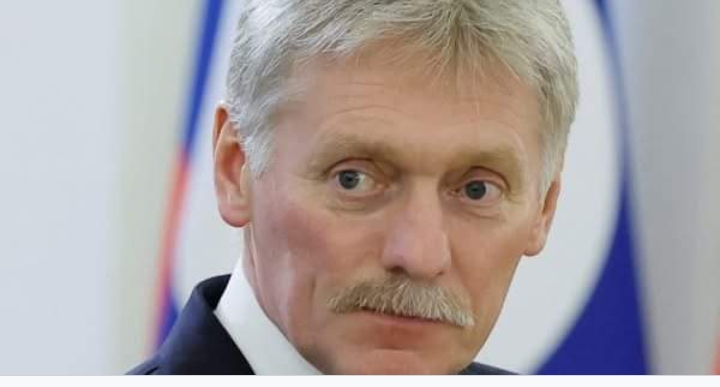
The Kremlin on Monday confirmed that Russian President Vladimir Putin has received an invitation to join U.S.
President Donald Trump’s proposed “Board of Peace,” a move that could signal a tentative opening for renewed dialogue between Moscow and Washington.
According to Kremlin officials, Russia is currently studying the proposal and has expressed hope for future contacts with the United States regarding the initiative.
The announcement comes at a time when relations between Russia and the United States remain strained by years of geopolitical rivalry, sanctions, and disagreements over major global conflicts.
Against this backdrop, the idea of a “Board of Peace” has drawn attention as a potentially symbolic, if not yet clearly defined, mechanism for dialogue among global leaders.
Kremlin spokespersons emphasized that Moscow is treating the invitation with seriousness, noting that any such initiative would require careful consideration of its goals, structure, and practical implications.
While details about the board’s mandate, membership, and authority have not been publicly disclosed, Russian officials indicated that they view the proposal as an opportunity to explore diplomatic engagement rather than dismiss it outright.
“The Russian side is studying the proposal and hopes for contacts with Washington on this matter,” the Kremlin said, underscoring a cautious but open stance.
This language reflects Moscow’s broader approach to U.S. relations in recent years—one marked by guarded pragmatism and a preference for concrete actions over rhetoric.
From the U.S. perspective, President Trump has often positioned himself as a leader willing to break with traditional diplomatic conventions in pursuit of high-level agreements and personal diplomacy.
The concept of a “Board of Peace” appears consistent with his emphasis on direct engagement with world leaders, including those with whom the United States has complex or adversarial relationships.
Analysts note that even if the board remains largely symbolic, the invitation itself carries political weight.
It suggests a willingness, at least rhetorically, to include Russia in discussions framed around global stability and conflict resolution.
For Moscow, participation could offer a platform to present its views on international security and to reassert its role as a key global power.
However, experts also caution against reading too much into the announcement at this early stage.
Without clear terms of reference or a defined agenda, the proposal may face skepticism from both sides, as well as from U.S. allies and the broader international community.
Still, the Kremlin’s acknowledgment of the invitation and its expressed hope for dialogue point to a small but notable opening in U.S.–Russia relations.
Whether this develops into meaningful engagement or remains a diplomatic gesture will depend on the substance of future contacts and the political will in both capitals to move beyond longstanding divisions.

ANDES STRAIN HANTAVIRUS: 3 DEAD, PASSENGERS SCATTERED — EXPERTS SLAM US FOR REPEATING COVID MISTAKES HANTAVIRUS OUTBREAK SPIRALS: SPAIN ORDERS 6-WEEK LOCKDOWN — BUT AMERICA’S LAX RESPONSE SPARKS PANIC..�

JUST BREAKING: Here’s Why Some Americans Will Receive Huge $5,108 Social Security Direct Deposits Within 10 Days

Middle East tensions continue to rise as Israel reportedly views Turkey as its next major regional challenge, with some officials referring to Ankara as “the new Iran.”

Breaking News: Missouri Supreme Court Hands Republicans a 7-1 House Map Victory for 2026 see what happens next

Elon Musk is joining President Trump on a major trip to Beijing, signaling a notable shift after the pair’s well-documented falling out in 2025.

BREAKING:Reza Pahlavi Declares Iran’s Leadership Weakening, Urges End to Islamic Republic.

VIRAL: Donald Trump’s Glamorous AI-Generated Proposal to Melania Trump Inside a Luxurious Met Gala Ballroom Has the Internet Buzzing

JUST NOW | This morning I woke up and started crying. And the reason is this photograph of JD Vance.

BREAKING : Here’s Who Will NOT Receive a Social Security Payment on Wednesday, May 13, 2026….

JUST BREAKING: Maximum Social Security Benefits for May 2026 Revealed by Retirement Age

REPORT: Elon Musk Could Join President Trump’s China Delegation — But No Official Confirmation Yet
