
NEWS
BREAKING: Trump’s Voter Order Sparks Legal Firestorm — Judge Blocks Citizenship Rule as Election Fight Explodes. Read the full details

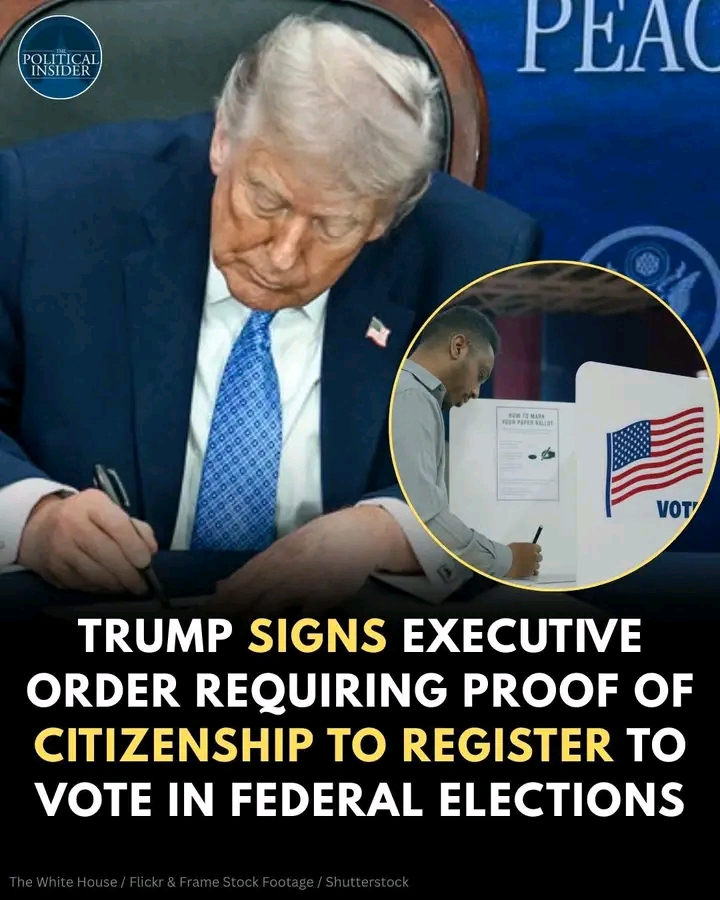
A Single Signature. A National Backlash. And a Courtroom Showdown That Could Reshape U.S. Elections
On March 25, 2025, President Donald Trump signed one of the most controversial executive orders of his presidency a directive requiring proof of U.S. citizenship for federal voter registration and mandating that all ballots be received by Election Day.
Within weeks, the order ignited a political and legal firestorm that is still unfolding.
By April 24, 2025, a federal judge stepped in, blocking the citizenship documentation requirement, dealing a major blow to the administration’s push and setting off a nationwide debate over who gets to vote and how.
What the Executive Order Demanded
The order introduced sweeping changes aimed, according to supporters, at tightening election security.
Its core provisions included:
Mandatory proof of U.S. citizenship to register for federal elections
A hard deadline requiring ballots to be received by Election Day
Expanded federal oversight of state voter registration processes
The White House framed the move as a necessary response to what it called “systemic vulnerabilities” in U.S. elections.
The Immediate Legal Pushback
Civil rights groups, voting advocacy organizations, and several states moved quickly to challenge the order, arguing it exceeded presidential authority and threatened to disenfranchise millions of eligible voters.
On April 24, a federal judge agreed at least in part issuing an injunction that halted enforcement of the citizenship documentation requirement while the case moves forward.
Legal experts say the ruling underscores a deeper constitutional question: Can a president unilaterally rewrite the rules of federal elections?
A Nation Split Down the Middle
Reaction has been fierce and deeply divided.
Supporters argue the order is long overdue, insisting that:
Proof of citizenship is a basic safeguard
Election deadlines must be firm to maintain trust
Federal standards are necessary for national elections
Opponents counter that the measures would:
Block lawful voters who lack immediate documentation
Disproportionately impact seniors, minorities, and low-income Americans
Shift election control away from states
The result? A political standoff with no easy resolution.
Congress Enters the Fight
With key provisions now stalled in court, attention has turned to Capitol Hill.
Lawmakers are debating similar reforms through legislation, including the SAVE Act which mirrors parts of the executive order but would require congressional approval.
Whether Congress can agree remains uncertain but the issue is now front and center heading into the next election cycle.
What Happens Next
The blocked provisions remain frozen as legal battles continue.
Appeals are expected.
Congressional action is possible. And states are watching closely.
One thing is certain:
The fight over America’s voting rules is far from over.
🗳️ Is this about election integrity or voter suppression?
The country is divided.
The courts are involved.
And the stakes couldn’t be higher.

HIS HAND WAS TREMBLING” — THE MOMENT Donald Trump AND Melania Trump FROZE 80,000 PEOPLE IN SILENCE

BREAKING:“The President Who Never Sleeps?” Pilot’s 30-Year Claim Reveals a Different Side of Donald Trump.

Just In: The betrayal cuts deep—watching career Democrats like Pelosi whisper with their next generation while America burns.

AOC warned the South that “the North” is about to pull up.

When Donald Trump was five years old, his father Fred would wake him at dawn on Saturdays, hand him a paper bag with a bologna sandwich, and drive him to a construction site in Brooklyn. Full story

Faith Is Our Foundation”: JD Vance Calls for National Renewal Through Prayer at ‘Rededicate 250’ Event.

SPEAKER JOHNSON DEFENDS ‘IN GOD WE TRUST’ AND NATIONAL REDEDICATION AGAINST SEPARATION CRITICS

BREAKING: Lindsey Graham Warns Republicans — Opposing Donald Trump Could End Political Careers

Just In : Gates made the comments during an interview regarding his book How to Avoid a Climate Disaster.

Just In : Trump and Netanyahu Hold Urgent 30-Minute Call as Intel Warns Iran May Be Buying Time for War. See what happens next

BREAKING NEWS:Trump Issues Stark New Warning to Iran as Regional Tensions Escalate.
