
NEWS
BREAKING Trump Weighs $2,000 Rebate Checks Funded by Tariffs, Sparking Economic Debate.

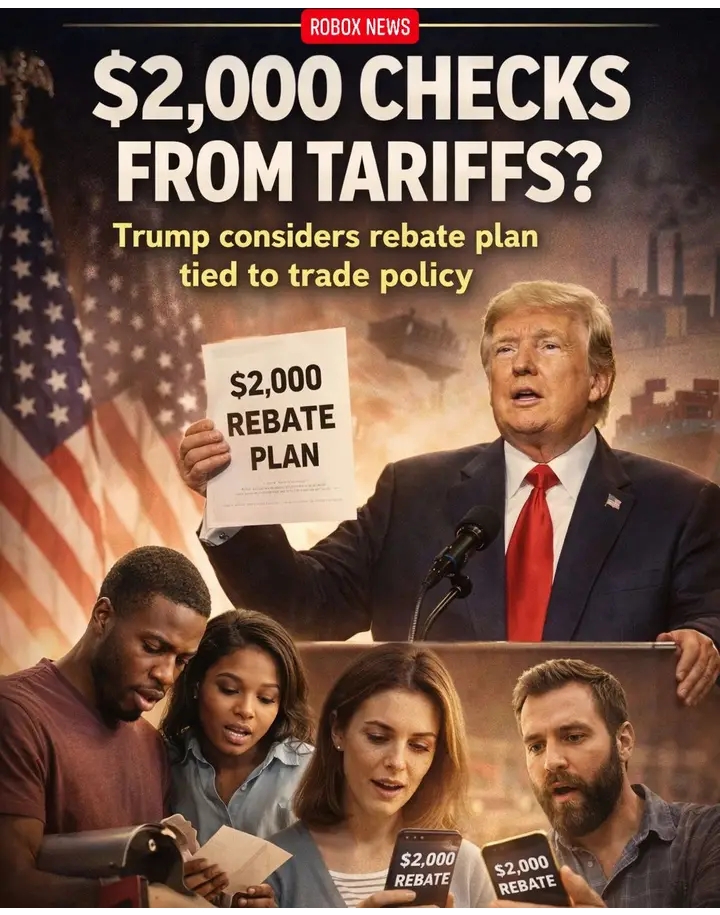
Former U.S. President Donald Trump has floated a proposal to send $2,000 rebate checks to Americans, funded by revenue generated from tariffs on foreign imports.
The idea, which Trump says he is “looking at very seriously,” is part of his broader trade-centered economic vision that emphasizes aggressive tariff policies as a source of government income.
According to Trump, tariffs imposed on foreign goods are bringing in “hundreds of billions of dollars,” money he believes could be redirected to provide direct financial relief to U.S. citizens.
While the proposal has drawn widespread attention, Trump has not formally approved the plan, nor has he outlined a clear timeline for when such payments might occur.
Administration officials and close advisers suggest that, if pursued, the rebate checks would likely be targeted toward low- and middle-income Americans.
The feasibility of the plan would depend heavily on the actual amount of tariff revenue collected and whether Congress supports authorizing direct payments.
As with most large-scale federal spending initiatives, legislative approval would almost certainly be required.
Economists and lawmakers remain divided on the proposal.
Supporters argue that returning tariff revenue directly to citizens could help offset higher consumer prices that sometimes result from tariffs.
Critics, however, question whether tariff income alone would be sufficient to fund $2,000 payments for millions of Americans, warning that the numbers may not add up.
Others raise concerns about the broader economic impact, including potential inflationary pressures and trade retaliation from other countries.
For now, the rebate checks remain a concept rather than a confirmed policy.
Still, the suggestion has reignited national debate over tariffs, trade policy, and the role of direct cash payments in supporting American households.
As discussions continue, the proposal underscores how economic policy is likely to remain a central issue in the U.S. political landscape.

ANDES STRAIN HANTAVIRUS: 3 DEAD, PASSENGERS SCATTERED — EXPERTS SLAM US FOR REPEATING COVID MISTAKES HANTAVIRUS OUTBREAK SPIRALS: SPAIN ORDERS 6-WEEK LOCKDOWN — BUT AMERICA’S LAX RESPONSE SPARKS PANIC..�

JUST BREAKING: Here’s Why Some Americans Will Receive Huge $5,108 Social Security Direct Deposits Within 10 Days

Middle East tensions continue to rise as Israel reportedly views Turkey as its next major regional challenge, with some officials referring to Ankara as “the new Iran.”

Breaking News: Missouri Supreme Court Hands Republicans a 7-1 House Map Victory for 2026 see what happens next

Elon Musk is joining President Trump on a major trip to Beijing, signaling a notable shift after the pair’s well-documented falling out in 2025.

BREAKING:Reza Pahlavi Declares Iran’s Leadership Weakening, Urges End to Islamic Republic.

VIRAL: Donald Trump’s Glamorous AI-Generated Proposal to Melania Trump Inside a Luxurious Met Gala Ballroom Has the Internet Buzzing

JUST NOW | This morning I woke up and started crying. And the reason is this photograph of JD Vance.

BREAKING : Here’s Who Will NOT Receive a Social Security Payment on Wednesday, May 13, 2026….

JUST BREAKING: Maximum Social Security Benefits for May 2026 Revealed by Retirement Age

REPORT: Elon Musk Could Join President Trump’s China Delegation — But No Official Confirmation Yet
