
NEWS
BREAKING:Immigration, Power, and Pressure: Trump’s Airport Enforcement Threat Raises New Questions.

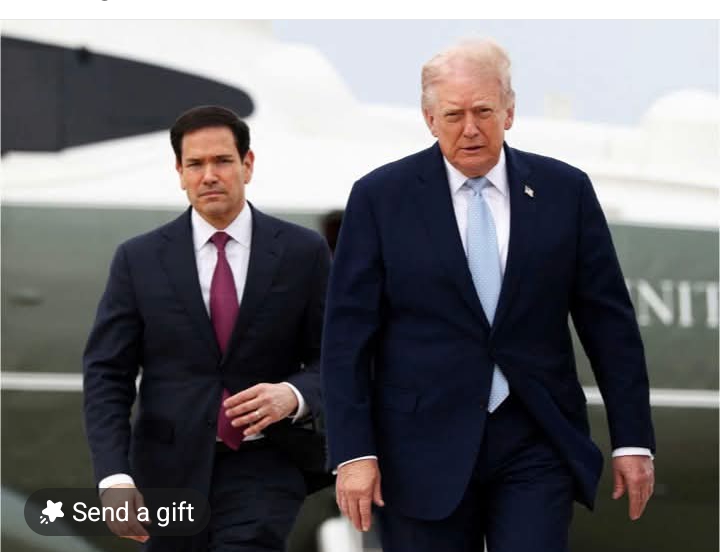
A newly circulating statement attributed to former President Donald Trump has intensified debate over immigration policy, federal authority, and the limits of political leverage during government funding disputes.
The message claims that, if Democrats refuse to approve funding for the Department of Homeland Security (DHS) without reforms to Immigration and Customs Enforcement (ICE), he would move ICE agents into U.S. airports to carry out sweeping immigration arrests.
According to the statement, the proposed deployment would focus on identifying and detaining undocumented immigrants, with particular emphasis on certain national groups.
The language used is forceful and politically charged, reflecting the broader tensions that have long defined immigration debates in the United States.
At the center of the issue is a reported partial government shutdown tied to disagreements over DHS funding.
Democrats have pushed for reforms to ICE, citing concerns over enforcement practices and allegations of excessive force in past operations.
Republicans, on the other hand, have largely resisted such conditions, framing ICE as a necessary component of national security and law enforcement.
The idea of using ICE agents in airports in this manner is unusual and raises several legal and practical questions.
Airports already operate under layered federal security systems, primarily overseen by the Transportation Security Administration (TSA) and supported by other agencies.
Expanding ICE’s role into routine airport security or large-scale arrest operations would likely face scrutiny over jurisdiction, civil liberties, and the potential for disruption to travel and commerce.
Critics argue that the proposal, if pursued, could blur the line between immigration enforcement and political strategy.
They warn that leveraging law enforcement agencies during budget negotiations risks undermining public trust and could set a precedent for future conflicts.
Supporters, however, may view the approach as a firm stance on border control and a demonstration of prioritizing national security.
It is also important to note that statements made on social media platforms, even by prominent political figures, do not always translate into actionable policy.
Any such deployment would require coordination across federal agencies and would likely face legal challenges.
As with many fast-moving political claims, the broader context and factual verification remain essential.
Whether this statement reflects a concrete plan or rhetorical escalation, it underscores the continuing volatility of immigration policy debates—and the high stakes involved when governance, enforcement, and political negotiation intersect.

ANDES STRAIN HANTAVIRUS: 3 DEAD, PASSENGERS SCATTERED — EXPERTS SLAM US FOR REPEATING COVID MISTAKES HANTAVIRUS OUTBREAK SPIRALS: SPAIN ORDERS 6-WEEK LOCKDOWN — BUT AMERICA’S LAX RESPONSE SPARKS PANIC..�

JUST BREAKING: Here’s Why Some Americans Will Receive Huge $5,108 Social Security Direct Deposits Within 10 Days

Middle East tensions continue to rise as Israel reportedly views Turkey as its next major regional challenge, with some officials referring to Ankara as “the new Iran.”

Breaking News: Missouri Supreme Court Hands Republicans a 7-1 House Map Victory for 2026 see what happens next

Elon Musk is joining President Trump on a major trip to Beijing, signaling a notable shift after the pair’s well-documented falling out in 2025.

BREAKING:Reza Pahlavi Declares Iran’s Leadership Weakening, Urges End to Islamic Republic.

VIRAL: Donald Trump’s Glamorous AI-Generated Proposal to Melania Trump Inside a Luxurious Met Gala Ballroom Has the Internet Buzzing

JUST NOW | This morning I woke up and started crying. And the reason is this photograph of JD Vance.

BREAKING : Here’s Who Will NOT Receive a Social Security Payment on Wednesday, May 13, 2026….

JUST BREAKING: Maximum Social Security Benefits for May 2026 Revealed by Retirement Age

REPORT: Elon Musk Could Join President Trump’s China Delegation — But No Official Confirmation Yet
