
NEWS
BREAKING:Trump Pauses Iran Strike Plans as Diplomacy Reopens Amid Rising Gulf Tensions. Click for more story.

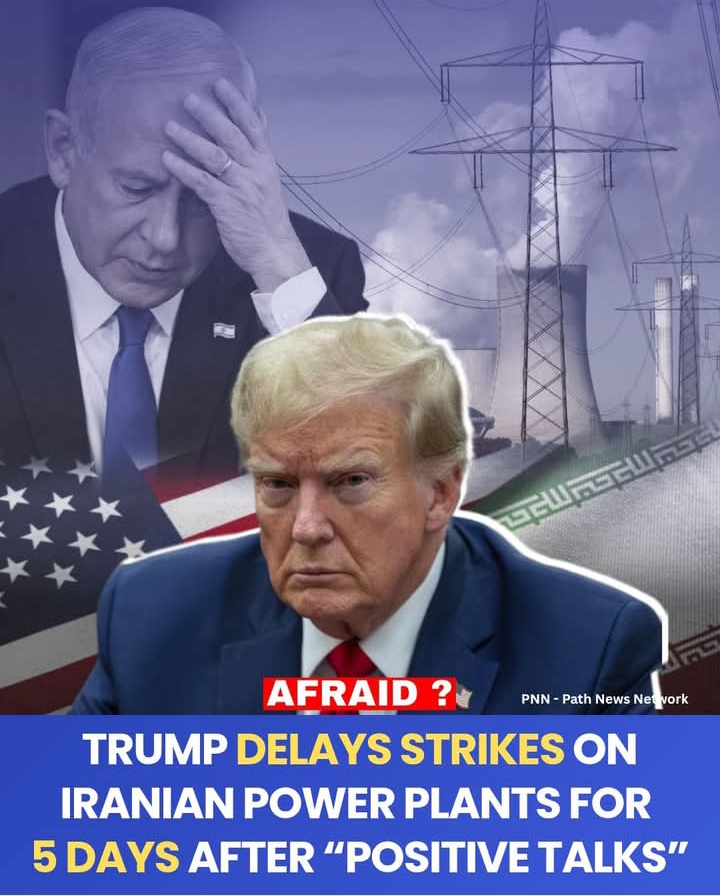
In a significant shift from military escalation to diplomatic engagement, US President Donald Trump has delayed planned strikes on Iran’s power infrastructure, signaling a potential opening for renewed negotiations between Washington and Tehran.
The decision comes at a critical moment, as tensions in the Middle East intensify, particularly around the strategically vital Strait of Hormuz.
The planned strikes were reportedly part of a broader response to escalating hostilities and perceived threats from Iran.
However, the administration’s decision to hold back underscores a cautious approach, prioritizing dialogue over immediate confrontation.
Officials suggest that backchannel communications and international pressure played a role in bringing both sides to the negotiating table.
The Strait of Hormuz, through which a significant portion of the world’s oil supply passes, has once again become a focal point of geopolitical strain.
Recent threats of retaliation and disruptions to shipping routes have rattled global energy markets, contributing to price volatility and concerns about supply security.
Any sustained instability in the region could have far-reaching consequences for economies worldwide.
While the pause in military action offers a temporary reprieve, analysts warn that the situation remains fragile.
The underlying issues—ranging from nuclear ambitions to regional influence—are deeply entrenched and unlikely to be resolved quickly.
Both nations face internal and external pressures that complicate the path to a lasting agreement.
Global leaders have largely welcomed the move toward diplomacy, urging restraint and emphasizing the importance of maintaining open channels of communication.
Still, skepticism persists over whether negotiations will yield meaningful progress or simply delay further confrontation.
As talks begin, the world watches closely.
The outcome will not only shape US-Iran relations but also influence the broader stability of the Middle East and the future of global energy security.

ANDES STRAIN HANTAVIRUS: 3 DEAD, PASSENGERS SCATTERED — EXPERTS SLAM US FOR REPEATING COVID MISTAKES HANTAVIRUS OUTBREAK SPIRALS: SPAIN ORDERS 6-WEEK LOCKDOWN — BUT AMERICA’S LAX RESPONSE SPARKS PANIC..�

JUST BREAKING: Here’s Why Some Americans Will Receive Huge $5,108 Social Security Direct Deposits Within 10 Days

Middle East tensions continue to rise as Israel reportedly views Turkey as its next major regional challenge, with some officials referring to Ankara as “the new Iran.”

Breaking News: Missouri Supreme Court Hands Republicans a 7-1 House Map Victory for 2026 see what happens next

Elon Musk is joining President Trump on a major trip to Beijing, signaling a notable shift after the pair’s well-documented falling out in 2025.

BREAKING:Reza Pahlavi Declares Iran’s Leadership Weakening, Urges End to Islamic Republic.

VIRAL: Donald Trump’s Glamorous AI-Generated Proposal to Melania Trump Inside a Luxurious Met Gala Ballroom Has the Internet Buzzing

JUST NOW | This morning I woke up and started crying. And the reason is this photograph of JD Vance.

BREAKING : Here’s Who Will NOT Receive a Social Security Payment on Wednesday, May 13, 2026….

JUST BREAKING: Maximum Social Security Benefits for May 2026 Revealed by Retirement Age

REPORT: Elon Musk Could Join President Trump’s China Delegation — But No Official Confirmation Yet
