
NEWS
Just News: U.S.–Israeli Airstrikes Rock Iran: Strategic Bombing Campaign Deals Heavy Blow to Military and Energy Infrastructure

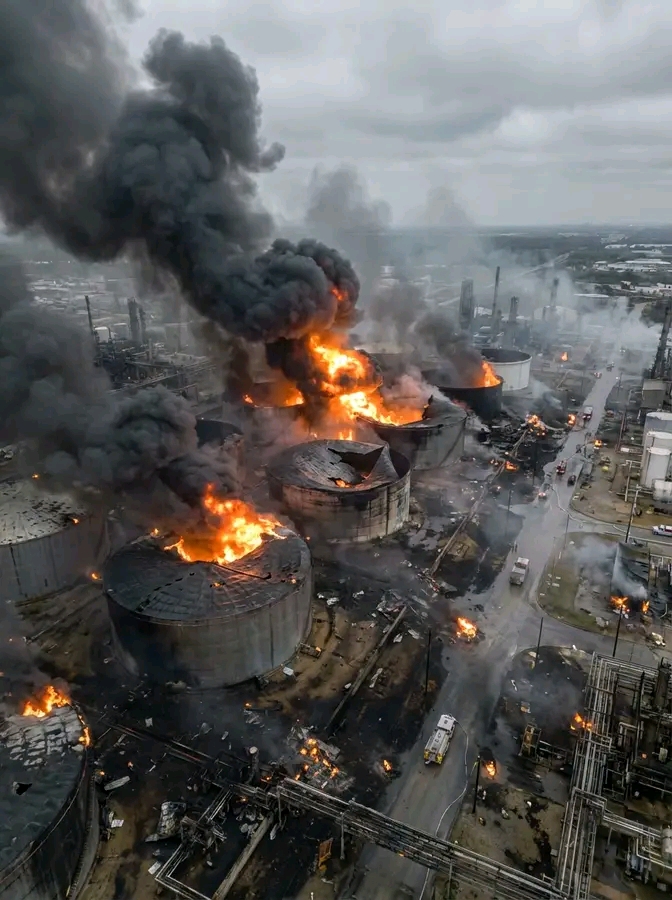
Tensions in the Middle East have escalated dramatically following a series of coordinated airstrikes by the United States and Israel targeting key Iranian military assets.
The operations, reportedly involving advanced B-2 stealth bombers, mark one of the most intense phases of the ongoing conflict and have raised global concerns about energy security and regional stability.
Recent reports confirm that U.S. B-2 bombers carried out precision strikes on heavily fortified Iranian facilities, including underground military compounds and missile infrastructure.
These aircraft, capable of delivering massive bunker-busting munitions, were deployed in long-range missions lasting over 30 hours, underscoring the scale and sophistication of the assault.
The strikes are part of a broader campaign—described in some circles as a systematic dismantling of Iran’s military capabilities.
According to U.S. officials, thousands of targets have been hit since the conflict intensified in early 2026, including air الدفاع systems, weapons storage sites, and command centers.
While viral claims have suggested that Iran’s oil industry has been “wiped out” with damages reaching $50 billion, available evidence paints a more complex picture.
Confirmed strikes have primarily focused on military and strategic infrastructure rather than directly targeting core oil export facilities.
However, the indirect impact on Iran’s energy sector—and the wider global oil market—has been significant.
The broader conflict has already disrupted oil flows across the region. Iran has retaliated with drone strikes on energy infrastructure in neighboring Gulf states, contributing to supply instability and pushing global oil prices sharply higher.
Analysts warn that even without direct destruction of oil fields or terminals, sustained military pressure, damaged logistics, and regional insecurity could severely weaken Iran’s oil output and export capacity over time.
Given that a significant portion of the world’s oil passes through the Strait of Hormuz, any prolonged disruption could have far-reaching economic consequences.
Meanwhile, diplomatic efforts remain fragile. A temporary ceasefire was recently brokered, but ongoing skirmishes and retaliatory attacks indicate that a lasting resolution remains uncertain.
As the situation unfolds, the world watches closely. The combination of military escalation, energy market volatility, and geopolitical tension has created a high-stakes environment where the next move could reshape not only the Middle East but the global economy.

Just News: U.S.–Israeli Airstrikes Rock Iran: Strategic Bombing Campaign Deals Heavy Blow to Military and Energy Infrastructure

Schumer’s ‘Stronger Iran’ Narrative is Collapsing Under the Weight of Reality.

President Trump delivered a powerful message on Iran that perfectly captures his America First approach

Breaking Trump STEP DOWN IMMINENT as 29 Judges DEMAND Removal. See what happens next

Breaking News: Iran Fath-360 ICBM Strikes Israel’s F-35 — What Really Happened

TWO VOICES. NO MUSIC. NO SCRIPT. AND YET 15 MILLION PEOPLE COULDN’T LOOK AWAY.

Breaking News: SOMETHING HAPPENED IN THE USA… AND IT’S WORSE THAN EXPECTED – THE SHOCKING TURN THAT COULD DESTROY EVERYTHING WE KNOW

Just In : Who Will NOT Receive a Social Security Payment on April 15, 2026? Key Details Explained

BRIDGE TO GLORY: The Trump administration shares plans for a privately funded 250-foot “triumphal arch” near Arlington Memorial Bridge.

Just In: Iran Sends Massive 86-Member Team to Pakistan for High-Stakes Ceasefire Talks with the US. full details here

Just In :Shocking The World! Seven Unidentified Fighter Jets Just Sank TWO US Stealth Aircraft Carriers This just broke.
