
NEWS
Breaking Trump–Pope Rift Rekindles Strain Among U.S. Catholics Rising tensions between President Donald Trump and Pope Leo XIV are once again placing many American Catholics at the crossroads of political allegiance and religious identity.

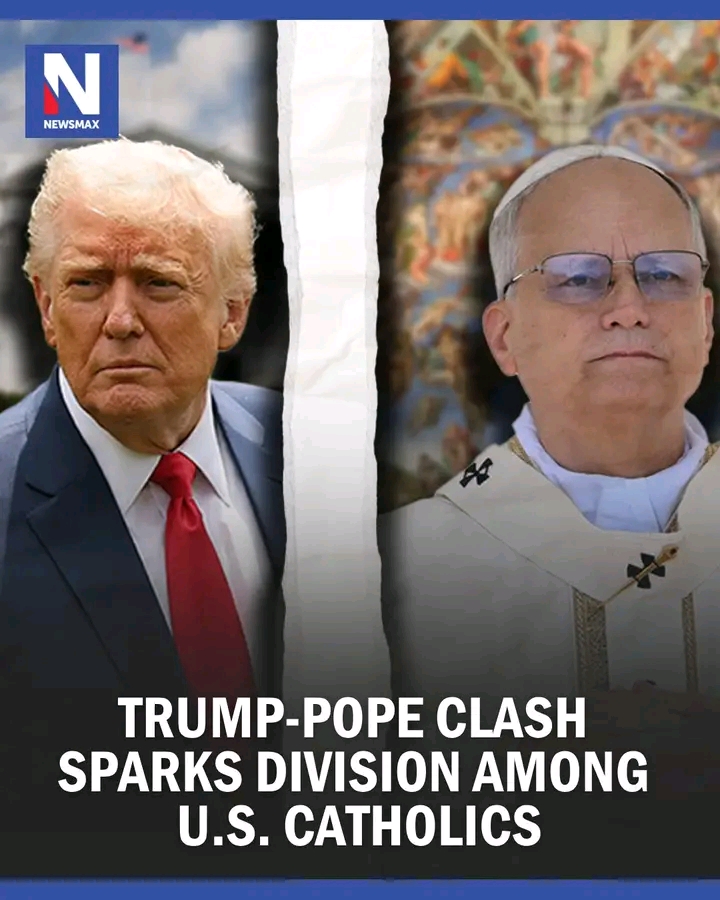
The unfolding disagreement, marked by contrasting rhetoric and priorities, is not entirely new—but it appears to be intensifying in ways that are increasingly difficult for the faithful to ignore.
At the heart of the divide lies a broader question that has long shaped Catholic life in the United States: how to reconcile civic loyalty with adherence to the moral authority of the Church. For some Catholics, Trump’s political positions—particularly on issues such as immigration, nationalism, and social policy—resonate strongly.
For others, the Pope’s emphasis on compassion, global solidarity, and moral consistency offers a clearer reflection of Catholic teaching.
This tension is not merely theoretical. In parishes, on social media, and within families, discussions have grown more pointed.
Clergy members report navigating delicate conversations as parishioners seek guidance on aligning their political choices with their faith. While the Church does not endorse political candidates, its teachings inevitably shape how believers interpret policy and leadership.
The dynamic between Trump and Pope Leo XIV underscores a deeper cultural divide within American Catholicism. One side tends to prioritize national identity, economic concerns, and political pragmatism; the other leans toward universalism, social justice, and adherence to papal guidance.
These perspectives are not mutually exclusive, yet the current climate often frames them as such.
Historically, American Catholics have managed similar tensions by maintaining a degree of separation between their political preferences and religious obligations. However, as political discourse becomes more polarized, that balance is increasingly difficult to sustain.
The personal nature of faith means that disagreements involving the Pope—regarded as a spiritual leader by over a billion Catholics—carry significant emotional weight.
For many, the current moment feels like a test of unity. Some Catholic leaders are calling for a renewed focus on shared values, emphasizing that political differences should not overshadow core teachings on dignity, charity, and community.
Others argue that confronting these divisions openly is necessary to preserve the integrity of both faith and civic life.
As the relationship between Trump and Pope Leo XIV continues to evolve, so too will its impact on American Catholics. Whether this period deepens divisions or prompts reflection and reconciliation remains uncertain.
What is clear, however, is that the intersection of politics and religion remains as complex—and consequential—as ever.

Just In: EMOTIONAL: Trump Shares Heartfelt Update on Ivanka’s Health, Thanks Supporters Worldwide

Breaking Trump–Pope Rift Rekindles Strain Among U.S. Catholics Rising tensions between President Donald Trump and Pope Leo XIV are once again placing many American Catholics at the crossroads of political allegiance and religious identity.

Just In : U.S. Weighs $6 Billion Asset Release as Opening Move in High-Stakes Iran Peace Deal

BREAKING: Trump Just Told CBS News Iran Has “Agreed to Everything.”

U.S. Representative Robert Menendez expressed profound alarm over President Donald Trump’s recent actions, stating that his attack on the Pope, combined with posting a Jesus-like image of himself, leaves Americans no doubt about his instability.

Breaking News: France, U.K. Welcome Hormuz Reopening but Demand Lasting Freedom of Navigation

BREAKING🚨 RFK Jr. told Congress he never said Black children on ADHD meds should be sent to “wellness farms” to be “re-parented.” There is a recording. He still denied it.

Breaking News: Social Security Payments Set for April 22, 2026 — Who Will Receive Benefits This Week

Just In: Several States May Begin Relief Payments Around April 22, 2026 — See Who Qualified

Just In: Trade Threat Backfires? Spain Moves Anyway Donald Trump warned:

Just In : A Message of Hope: Donald Trump Shares Heartfelt Words Amid Barron’s Health Concerns
