
NEWS
Breaking News: Ilhan Omar Blasts $25 Billion Iran War Cost: “Tax Dollars Should Help Working Americans, Not Fuel Endless Conflict

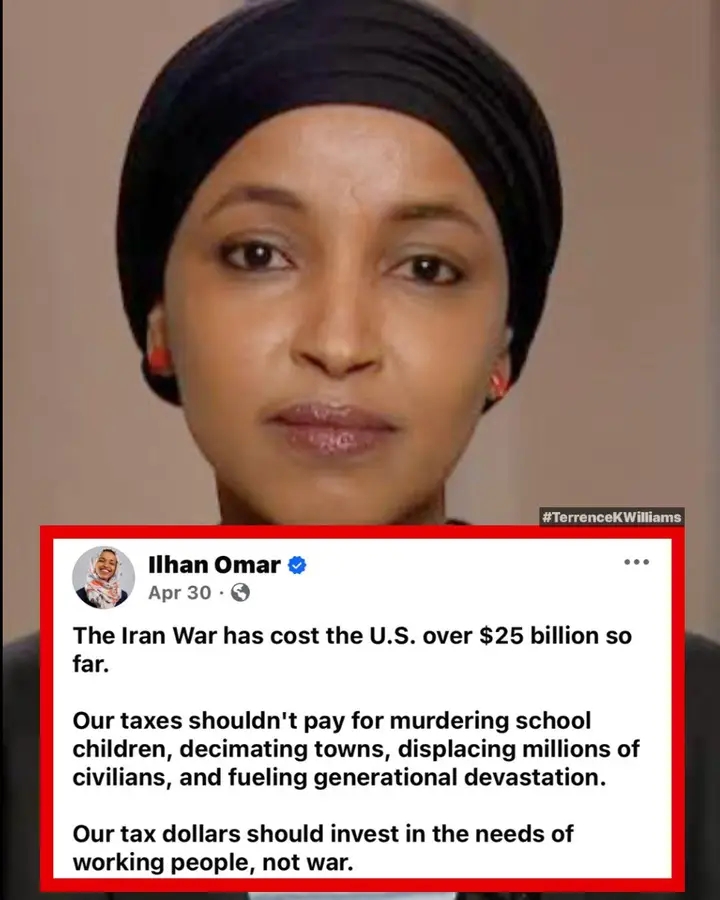
Representative Ilhan Omar has ignited fresh debate over U.S. foreign policy after condemning the growing financial and human cost of the ongoing conflict involving Iran, arguing that American taxpayers are footing the bill for destruction abroad while struggling families at home are left behind.
In a strongly worded statement, Omar declared that the Iran war has already cost the United States more than $25 billion, criticizing what she described as the devastating humanitarian consequences of continued military operations.
She argued that taxpayer money should not be used to support violence that results in civilian deaths, shattered communities, and mass displacement.
“Our taxes shouldn’t pay for murdering school children, decimating towns, displacing millions of civilians, and fueling generational devastation,” Omar said, calling instead for federal resources to be redirected toward healthcare, jobs, housing, and economic support for working Americans.
The Minnesota congresswoman has been one of the most outspoken critics of U.S. military involvement in the Middle East, repeatedly warning that escalating conflict with Iran could spiral into another prolonged and costly war.
In recent months, she has backed congressional efforts aimed at limiting presidential war powers and demanding greater oversight of military action.
Omar’s remarks have intensified political divisions in Washington, with supporters praising her anti-war stance as a defense of humanitarian values and fiscal responsibility, while critics argue that reducing military pressure on Iran could weaken American strategic interests in the region.
Reports and public statements surrounding the conflict have pointed to rapidly rising financial costs, with some estimates placing daily expenses in the billions as military operations continue.
As tensions remain high, Omar’s comments are likely to fuel continued national debate over the balance between military engagement overseas and investment in domestic priorities at home.

Breaking News: Ilhan Omar Condemns ICE Deportations, Sparks Fierce Debate Over Immigration Enforcement and Due Process

A Future King Winning Hearts Around the World

Breaking News: Ilhan Omar Blasts $25 Billion Iran War Cost: “Tax Dollars Should Help Working Americans, Not Fuel Endless Conflict

Donald Trump is turning 80 years old in 37 days. And instead of a quiet birthday dinner — he chose 100000 Americans on the White House lawn.

“Global Tensions Explode: Fictional Scenario Depicts Destruction of Massive U.S. Missile Convoy by Russian Forces”

A SPECIAL MOMENT: Last night, Donald Trump Jr. and Eric Trump stepped onto the stage together and delivered a quietly powerful tribute to their father, Donald Trump — a moment not announced, not explained, but deeply felt. Full story in the link

2 MINUTES AGO! The world is in shock, America has lost a major city, see what happened!

Capitol Hill on FIRE as Senate Votes Trump OUT. See what happens next!!

Breaking News: Trump Delivers Blunt Warning to Pope Leo XIV: Iran Will Never Get Nukes

Claims that “a city housing 15,000 U.S. troops suddenly collapsed” are false and not supported by any credible reports. Reality check:

Just In Washington Under Fire: Fictional Scenario Imagines Russian Yak-141 Strike on U.S. Presidential Complex see what happens next
