
NEWS
BREAKING: A Strategic Shift — U.S. Completes First Major Venezuelan Oil Transaction Worth $500 Million

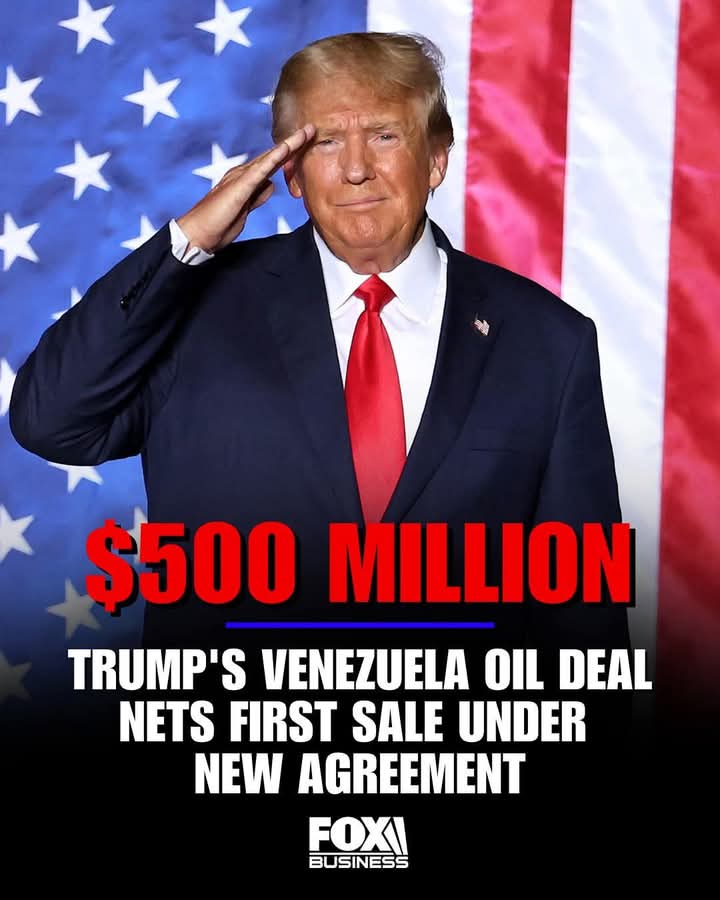
In a dramatic pivot in U.S.–Venezuela relations, the Trump administration has officially confirmed the completion of its first major oil transaction involving Venezuelan crude, marking a significant strategic shift in both energy policy and geopolitics.
The deal, valued at approximately $500 million, represents an initial milestone in Washington’s plans to integrate Venezuelan oil back into global markets under U.S. supervision.
A New Chapter in Venezuelan Oil Relations
The sale, confirmed by senior U.S. officials, is part of a larger, broader arrangement reached earlier this month that could see hundreds of millions, and potentially billions, of dollars’ worth of Venezuelan crude redirected to the United States following political changes in Caracas.
Under terms outlined by the administration, Venezuelan oil is to be sold at market prices, with the proceeds held in accounts controlled by the U.S. government.
A primary account has been established in Qatar, chosen as a neutral financial hub to facilitate secure movement and management of funds without risk of seizure.
Why This Matters
The transaction is more than an isolated sale — it signals a turning point in U.S. engagement with Venezuela’s vast energy resources, long sidelined by sanctions and political tensions.
Venezuela holds the largest proven oil reserves in the world, and its re-entry into the U.S. market under Washington’s oversight could reshape supply dynamics in the Western Hemisphere and beyond.
Officials say additional sales are expected in the weeks ahead, laying the groundwork for a sustained commercial and possibly strategic energy relationship.
The initial $500 million deal demonstrates Washington’s intent to leverage access to Venezuelan crude as part of broader foreign policy goals.
A Broader Strategic Vision
According to administration statements, the oil revenue will be directed toward stabilizing Venezuela’s economy, funding reconstruction efforts, and addressing longstanding debts.
At the same time, U.S. negotiators are engaging with major American oil companies to encourage investment in Venezuela’s aging energy infrastructure — a sector that has struggled after years of underinvestment and mismanagement.
The White House has framed the deal as beneficial not only for the Venezuelan people but also for American consumers and energy markets, potentially easing global oil price volatility and strengthening domestic refinery feedstock supplies.
Geopolitical Ripples
Experts say the move could have significant geopolitical implications. Redirecting Venezuelan oil flows from traditional buyers — historically including China — toward U.S. markets or Western channels represents a major realignment in global energy politics.
It also follows recent shifts in Venezuelan leadership and governance that opened the door for these historic negotiations.
Looking Forward
While details about future sales and long-term strategy remain limited, the first $500 million transaction is widely seen as the opening chapter of a potential re-entry of Venezuelan oil into the global mainstream under U.S. influence.
As the administration continues to work with energy companies and international partners, analysts will be watching closely to see how this strategic shift unfolds — and what it means for U.S. energy policy, Venezuelan reconstruction, and global markets.

FAIRNESS FIGHT: The International Olympic Committee announcing a groundbreaking change to protect female athletes and women’s sports as a whole — a ban on biological males competing in women’s events.

Breaking News: Trump Administration Moves to Add President’s Signature to U.S. Currency in Unprecedented Shift

Afternoon Update | America… right now… in the middle of this afternoon… while most of us are on lunch break… Karoline Leavitt just finished facing every camera and every difficult question in the world.click the link below

President Trump’s signature will be added to future U.S. paper currency, the Treasury Department announced Thursday

Breaking News: First $100 Bills Bearing Trump and Bessent Signatures Set for June Release click the link below

Just In : U.S. INTERCEPTED UKRAINE MESSAGES OF PLOT TO ROUTE MONEY TO BIDEN CAMPAIGN

Just In : Here’s the Average Social Security Benefit at Ages 62 to 80 — What You Can Expect at Every Stage

BREAKING: U.S President Donald Trump Has Just Been Confirmed… See More

Just In: “NO ONE UNDERSTOOD WHY Donald Trump PAUSED HIS SPEECH… UNTIL THE NEXT MORNING.”CLICK. THE LINK BELOW

REALITY CHECK IN WASHINGTON: A tense exchange has sparked fresh debate over the true cost—and purpose—of recent escalation.

Breaking News:Millions of Americans Receive Social Security Payments Today — Here’s Who Qualifies for March 25 Disbursement
