
NEWS
BREAKING: Canada–Europe Alignment Signals a Major Diplomatic Shift, Leaving Washington on the Sidelines

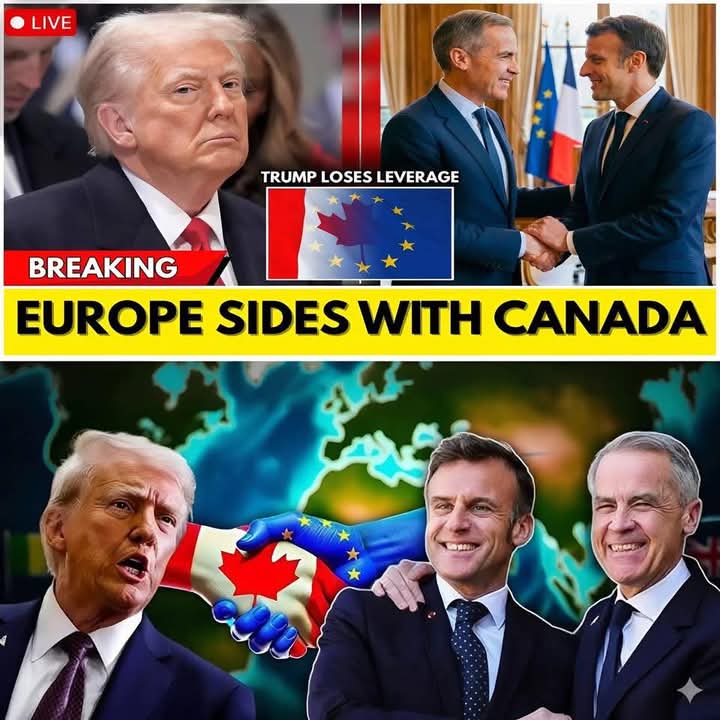
A sudden and sweeping realignment between Canada and key European partners is sending shockwaves through global diplomacy, raising urgent questions about the future of U.S. influence and the durability of long-standing Western alliances.
According to officials familiar with the talks, Canada has finalized a far-reaching coordination framework with Europe that goes well beyond symbolism—reshaping trade routes, regulatory standards, and long-term strategic cooperation **without direct U.S. involvement.
The move, completed after months of quiet negotiations behind closed doors, reportedly caught Washington off guard, exposing how quickly traditional alliances can be redrawn in a changing geopolitical landscape.
More Than a Trade Deal
Sources say the alignment encompasses integrated supply chains, harmonized regulations, and joint strategic planning across multiple sectors—from energy and advanced manufacturing to digital governance and environmental standards.
While the United States remains a major economic partner to both Canada and Europe, this new framework signals a deliberate effort to reduce dependence on U.S.-led coordination.
For Ottawa and Brussels, the rationale appears pragmatic: predictability, shared regulatory values, and a desire to insulate long-term planning from political volatility elsewhere.
Washington Watches From the Sidelines
Inside Washington, the development is being read as a warning sign.
Analysts say the agreement underscores how allies once assumed to be firmly aligned with the U.S. are increasingly charting independent courses particularly in response to trade disputes, tariff threats, and strained diplomatic tone during the Trump era.
“This isn’t about cutting ties with the U.S.,” one analyst noted.
“It’s about hedging. And hedging is what allies do when trust becomes uncertain.”
A Shrinking Leverage Problem
For President Donald Trump, critics argue the shift highlights a deeper challenge: diminishing leverage over partners who now see alternatives.
Europe has accelerated internal coordination, Canada has diversified its economic and diplomatic options, and both appear more willing to finalize major initiatives without Washington’s leadership—or consent.
Supporters of Trump counter that allies are free to pursue their interests and that America’s economic weight still commands influence.
But even they acknowledge the optics are troubling: when major partners move in lockstep elsewhere, U.S. absence is conspicuous.
Why Rebuilding Trust Won’t Be Easy
Reestablishing U.S. centrality won’t happen overnight. Trust, once eroded, takes time to restore—especially when new systems, standards, and supply chains are already being built.
Businesses adapt, governments align, and momentum becomes self-reinforcing.
“Once regulatory and trade ecosystems sync up, reversing course is costly,” said a former trade negotiator.
“That’s why this matters.”
A Turning Point or a Temporary Detour?
Whether this alignment marks a permanent weakening of U.S. influence or a temporary recalibration remains to be seen.
Much will depend on Washington’s next moves—whether it chooses confrontation or cooperation, unilateral pressure or multilateral engagement.
For now, one reality is clear: the global order is becoming more fluid, and alliances once taken for granted are being re-evaluated.
Canada and Europe have made their move.
The question is how—and whether—the United States responds in time to shape what comes next.

FAIRNESS FIGHT: The International Olympic Committee announcing a groundbreaking change to protect female athletes and women’s sports as a whole — a ban on biological males competing in women’s events.

Breaking News: Trump Administration Moves to Add President’s Signature to U.S. Currency in Unprecedented Shift

Afternoon Update | America… right now… in the middle of this afternoon… while most of us are on lunch break… Karoline Leavitt just finished facing every camera and every difficult question in the world.click the link below

President Trump’s signature will be added to future U.S. paper currency, the Treasury Department announced Thursday

Breaking News: First $100 Bills Bearing Trump and Bessent Signatures Set for June Release click the link below

Just In : U.S. INTERCEPTED UKRAINE MESSAGES OF PLOT TO ROUTE MONEY TO BIDEN CAMPAIGN

Just In : Here’s the Average Social Security Benefit at Ages 62 to 80 — What You Can Expect at Every Stage

BREAKING: U.S President Donald Trump Has Just Been Confirmed… See More

Just In: “NO ONE UNDERSTOOD WHY Donald Trump PAUSED HIS SPEECH… UNTIL THE NEXT MORNING.”CLICK. THE LINK BELOW

REALITY CHECK IN WASHINGTON: A tense exchange has sparked fresh debate over the true cost—and purpose—of recent escalation.

Breaking News:Millions of Americans Receive Social Security Payments Today — Here’s Who Qualifies for March 25 Disbursement
