
NEWS
Breaking News: Poll: 54% of American Voters Disapprove of Donald Trump’s Handling of Iran Conflict

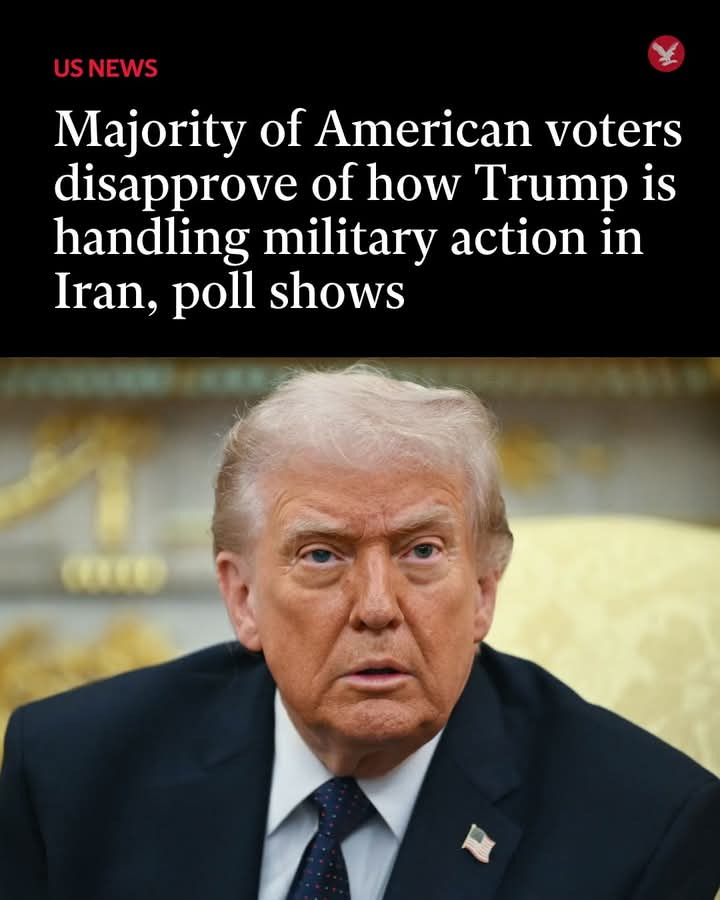
A new national poll shows that a majority of American voters are unhappy with how U.S. President Donald Trump is managing the escalating conflict with Iran, highlighting growing public concern about the United States’ military involvement in the region.
According to a recent survey conducted by Hart Research Associates and Public Opinion Strategies for NBC News, 54 percent of American voters disapprove of Trump’s handling of the Iran situation, while 41 percent approve and about 5 percent remain undecided.
The findings come after the United States, working with Israel, launched military strikes on Iranian targets over the weekend as part of a campaign reportedly aimed at weakening Iran’s military capabilities and addressing concerns over its nuclear ambitions.
The operation has significantly escalated tensions across the Middle East.
The poll also found that a majority of respondents are skeptical about the decision to use military force.
About 52 percent of voters said the United States should not have carried out military strikes against Iran, compared with 41 percent who support the action.
The conflict has already resulted in casualties and rising geopolitical tensions.
Reports indicate that Iranian retaliation has targeted U.S. and allied interests in the region, increasing fears of a wider regional war.
The developments have also fueled political debate in Washington, where lawmakers remain divided over the scope of presidential authority to conduct military operations without explicit congressional approval.
Public opinion appears sharply divided along political lines.
While many Republican voters continue to support the administration’s actions, a significant portion of independent and Democratic voters have expressed concerns about the risk of deeper U.S. involvement in another prolonged Middle East conflict.
Political analysts say the polling numbers could have implications for upcoming U.S. elections, as foreign policy decisions and the potential human and economic costs of the conflict may influence voter sentiment in the months ahead.

JUST IN: Donald Trump said Iran has formally agreed they will never have a Nuclear Weapon.

Trump is defunding the TSA until Congress restricts vote by mail.

NEWS POLL: President Trump’s approval rating dipped to 41% in March, and 59% of registered voters now disapprove of him — the highest disapproval of either of his terms.

Speaker Mike Johnson has the right idea. While hardworking Americans endure endless TSA lines stretching through airport terminals, the vote tally poster should be enlarged and displayed prominently in every single one.

Breaking News: Senator Cory Booker just let the truth slip out. While railing against the SAVE America Act, he warned that requiring proof of U.S. citizenship for federal voter registration would shrink the voter rolls by 5 to 10 percent.

Just In : Trump HUMILIATED as Security Guards DRAG Him Out of Mueller Funeral Live On Camera. see what happens next

Breaking News: Trump Drops Hammer on Iran: 15 Non-Negotiable Demands to End the Middle East Mess see the full details

Breaking News: Fox News Reports Update Involving Former President Joe Biden

BREAKING: Trump Reportedly Fell While Boarding Air Force One as Doctor Allegedly Hints at a Hidden Diagnosis “HE HAS FALLEN AGAIN!”click here to see what happens next

Breaking News: EXPLOSIVE: Trump Goes BALLISTIC After Pope Leo XIV Exposes His 1970 Wharton IQ Test LIVE — “Genius?” Trump Fires Back! Click here

Just In : Florida is taking a firm stand to protect our American way of life. House Bill 1471, now heading to Governor Ron DeSantis for signature, explicitly bans Sharia law and any foreign or religious legal codes from overriding our courts and Constitution.
