
NEWS
Breaking News Trump Says Cuba Is “Ready to Fall,” Points to Venezuela Ties as Pressure Mounts

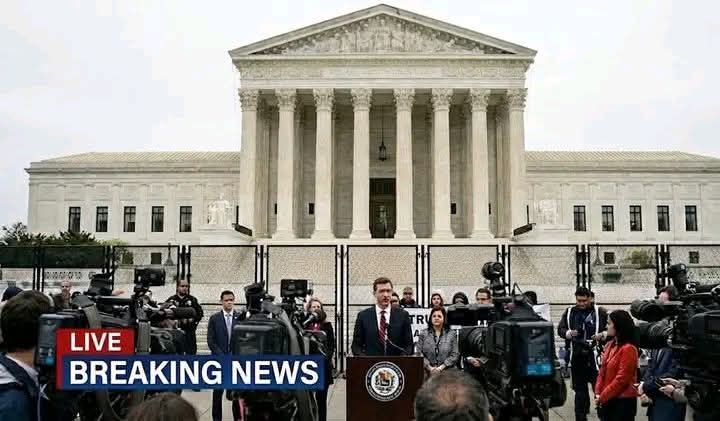
Former U.S. President **Donald Trump has reignited debate over U.S.–Cuba relations after declaring that Cuba is “ready to fall,”arguing that the island nation’s economy depended heavily on Venezuela and asserting bluntly, **“it’s going down.”
The remarks, delivered in characteristic fashion, immediately drew global attention and sharp reactions across the political spectrum.
The Claim Behind the Warning
Trump’s statement centers on a long-standing economic relationship between **Cuba and Venezuela, particularly the exchange of subsidized oil for Cuban medical and technical services.
For years, that partnership helped cushion Havana against the impact of U.S. sanctions and chronic domestic shortages.
According to Trump, recent turmoil in Venezuela has weakened that lifeline—leaving Cuba exposed.
“Without Venezuela,” Trump suggested, “the system can’t hold.”
Supporters of the former president argue that this assessment reflects economic reality, pointing to Cuba’s ongoing fuel shortages, inflation, and waves of emigration as signs of deep structural stress.
A Familiar Hardline Tone
Trump’s comments echo the confrontational approach his administration took toward Cuba while in office, when it rolled back engagement policies, tightened sanctions, and framed economic pressure as a tool to force political change.
Calling Cuba “ready to fall” fits that same strategy: public pressure, blunt language, and the suggestion that regime collapse is not only possible but imminent.
Critics, however, argue that such rhetoric oversimplifies a complex situation.
Skepticism and Pushback
Analysts caution that while Cuba faces serious economic challenges, predictions of imminent collapse have surfaced many times over the past six decades—without materializing.
“Cuba has endured extraordinary pressure before,” one regional expert noted.
“Economic pain does not automatically translate into political collapse.”
Others warn that framing hardship as proof of an approaching fall risks minimizing the humanitarian impact on ordinary Cubans, who bear the brunt of shortages regardless of political outcomes.
Havana and the Region React
Cuban officials have not formally responded to Trump’s remarks, but state media has historically dismissed similar statements as political provocation.
Across Latin America, reactions have been mixed, with some leaders urging dialogue and others viewing Trump’s words as part of a broader strategy to escalate pressure in the region.
Meanwhile, Cuban-Americans and exile communities remain divided—some welcoming Trump’s assessment as overdue honesty, others fearing it could harden positions without improving lives.
Rhetoric or Reality?
At the heart of the debate is a familiar question:
Is this a realistic assessment—or political signaling?
Trump’s declaration adds fuel to speculation about future U.S. policy direction and reinforces a narrative of cascading pressure following Venezuela’s instability.
But whether Cuba is truly “ready to fall” remains contested, dependent on internal resilience, external support, and the unpredictable dynamics of global politics.
—
The Bottom Line
Trump’s claim that Cuba is “ready to fall” underscores his belief in economic pressure as a decisive force—and revives long-standing arguments about the island’s dependence on allies like Venezuela.
While the statement has intensified debate, it has not resolved it.
As history shows, Cuba’s future is unlikely to be decided by rhetoric alone.
But in an era of heightened geopolitical tension, words from a former U.S. president still carry weight—and can shape expectations long before realities catch up.

JUST BREAKING: Some Retirees to Receive Over $5,000 Monthly in Social Security by 2026 — Eligibility Criteria Revealed

¡Esta es la extraordinaria valentía de Irán 🇮🇷! 🔥 9:00 am: “Toda una civilización terminará esta noche”, dijo Trump. 9:10 a. m.: La gente común de Irán ha formado una cadena humana en el puente blanco. 🔥🔥 Si no tienen miedo a morir, no pueden ser derrotados. ¡Qué coraje increíble! 🔥

Pro-Iranian accounts on Twitter are flooding the platform tonight with AI-generated videos mocking Trump, including one showing him stepping off Air Force One waving a white flag after announcing a ceasefire deal critics say was so bad he appeared to negotiate with himself.

A major political shockwave just hit Washington as 24 members of Congress declare an EMERGENCY and demand the UNPRECEDENTED removal of President Trump from office.

BREAKING: Trump’s Shocking Revelation Sparks Viral Frenzy and Raises Questions About His Political Future

Is “getting the job done” more important than having a “nice” president?

Just In :Trump Sends Clear Message to Iran as B-52 Bombers Lift Off from UK Bases. See what happens next

Breaking News:Trump Suspends Planned U.S. Strikes on Iran for Two Weeks Amid Diplomatic Push. Full details here
Today I witnessed something because of Trump that I will never forget for the rest of my life. And that is exactly why I want to show you Trump’s real face today. Click here for full details

At a Monday press conference, Trump brought up past comments by North Korea’s Kim Jong Un about Joe Biden while discussing US troop deployment in South Korea.

Breaking Claim Sparks Concern: Viral Report Alleges Attack on U.S. Warships Near Strait of Hormuz. See what happens next
