
NEWS
Breaking News: U.S. and Allied Airstrikes Cripple Iran’s Defense Network as Regional Conflict full story here!

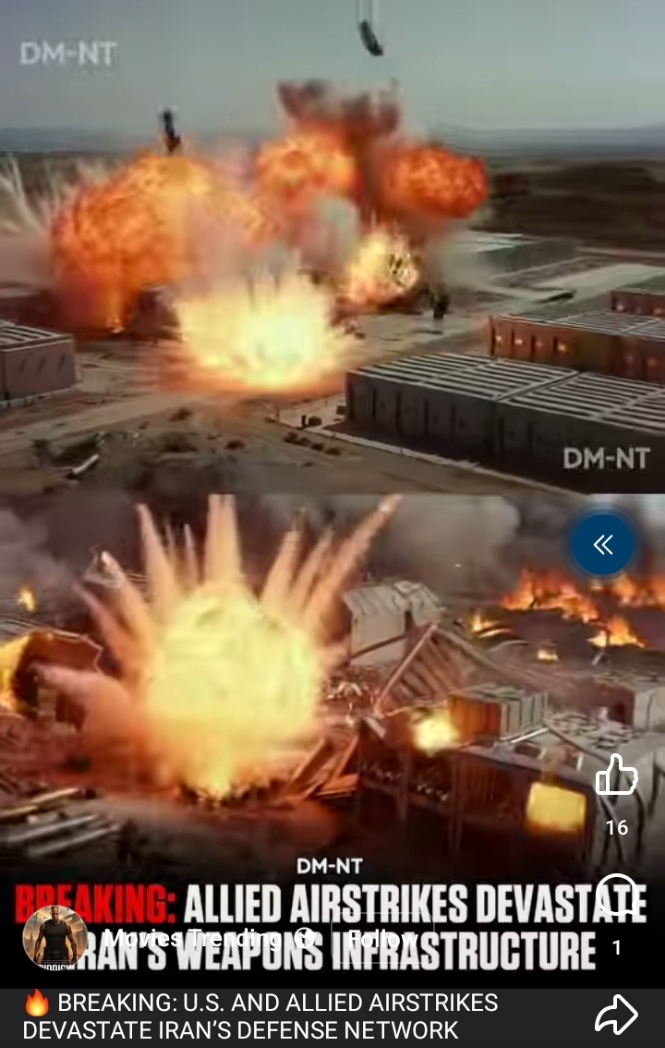
A sweeping wave of coordinated airstrikes by the United States and its allies has severely damaged Iran’s air defense infrastructure, marking one of the most intense military escalations in the Middle East in recent years.
The strikes targeted radar installations, missile launchers, command centers, and other critical military sites across multiple Iranian locations.
Military officials involved in the operation say the campaign significantly weakened Iran’s ability to detect and intercept incoming aircraft and missiles.
According to U.S. Central Command assessments, hundreds of Iranian missiles, drones, and launch systems have been destroyed, along with several naval assets, dramatically reducing the country’s immediate offensive and defensive capabilities.
The strikes are part of a broader military campaign launched in response to rising tensions between Iran, Israel, and Western allies.
The offensive, reportedly coordinated between U.S. forces and Israeli military planners, began with large-scale attacks aimed at crippling Iran’s strategic infrastructure and military command networks.
Officials say the goal of the operation is to neutralize Iran’s missile threat, degrade its military capabilities, and prevent further attacks against U.S. forces and allied nations in the region.
The campaign has already struck thousands of targets and involves tens of thousands of troops, making it one of the largest multinational military operations in the Middle East in decades.
Despite the heavy damage reported to Iran’s defense network, the conflict shows no signs of ending soon.
Iran has responded with missile and drone attacks targeting military bases, infrastructure, and shipping routes in the Gulf region, raising fears of a broader regional war.
Analysts warn that the escalating confrontation could disrupt global energy supplies and trigger wider geopolitical instability.
The strategic Strait of Hormuz — through which a significant portion of the world’s oil supply passes — has already seen increased threats to commercial shipping as hostilities intensify.
As both sides continue to exchange strikes and military pressure grows across the region, the situation remains volatile.
Diplomatic efforts to contain the conflict are ongoing, but the scale of recent attacks suggests that the Middle East could be entering a new and dangerous phase of confrontation.
Today I witnessed something because of Trump that I will never forget for the rest of my life. And that is exactly why I want to show you Trump’s real face today. Click here for full details

At a Monday press conference, Trump brought up past comments by North Korea’s Kim Jong Un about Joe Biden while discussing US troop deployment in South Korea.

Breaking Claim Sparks Concern: Viral Report Alleges Attack on U.S. Warships Near Strait of Hormuz. See what happens next

Trump’s Playful Jab at Melania Steals the Show with Heartland Egg Farmers President Donald Trump turned on the charm and humor Monday during an outdoor event with egg farmers and their families, playfully introducing First Lady Melania Trump as the glamorous outsider who left Hollywood behind for real America.

BREAKING: Donald Trump is in the Hospital as we speak, though its not confirmed of his conditions.

BREAKING NEWS:Trump’s Stark Remark on Iran Raises Concerns Over Escalation.

JUSTIN:Defense Secretary Hegseth Issues Stark Warning to Iran Amid Rising Tensions. Click for complete story.

JUSTIN:Trump Remarks About Son at Investment Summit Draw Public Attention 🇺🇸.

BREAKING:VP Vance Commends U.S. Military After Daring Rescue of Downed Airman in Hostile Territory.

BREAKING:High-Risk Rescue Mission Highlights U.S. Commitment to Service Members, Sparks Debate on Leadership Style.

According to multiple reports, Donald Trump said Monday that the U.S. could “take out” Iran in one night and suggested that “might be tomorrow night,” escalating fears of a wider war as his deadline over the Strait of Hormuz nears.
