
CELEBRITY
BREAKING NEWS; “WILDLY ILLEGAL”: TRUMP SAYS HE SEIZED MADURO AFTER U.S. STRIKE ON VENEZUELA 👉 Find out why lawmakers are sounding the alarm.

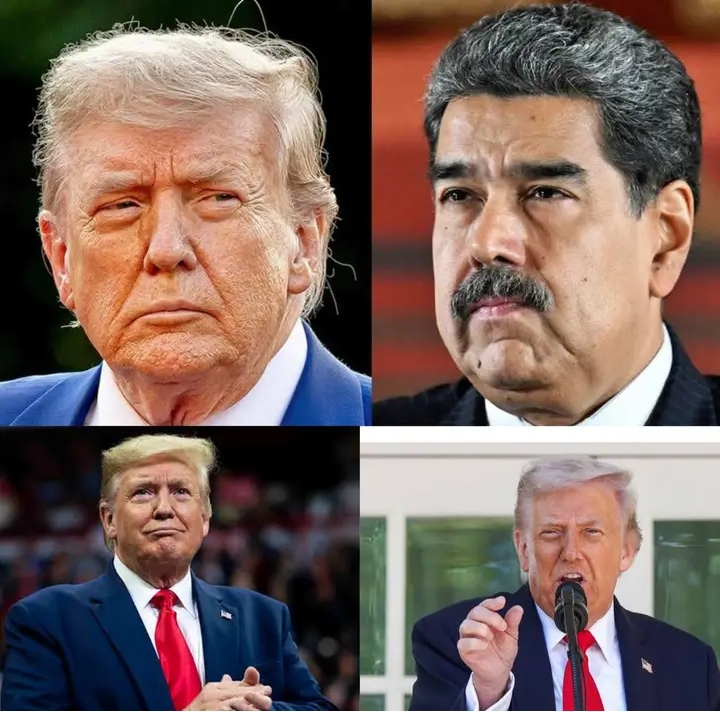
BREAKING: Trump Says U.S. Seized Maduro After Military Strike — Lawmakers Sound Alarm
In an unprecedented and highly controversial military operation early January 3, 2026, the United States launched a large-scale strike on Venezuela, targeting the capital Caracas and other strategic sites. President Nicolás Maduro and his wife, Cilia Flores, were reportedly captured and flown out of the country, according to U.S. President Donald Trump. AOL+1
Trump announced the operation on his Truth Social platform and later from Mar-a-Lago, describing the raid as a success and framing it as part of a broader effort to dismantle criminal networks and bring Maduro to justice.
“The United States of America has successfully carried out a large scale strike against Venezuela and its leader… who has been, along with his wife, captured and flown out of the country,” the president said in his statement.
A U.S. official said Maduro is expected to be prosecuted in New York on long-standing narcotics and narco-terrorism charges.
Interior of the Operation
The assault, dubbed Operation Absolute Resolve, involved coordinated air and special forces strikes that targeted military installations and regime strongholds in Venezuela — a move the U.S. government claims was necessary to dismantle “narco-terror networks” and protect American citizens.
Although the Trump administration insists that U.S. troops did not suffer fatalities and that any injuries were minor, the operation marks the first direct U.S. attack on another Latin American government in decades, drawing comparisons to the 1989 invasion of Panama.
Trump also said the United States plans to hold a sustained role in Venezuela’s future, including involvement in its vast oil industry and governance during a transitional period.
Why Lawmakers Are Calling It “Wildly Illegal”
The strike and capture have triggered immediate pushback from lawmakers in Washington — particularly those concerned over constitutional authority and international law:
1. No Congressional Authorization
Many lawmakers argue the president lacks legal authority to unilaterally launch military action against Venezuela:
Democratic representatives called the move “blatantly illegal,” noting Congress has not approved any use of force against Venezuela. Al Jazeera
Senator Ruben Gallego (D-Ariz.) called the campaign “illegal” and “an unjustified war,” stressing that no imminent threat justified the strikes.
Republican Senator Mike Lee also questioned the constitutional basis, noting a lack of a war declaration or specific congressional authorization.
2. International Law & Sovereignty Concerns
Legal experts and lawmakers warn the operation may violate international norms:
Critics argue the seizure of a foreign head of state in his territory could be interpreted as kidnapping under international law.
The United Nations and several governments have expressed alarm over sovereignty violations, underscoring the risk this sets a dangerous global precedent.
3. Risk of Regional Instability
Opposition voices in Congress also warn of broader strategic risks:
By bypassing diplomatic channels and ignoring international frameworks like the U.N. Charter, the U.S. could heighten tensions across Latin America and fuel anti-U.S. sentiment.
Lawmakers stress that such actions might embolden rival powers and destabilize the region economically and politically.
Global Reactions: Condemnation and Support
The international response has been sharply divided:
Condemnation: Brazil, Mexico, China, France, and many Latin American states called the U.S. operation an “unacceptable breach of sovereignty” and warned against setting dangerous precedents.
Support: Some allied leaders — including Argentina’s Javier Milei — praised the move as a blow against authoritarianism and criminal corruption.
What Comes Next?
The future of Venezuela — and U.S. foreign policy — hangs in the balance:
Venezuela is in turmoil, with loyalist forces still operational and some resistance reported within the country.
U.S. control of Venezuela’s oil sector and transitional governance structure remain uncertain.
At home, lawmakers are calling for Congressional action to rein in the executive branch and clarify war powers, a debate that could reshape American military policy for years to come.
This developing situation continues to evolve rapidly. Let me know if you’d like a timeline of events or a breakdown of legal implications under U.S. and international law.

The situation is rapidly spiraling into what many are calling a looming disaster.full details here!

OVER THE MOON: The moon lights up the night sky around the world as NASA’s Artemis II crew prepares to fly by it in the coming days.

Fox & Friends Carley Shimkus asked me what my message is on this Good Friday.

Donald Trump recently claimed that he is receiving “93% bad publicity,” attributing much of the negative coverage to the actions of Karoline Leavitt.

WHITE HOUSE BALLROOM APPROVED

TODAY IS GOOD FRIDAY. EVERYONE WHO BELIEVES JESUS WAS CRUCIFIED, BLED, AND DIED FOR YOU, CLICK THE LINK BELOW AND PUT AMEN!

WAIT… Today I am forced by my own heart to tell you something about President Trump’s Because these two photos just broke something open inside me. And I cannot keep it to myself. Click the link below

Something unusual is happening across the U.S… and it’s getting harder to ignore.

Seattle Mayor ADMITS “I Have Zero Experience” As The City Collapses Into Total Chaos

Breaking News: White House Confirms Passing of Beloved Former President, Nation Mourns a Historic Legacy. Tap for the full details

Duty Calls Current Status of Barron Trump (March 2026):No Military Service: As of March 2026, Barron Trump has not enlisted in the U.S. Military.
