
NEWS
BREAKING NEWS:Deadly ICE Shooting in Minneapolis: What Happened, What We Know, and the Media Debate.

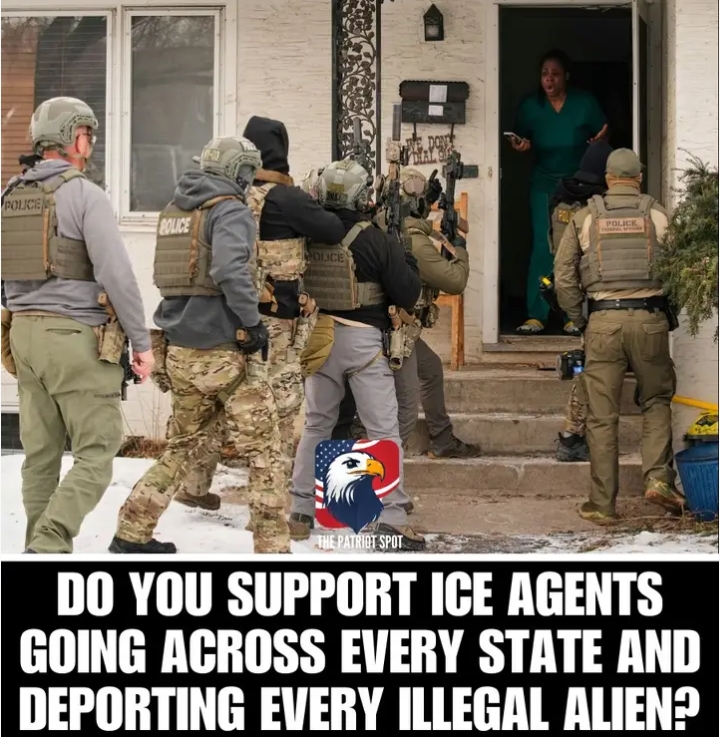
On January 7, 2026, 37 year old Renee Nicole Good, a U.S. citizen and mother of three, was shot and killed by a U.S. Immigration and Customs Enforcement (ICE) agent in Minneapolis, Minnesota.
The incident occurred during a highly controversial federal immigration enforcement operation that has since sparked nationwide protests, political debate, and sharply conflicting narratives about what actually happened.
The Incident: Conflicting Narratives.
According to multiple mainstream news reports and official documents:
Good was driving her SUV on a street in south Minneapolis when an ICE agent fired multiple shots into her vehicle, killing her.
Good was later pronounced dead at a hospital.
Federal authorities, including the Department of Homeland Security (DHS), called the shooting self-defense, claiming the ICE agent fired after Good’s vehicle was used in a way that threatened officers.
DHS officials described the event as an attempt by Good to “weaponize her vehicle.”
However, local authorities, video footage, and independent fact-checking challenge that account.
Minneapolis officials have said the footage does not clearly show Good posing a lethal threat, and some analyses suggest she was attempting to drive away from officers when she was shot.
Who Was Renee Nicole Good?
Good was identified by family and neighbors as a 37 years old Minneapolis resident.
Loved ones describe her as a compassionate person who cared about her children and community.
Some mainstream outlets note she had no clear history of violent protest activity, and family members have questioned the justification for the operation and the shooting.
Contradictions and Controversy.
Video evidence shared publicly has been central to the dispute:
Protests and independent video analyses circulated online show Good’s vehicle turning away from officers before shots were fired contradicting the federal description of an active attempt to run down an officer.
Other accounts indicate chaotic interactions between federal agents and bystanders, including disputes over whether Good’s vehicle ever made contact with officers.
The shooting also ignited sharp political polarization:
Supporters of ICE and federal enforcement argue the agent acted in self-defense under dangerous and unpredictable circumstances.
Critics—including local leaders, civil rights advocates, and Good’s family—say the shooting was unjustified, avoidable, and symptomatic of excessive force and lack of accountability.
Media and Political Reaction.
The incident has reverberated through national media and political discourse:
Some conservative commentators have referenced the case to highlight perceived threats to law enforcement and argue that federal agents acted appropriately — a perspective that featured in recent media debates, including on networks like CNN.
Others in the press, local government, and advocacy groups question the federal narrative and call for independent investigations, greater transparency, and accountability.
The FBI now leads the investigation, with Minnesota authorities expressing concern about access to evidence and a robust local inquiry.
What This Means for Public Discourse.
This shooting has become more than a single tragic event. It has:
Fuels debates over immigration enforcement, law enforcement use of force, and federal–local authority conflicts.
Highlighted the challenges of real-time commentary on complex, fluid incidents, where information evolves as video footage, official reports, and eyewitness accounts are reviewed.
Raised questions about how narratives are shaped in the media and political commentary especially when widely viewed footage and official statements do not fully align.
Looking Forward
The investigation into Good’s death continues, and the legal and public scrutiny will likely grow as more evidence including body-cam footage, agent testimony, and forensic analysis becomes available.
The case also underscores the importance of evidence-based reporting and careful examination of competing narratives when incidents of lethal force occur.

FAIRNESS FIGHT: The International Olympic Committee announcing a groundbreaking change to protect female athletes and women’s sports as a whole — a ban on biological males competing in women’s events.

Breaking News: Trump Administration Moves to Add President’s Signature to U.S. Currency in Unprecedented Shift

Afternoon Update | America… right now… in the middle of this afternoon… while most of us are on lunch break… Karoline Leavitt just finished facing every camera and every difficult question in the world.click the link below

President Trump’s signature will be added to future U.S. paper currency, the Treasury Department announced Thursday

Breaking News: First $100 Bills Bearing Trump and Bessent Signatures Set for June Release click the link below

Just In : U.S. INTERCEPTED UKRAINE MESSAGES OF PLOT TO ROUTE MONEY TO BIDEN CAMPAIGN

Just In : Here’s the Average Social Security Benefit at Ages 62 to 80 — What You Can Expect at Every Stage

BREAKING: U.S President Donald Trump Has Just Been Confirmed… See More

Just In: “NO ONE UNDERSTOOD WHY Donald Trump PAUSED HIS SPEECH… UNTIL THE NEXT MORNING.”CLICK. THE LINK BELOW

REALITY CHECK IN WASHINGTON: A tense exchange has sparked fresh debate over the true cost—and purpose—of recent escalation.

Breaking News:Millions of Americans Receive Social Security Payments Today — Here’s Who Qualifies for March 25 Disbursement
