
NEWS
Breaking News:Iran Protests Intensify as Authorities Move to Restrict Internet Access.

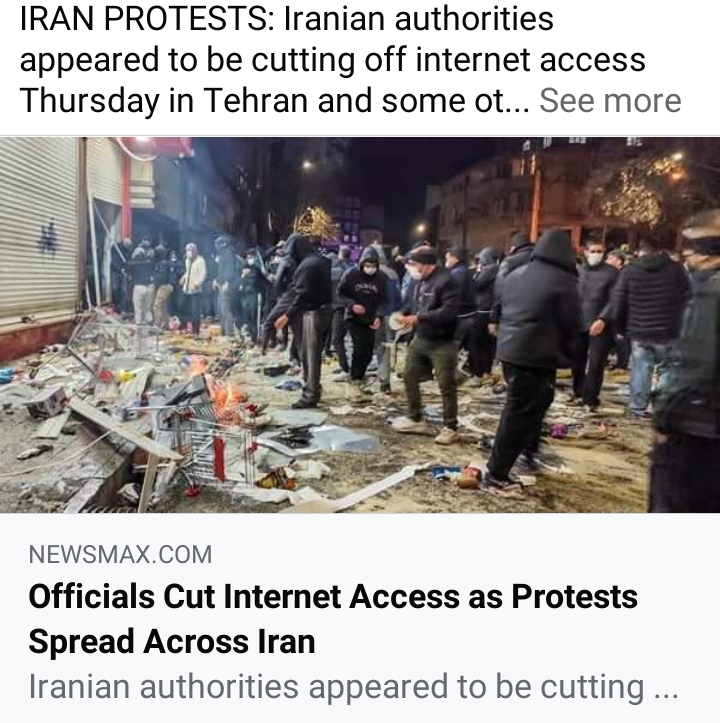
Iranian authorities appeared to sharply restrict internet access on Thursday in Tehran and several other regions, as widespread protests and anti-government demonstrations continued across the country.
The move, widely viewed as an attempt to curb the flow of information and hinder protest coordination, comes amid one of the most sustained periods of civil unrest Iran has faced in recent years.
Reports from residents, digital rights groups, and internet monitoring organizations indicated significant disruptions to mobile data services and popular social media platforms. Messaging apps and virtual private networks (VPNs), commonly used by Iranians to bypass state controls, were reportedly slowed or blocked entirely in some areas.
While the government did not immediately issue a formal announcement, similar tactics have been used during previous waves of unrest.
Protests Spread Nationwide
The demonstrations, driven by deep-seated frustration over political repression, economic hardship, and social restrictions, have spread beyond Tehran to cities and towns across multiple provinces.
Protesters have gathered in public squares, universities, and neighborhoods, chanting slogans critical of the government and calling for systemic change.
Security forces have been deployed in large numbers, and clashes have been reported between demonstrators and police.
Human rights organizations say dozens of protesters have been detained, while activists claim some have been injured during confrontations.
Iranian state media, however, has portrayed the demonstrations as limited and blamed “foreign interference” for the unrest.
Internet Shutdowns as a Tool of Control
Internet disruptions have become a familiar strategy for Iranian authorities during times of crisis.
By limiting access, the government aims to prevent protesters from organizing, sharing videos, and drawing international attention.
Critics argue that such shutdowns not only violate freedom of expression but also disrupt daily life, harming businesses, education, and emergency communications.
Digital rights advocates noted that Thursday’s restrictions appeared uneven, with some users retaining limited access while others experienced near-total blackouts.
This selective approach, they say, suggests an effort to control information without triggering the economic fallout of a complete nationwide shutdown.
International Reaction and Uncertainty Ahead.
The renewed unrest and reports of internet restrictions have drawn concern from the international community.
Several governments and human rights groups have called on Iranian authorities to respect the right to peaceful assembly and restore full internet access.
As protests continue, uncertainty remains over how the situation will evolve.
While the government has shown little willingness to concede to demonstrators’ demands, the persistence and geographic spread of the unrest signal a deep and ongoing challenge to Iran’s leadership—one that internet shutdowns alone may not be able to contain.

JUST BREAKING: Some Retirees to Receive Over $5,000 Monthly in Social Security by 2026 — Eligibility Criteria Revealed

¡Esta es la extraordinaria valentía de Irán 🇮🇷! 🔥 9:00 am: “Toda una civilización terminará esta noche”, dijo Trump. 9:10 a. m.: La gente común de Irán ha formado una cadena humana en el puente blanco. 🔥🔥 Si no tienen miedo a morir, no pueden ser derrotados. ¡Qué coraje increíble! 🔥

Pro-Iranian accounts on Twitter are flooding the platform tonight with AI-generated videos mocking Trump, including one showing him stepping off Air Force One waving a white flag after announcing a ceasefire deal critics say was so bad he appeared to negotiate with himself.

A major political shockwave just hit Washington as 24 members of Congress declare an EMERGENCY and demand the UNPRECEDENTED removal of President Trump from office.

BREAKING: Trump’s Shocking Revelation Sparks Viral Frenzy and Raises Questions About His Political Future

Is “getting the job done” more important than having a “nice” president?

Just In :Trump Sends Clear Message to Iran as B-52 Bombers Lift Off from UK Bases. See what happens next

Breaking News:Trump Suspends Planned U.S. Strikes on Iran for Two Weeks Amid Diplomatic Push. Full details here
Today I witnessed something because of Trump that I will never forget for the rest of my life. And that is exactly why I want to show you Trump’s real face today. Click here for full details

At a Monday press conference, Trump brought up past comments by North Korea’s Kim Jong Un about Joe Biden while discussing US troop deployment in South Korea.

Breaking Claim Sparks Concern: Viral Report Alleges Attack on U.S. Warships Near Strait of Hormuz. See what happens next
