
NEWS
BREAKING NEWS:TIME’S UP: U.S. Ends Temporary Protected Status for Somali Nationals, Forcing Thousands to Leave.

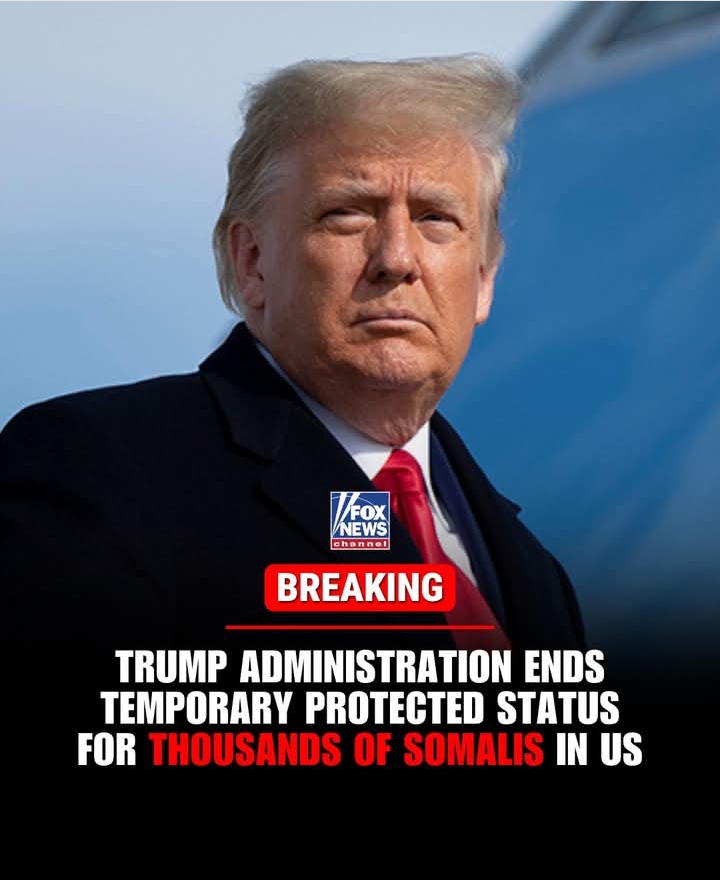
Thousands of Somali nationals living in the United States are facing an uncertain future after the Trump administration announced the termination of Temporary Protected Status (TPS) for Somalia, with the designation set to expire on March 17.
The decision means that Somali immigrants who relied on TPS to legally live and work in the U.S. must either secure another lawful immigration status or prepare to leave the country by the deadline.
Temporary Protected Status is granted to nationals of countries experiencing armed conflict, natural disasters, or other extraordinary conditions that make safe return difficult.
Somalia has held TPS designation for decades due to prolonged instability, militant violence, and humanitarian crises.
Advocacy groups argue that many of those conditions persist, warning that returning large numbers of people could place them at serious risk.
The Department of Homeland Security (DHS), however, said the decision reflects a reassessment of country conditions and aligns with the administration’s broader effort to scale back temporary immigration programs.
DHS officials emphasized that TPS was never intended to be permanent and that individuals affected have had years to seek alternative legal pathways.
The announcement comes amid continued Immigration and Customs Enforcement (ICE) operations in Minnesota, a state home to one of the largest Somali communities in the United States.
Federal authorities say enforcement activity has intensified following investigations into a large-scale fraud scheme that allegedly involved misuse of public funds by a network of individuals, some of whom are of Somali descent.
State and federal officials have stressed that the investigations and ICE actions are targeted at specific suspects and criminal conduct—not the broader Somali community.
Community leaders have echoed that message, warning against stigmatization and urging authorities to clearly separate criminal accountability from immigration policy.
Immigration advocates argue that linking the TPS termination to fraud investigations risks unfairly painting an entire immigrant population with a broad brush.
“TPS holders are workers, parents, and long-term residents who contribute to their communities,” said one advocacy group in a statement.
“Ending protections now will destabilize families and local economies.”
In Minnesota, community organizations and legal aid groups are rushing to provide guidance to affected individuals, helping them explore options such as asylum claims, family-based petitions, or other humanitarian relief.
Still, attorneys warn that options are limited for many, especially those who have lived in the U.S. for years under TPS but lack other qualifying status.
As the March 17 deadline approaches, pressure is mounting on Congress to consider legislative solutions that could provide permanent protections for long-term TPS holders.
Without action, thousands of Somali nationals may soon be forced to return to a country many have not seen in years—closing a chapter that has defined their lives in America for decades.

FAIRNESS FIGHT: The International Olympic Committee announcing a groundbreaking change to protect female athletes and women’s sports as a whole — a ban on biological males competing in women’s events.

Breaking News: Trump Administration Moves to Add President’s Signature to U.S. Currency in Unprecedented Shift

Afternoon Update | America… right now… in the middle of this afternoon… while most of us are on lunch break… Karoline Leavitt just finished facing every camera and every difficult question in the world.click the link below

President Trump’s signature will be added to future U.S. paper currency, the Treasury Department announced Thursday

Breaking News: First $100 Bills Bearing Trump and Bessent Signatures Set for June Release click the link below

Just In : U.S. INTERCEPTED UKRAINE MESSAGES OF PLOT TO ROUTE MONEY TO BIDEN CAMPAIGN

Just In : Here’s the Average Social Security Benefit at Ages 62 to 80 — What You Can Expect at Every Stage

BREAKING: U.S President Donald Trump Has Just Been Confirmed… See More

Just In: “NO ONE UNDERSTOOD WHY Donald Trump PAUSED HIS SPEECH… UNTIL THE NEXT MORNING.”CLICK. THE LINK BELOW

REALITY CHECK IN WASHINGTON: A tense exchange has sparked fresh debate over the true cost—and purpose—of recent escalation.

Breaking News:Millions of Americans Receive Social Security Payments Today — Here’s Who Qualifies for March 25 Disbursement
