
NEWS
Breaking News:Trump Announces China & Russia Can Buy Venezuelan Oil But Only Through the United States

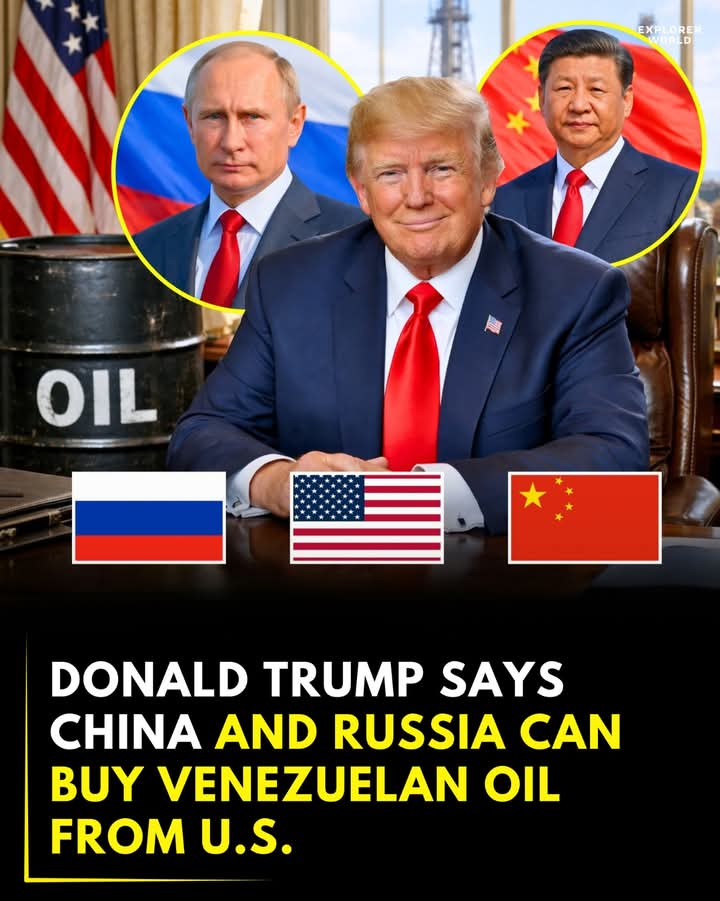
In a striking development with major implications for global energy markets and geopolitics, President Donald Trump has indicated that China and Russia could be permitted to purchase Venezuelan crude oil — but only if the transactions are routed through the United States.
This announcement underscores a broader U.S. strategy to assert control over Venezuelan oil exports as Washington expands its influence in Caracas and reconfigures longstanding alliances.
A New Energy Playbook
Under Trump’s direction, the U.S. is now positioning itself as the central gatekeeper for Venezuelan oil a dramatic shift from decades of direct supply ties between Caracas and major world buyers like China.
Officials have made it clear that any future sales — even to traditionally friendly partners such as China or Russia — must be mediated through U.S.-approved channels, essentially putting Washington in control of how and where Venezuelan crude is marketed.
This approach ties into recent moves to revive Venezuelan oil output and integrate it into global markets under U.S. oversight, following military and diplomatic pressure on the Maduro government.
The administration has framed the U.S. role as both manager and stabilizer of Venezuela’s flagship industry.
Supporters See Strategic Stability
Proponents of the policy argue this unconventional arrangement could deliver several benefits:
🛢 Stabilized global supply By controlling the flow of Venezuela’s massive crude reserves, the U.S. could help reduce volatility in international oil markets.
💰 Revenue management Proceeds from sales would be overseen by U.S.-controlled accounts, with the stated goal of channeling funds back into Venezuelan reconstruction and economic stabilization.
🇺🇸 Leverage in Diplomatic Conditioning sales on U.S. terms could serve as a bargaining chip in broader negotiations with Beijing and Moscow.
Administration officials emphasize that this is not about excluding China or Russia entirely, but about structuring energy commerce in a way that aligns with U.S. interests** and legal oversight.
Critics Warn of Diplomatic Backlash
Despite Washington’s framing, the policy is already drawing sharp criticism from analysts and foreign governments:
China and Russia, longstanding buyers and investors in Venezuela’s oil industry, could see this as an encroachment on their commercial interests and geopolitical footprint in the Western Hemisphere.
Observers warn that forcing major powers to channel purchases through the U.S. could introduce trade frictions or retaliation, complicating already tense relations.
* Some global energy experts argue the approach could disrupt established supply networks and inflate costs if buyers seek alternative sources to avoid U.S. intermediaries.
China has protested similar U.S. actions in Venezuela, denouncing them as interference — particularly in light of ongoing disputes over debt and secured oil-for-loan agreements that Caracas holds with Beijing.
A Redefinition of Oil Diplomacy
Trump’s announcement marks a bold recalibration in how the U.S. engages with not just Venezuela, but major global powers tied to its oil industry.
By channeling all oil commerce through Washington, the administration aims to:
Reinforce U.S. influence over one of the world’s largest proven oil reserves.
Leverage energy resources as a tool of foreign policy, not just commerce.
Ensure that global oil revenues align with U.S. economic and geopolitical objectives.
In a world where energy politics and great-power rivalry increasingly intersect, this move could have long-term ripple effects across international relations, trade patterns, and global energy security.
📊 What Comes Next: Analysts will be watching closely how Beijing and Moscow respond — and whether this unprecedented U.S. control over Venezuelan oil sales reshapes the broader balance of influence in Latin America and beyond.

The leader of the UK Conservative Party, Kemi Badenoch, says Britain should have voted against the UN resolution, which described slavery as the greatest crime against humanity and demanded slavery reparations from former colonial authorities.

FAIRNESS FIGHT: The International Olympic Committee announcing a groundbreaking change to protect female athletes and women’s sports as a whole — a ban on biological males competing in women’s events.

Breaking News: Trump Administration Moves to Add President’s Signature to U.S. Currency in Unprecedented Shift

Afternoon Update | America… right now… in the middle of this afternoon… while most of us are on lunch break… Karoline Leavitt just finished facing every camera and every difficult question in the world.click the link below

President Trump’s signature will be added to future U.S. paper currency, the Treasury Department announced Thursday

Breaking News: First $100 Bills Bearing Trump and Bessent Signatures Set for June Release click the link below

Just In : U.S. INTERCEPTED UKRAINE MESSAGES OF PLOT TO ROUTE MONEY TO BIDEN CAMPAIGN

Just In : Here’s the Average Social Security Benefit at Ages 62 to 80 — What You Can Expect at Every Stage

BREAKING: U.S President Donald Trump Has Just Been Confirmed… See More

Just In: “NO ONE UNDERSTOOD WHY Donald Trump PAUSED HIS SPEECH… UNTIL THE NEXT MORNING.”CLICK. THE LINK BELOW

REALITY CHECK IN WASHINGTON: A tense exchange has sparked fresh debate over the true cost—and purpose—of recent escalation.
