
NEWS
BREAKING NEWS:U.N. Forecast Sees U.S. Economic Growth Stabilizing After 2025 Slowdown.

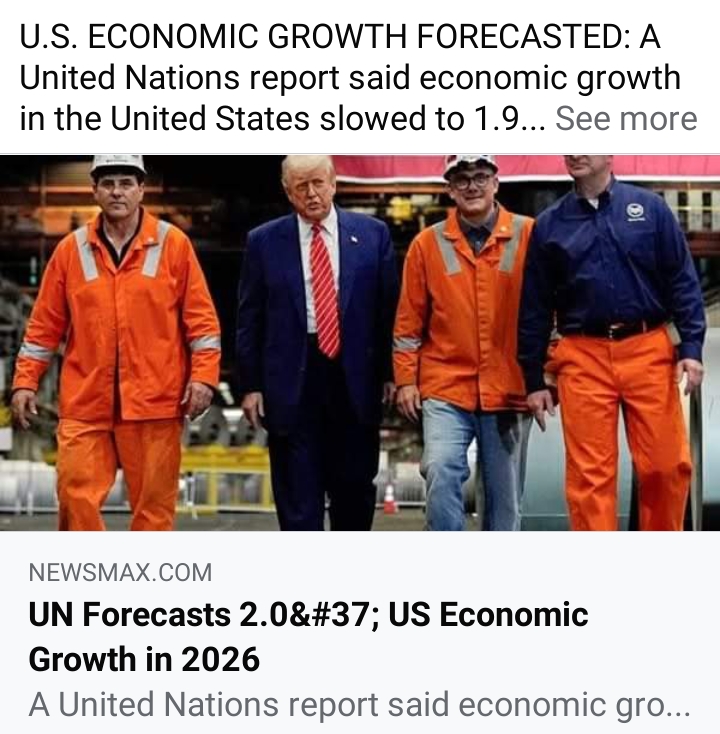
Economic growth in the United States is expected to stabilize and gradually improve over the next two years, according to a new report released by the United Nations.
The report noted that U.S. economic growth slowed to 1.9 percent in 2025, down from 2.8 percent in 2024, reflecting tighter financial conditions and lingering global uncertainties.
However, growth is forecast to edge up to 2.0 percent in 2026 and further to 2.2 percent in 2027.
The slowdown in 2025 was attributed to a combination of factors, including reduced consumer spending, easing post-pandemic momentum, and adjustments following earlier interest rate increases.
Despite these challenges, the U.N. emphasized that the U.S. economy has shown resilience, supported by a strong labor market and steady household demand.
Looking ahead, the report highlighted expansionary fiscal and monetary policies as key drivers of the expected rebound.
Increased government spending, targeted investment programs, and a more accommodative monetary stance are projected to help stimulate economic activity, encourage business investment, and sustain consumer confidence.
The U.N. also pointed to improving global conditions as a supportive factor.
Stabilizing supply chains, easing inflationary pressures, and recovering international trade are expected to benefit U.S. exports and industrial production.
At the same time, the report cautioned that risks remain, including geopolitical tensions, high public debt levels, and potential volatility in financial markets.
Economists note that while the projected growth rates are modest by historical standards, they suggest a soft landing rather than a sharp downturn.
Continued policy support, combined with productivity-enhancing investments in infrastructure and technology, could help maintain momentum over the medium term.
Overall, the U.N. forecast paints a cautiously optimistic picture for the U.S. economy, indicating that while growth has cooled, steady policy support and improving conditions may help keep the expansion on track through 2027.

JUST BREAKING: Some Retirees to Receive Over $5,000 Monthly in Social Security by 2026 — Eligibility Criteria Revealed

¡Esta es la extraordinaria valentía de Irán 🇮🇷! 🔥 9:00 am: “Toda una civilización terminará esta noche”, dijo Trump. 9:10 a. m.: La gente común de Irán ha formado una cadena humana en el puente blanco. 🔥🔥 Si no tienen miedo a morir, no pueden ser derrotados. ¡Qué coraje increíble! 🔥

Pro-Iranian accounts on Twitter are flooding the platform tonight with AI-generated videos mocking Trump, including one showing him stepping off Air Force One waving a white flag after announcing a ceasefire deal critics say was so bad he appeared to negotiate with himself.

A major political shockwave just hit Washington as 24 members of Congress declare an EMERGENCY and demand the UNPRECEDENTED removal of President Trump from office.

BREAKING: Trump’s Shocking Revelation Sparks Viral Frenzy and Raises Questions About His Political Future

Is “getting the job done” more important than having a “nice” president?

Just In :Trump Sends Clear Message to Iran as B-52 Bombers Lift Off from UK Bases. See what happens next

Breaking News:Trump Suspends Planned U.S. Strikes on Iran for Two Weeks Amid Diplomatic Push. Full details here
Today I witnessed something because of Trump that I will never forget for the rest of my life. And that is exactly why I want to show you Trump’s real face today. Click here for full details

At a Monday press conference, Trump brought up past comments by North Korea’s Kim Jong Un about Joe Biden while discussing US troop deployment in South Korea.

Breaking Claim Sparks Concern: Viral Report Alleges Attack on U.S. Warships Near Strait of Hormuz. See what happens next
