
NEWS
Breaking NewThe Silent Strike: How Venezuela Became the Chokepoint in a Hidden Economic War on the Kremlin.

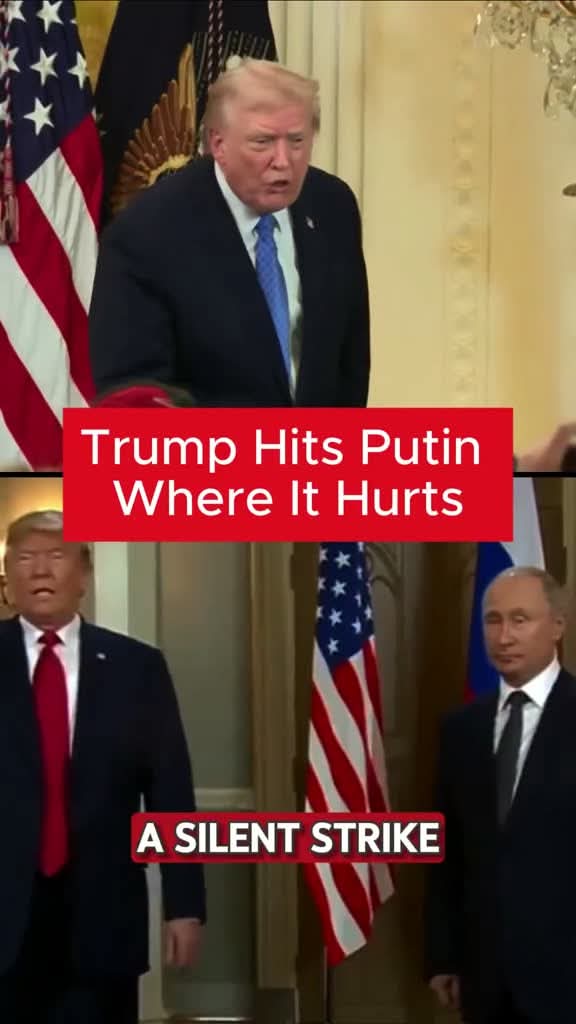
At first glance, the dramatic turn involving Venezuela appeared straightforward.
Nicolás Maduro in U.S. custody on narco-terrorism charges.
Venezuelan oil tankers blocked. Another chapter in Washington’s long confrontation with Caracas.
But that surface narrative misses the deeper, far more consequential story.
This was never just about Venezuela.
What unfolded may represent one of the most damaging economic blows to Russia since the war in Ukraine began—delivered without missiles, troops, or battlefield theatrics.
Instead, it struck where Moscow is most vulnerable: the shadow system keeping its war economy alive.
The Ghost Fleet That Kept Russia Afloat
Crippled by Western sanctions, Russia has spent years reinventing how it sells oil.
Unable to operate openly, the Kremlin constructed a vast shadow network—often referred to as a “ghost fleet.”
This system relies on:
* Unflagged or reflagged tankers
* Manipulated or erased shipping records
* Ship-to-ship transfers at sea
* Blended crude relabeled to hide its origin
Through this murky supply chain, Russian oil continued flowing to global markets, quietly generating the cash needed to sustain the Kremlin’s war machine.
And one of the most important hubs in that system was Venezuela.
Venezuela: More Than a Rogue State
Under Maduro, Venezuela was not merely a sanctioned petro-state—it functioned as a financial relay station.
Russian oil could move through Venezuelan channels, be blended with local crude, relabeled, and resold beyond the reach of formal oversight.
This network didn’t stop with Caracas.
It tied together Moscow, Tehran, and other sanctioned actors into a single ecosystem designed to bypass global restrictions.
As long as Venezuela remained operational, Russia had an escape valve.
Now that valve is under pressure.
—
Blocking Tankers, Choking Moscow
When the United States moved to block Venezuelan oil tankers, the action appeared—on paper—to target Maduro’s regime.
In reality, it struck at the heart of Russia’s sanctions-evasion architecture.
If Venezuelan exports stall:
Russian oil loses a key laundering route
Shadow shipments become riskier and costlier
Cash flows into Moscow tighten
Any state assisting Russia faces heightened exposure
The system depends on trust, deniability, and silence.
Disrupt one node, and the entire chain becomes unstable.
The Telling Silence from the Kremlin
The reaction—or lack of one—from Moscow speaks volumes.
President Vladimir Putin remained conspicuously silent.
But his spokesperson, Dmitry Peskov, suddenly broke tone, warning that the situation was “dangerous” and emphasizing that “Venezuela is our ally.”
That statement wasn’t about solidarity with Maduro.
It was about fear of exposure.
When laundering networks operate smoothly, they attract no attention. When they are threatened, even powerful regimes reveal their anxiety.
A New Kind of Pressure
Washington has since sharpened the message: countries that continue buying Russian oil while rejecting U.S. peace terms may face consequences.
Is this diplomacy?
Is it coercion?
Or is it something more calculated?
What’s unfolding looks less like traditional negotiation and more like economic suffocation—cutting oxygen rather than firing shots.
No tanks rolling.
No cities bombed.
No dramatic headlines.
Just:
Shadow fleets drying up
Transactions freezing
Backdoor routes slamming shut
The Invisible Battlefield
This is the war most people don’t see.
It doesn’t play out on maps or front lines, but in shipping logs, insurance markets, and tanker routes.
And it may prove more decisive than artillery.
If ghost oil stops moving, the question becomes unavoidable:
How long can the Kremlin fund a prolonged war?
This moment was not chaos.
It was not coincidence.
It was a silent strike—one that could reshape the global balance of power far faster than anyone expected.

JUST BREAKING: Some Retirees to Receive Over $5,000 Monthly in Social Security by 2026 — Eligibility Criteria Revealed

¡Esta es la extraordinaria valentía de Irán 🇮🇷! 🔥 9:00 am: “Toda una civilización terminará esta noche”, dijo Trump. 9:10 a. m.: La gente común de Irán ha formado una cadena humana en el puente blanco. 🔥🔥 Si no tienen miedo a morir, no pueden ser derrotados. ¡Qué coraje increíble! 🔥

Pro-Iranian accounts on Twitter are flooding the platform tonight with AI-generated videos mocking Trump, including one showing him stepping off Air Force One waving a white flag after announcing a ceasefire deal critics say was so bad he appeared to negotiate with himself.

A major political shockwave just hit Washington as 24 members of Congress declare an EMERGENCY and demand the UNPRECEDENTED removal of President Trump from office.

BREAKING: Trump’s Shocking Revelation Sparks Viral Frenzy and Raises Questions About His Political Future

Is “getting the job done” more important than having a “nice” president?

Just In :Trump Sends Clear Message to Iran as B-52 Bombers Lift Off from UK Bases. See what happens next

Breaking News:Trump Suspends Planned U.S. Strikes on Iran for Two Weeks Amid Diplomatic Push. Full details here
Today I witnessed something because of Trump that I will never forget for the rest of my life. And that is exactly why I want to show you Trump’s real face today. Click here for full details

At a Monday press conference, Trump brought up past comments by North Korea’s Kim Jong Un about Joe Biden while discussing US troop deployment in South Korea.

Breaking Claim Sparks Concern: Viral Report Alleges Attack on U.S. Warships Near Strait of Hormuz. See what happens next
