
NEWS
BREAKING: U.S. Pressure Takes Effect as Venezuelan Oil Ships Turn Back at Sea ;

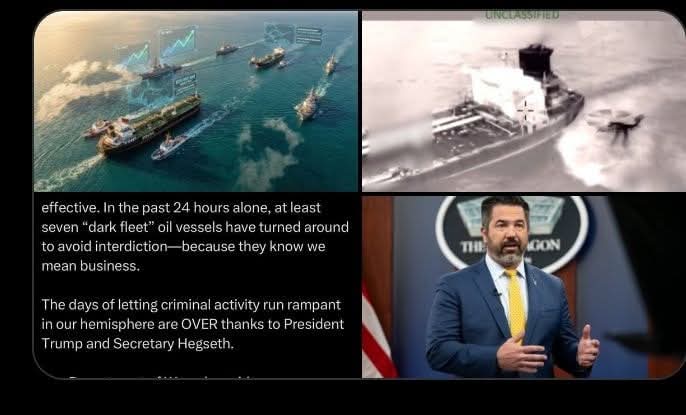
BREAKING: U.S. Pressure Takes Effect as Venezuelan Oil Ships Turn Back at Sea .
In a dramatic escalation of U.S. actions against Venezuela’s vital oil sector, reports from multiple international outlets show that U.S. pressure is forcing Venezuelan oil tankers to reroute or turn back at sea marking a turning point in Washington’s campaign to curb Caracas’ crude exports and enforce sanctions more aggressively.
Over recent weeks, the U.S. government has stepped up a coordinated maritime operation aimed at disrupting Venezuela’s oil export lifeline a cornerstone of the struggling nation’s economy.
The strategy appears to be working: several Venezuelan-linked vessels have stopped departures or changed course rather than risk interception, a sign of mounting concern among global shippers navigating tightening sanctions enforcement.
U.S. Military and Coast Guard Actions
The U.S. Coast Guard and military forces have played a central role in the crackdown, boarding and seizing tankers in the North Atlantic and Caribbean Sea that Washington says are operating in defiance of sanctions.
Most recently, U.S. forces captured the tanker Olina the fifth such vessel seized under the intensified campaign—after pre-dawn operations in Caribbean waters.
Earlier interceptions included a Russian-flagged tanker known as Marinera and another vessel in international waters, underscoring the broad reach of U.S. enforcement.
These operations have been described by U.S. officials as essential to stopping “illicit oil trade networks” that generate revenue for the Venezuelan government and allied groups.
Shipping Reroutes and Export Slowdown
Satellite tracking and maritime data show that at least several large crude carriers and tankers initially bound for Venezuelan ports have made U-turns or delayed departure effectively avoiding international waters where U.S. interdictions have taken place.
Many shipowners are reportedly reevaluating their routes to avoid seizures, highlighting how pressure at sea is reshaping commercial decisions.
The heightened enforcement has almost brought Venezuelan oil exports to a standstill outside of a handful of authorized shipments, such as those chartered by U.S. companies under special agreements.
Venezuelan state oil company PDVSA claims the slowdown has also coincided with cyber disruptions at its facilities, contributing to export paralysis.
Economic Ripple Effects
The squeeze on crude exports is already having economic consequences inside Venezuela.
The country’s currency has plunged sharply on black markets, and hyperinflation fears have resurfaced as foreign currency inflows shrink due to limited oil trade.
Observers say this deepening financial stress adds to pressure on Venezuela to negotiate with Washington or face prolonged economic isolation.
Meanwhile, European, Russian, and Chinese officials have criticized U.S. interventions as potential breaches of maritime law and free-trade principles, raising concerns about international norms and escalating geopolitical tensions.
What This Could Mean Going Forward
The U.S. campaign against Venezuelan oil shipments isn’t just a sanctions story—it could have far-reaching implications for:
Global energy markets as Venezuela holds some of the world’s largest proven oil reserves.
Geopolitical alignments especially with countries opposing U.S. enforcement actions.
Regional stability, given Venezuela’s economic collapse and political schisms.
As ships continue to avoid sanctioned routes and U.S. operations persist, analysts are debating whether this is the real turning point in Venezuela’s oil industry—or just the beginning of a prolonged struggle over one of the world’s most strategically important resources.
👉 Is this the moment Venezuela’s oil era changes forever? Comment your thoughts below!

Breaking News: Several States to Send Local Stimulus Checks on Wednesday, Feb. 25: What Payments Are Going Out and Who Qualifies

61% of Americans And 30% of Republicans Say Trump Is Losing It

Breaking News: Nation Prepares for President Trump’s State of the Union Address Tomorrow Night

President Donald J. Trump signs a proclamation declaring February 22, 2026, as National Angel Family Day.

Breaking News: $1,500,000,000 Cartel Network Exposed in Minneapolis — 3.25 Tons Seized, 2 Judges Arrested

FBI & ICE STORM Pennsylvania Judge’s Ranch — Secret Tunnel Found & 89 Missing Cases Linked

Will Donald Trump’s Presidency Be Remembered as Once-in-a-Generation?

Kash Patel Pushes Back Against Media Criticism, Defends Record and Motives

VANCE-RUBIO 2028: THE IRON TITAN TICKET THAT SEALS TRUMP’S REVOLUTION FOREVER — REBUILDING THE AMERICAN INDUSTRIAL TITAN, CRUSHING GLOBAL RIVALRY, AND LAUNCHING A DECADE OF UNDISPUTED WORLD DOMINANCE

The era of the “unlimited welfare state” for noncitizens is officially coming to an end as the Trump administration implements the most significant benefit reforms in decades.

Trump Says “If We Didn’t Win the Election, Our Nation Would Be Destroyed
