
NEWS
Breaking:Inside the Tech War: Iran’s New Military Technologies Challenge U.S. Powers. See more

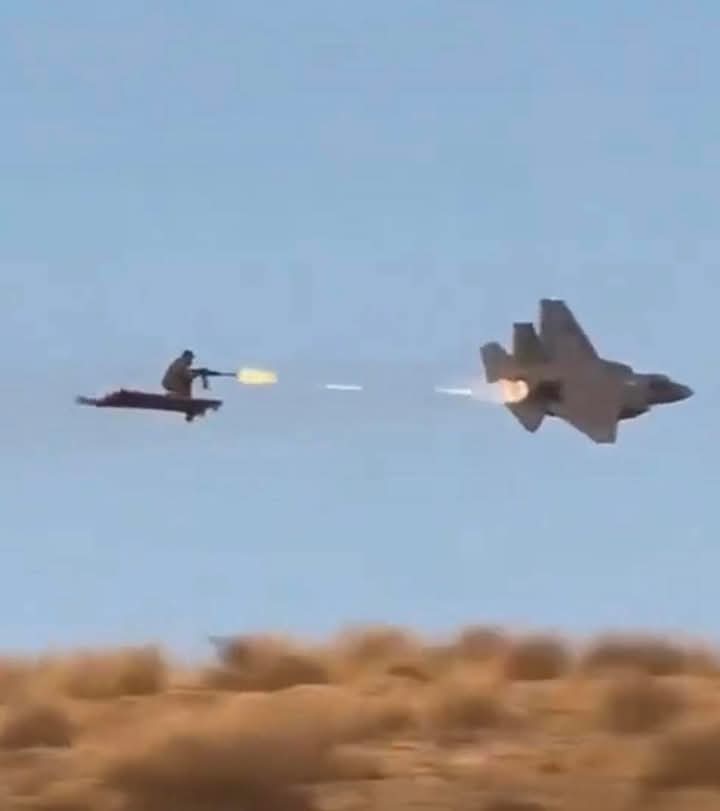
The conflict between Iran and the United States is increasingly becoming a battle not only of armies, but of advanced technology.
Military analysts say the latest clashes show how modern warfare is being reshaped by artificial intelligence, drones, cyber warfare, and electronic attacks.
One of the most notable developments is Iran’s heavy reliance on low-cost drone swarms.
Tehran has reportedly launched large numbers of unmanned aerial vehicles—many from the well-known Shahed drone family—to target military bases and strategic sites.
These drones are relatively cheap compared to traditional missiles, but when deployed in large numbers they can overwhelm sophisticated defense systems and dramatically increase the cost of interception for the United States.
Experts describe this strategy as “asymmetric warfare.”
Instead of matching the United States weapon for weapon, Iran uses smaller, cheaper systems that can still cause disruption or force expensive defensive responses.
Missile and Drone Innovations Iran has also introduced newer missile systems and upgraded drone technology in recent years.
Some systems feature improved navigation and guidance technologies, allowing them to strike targets with greater precision.
For example, newer ballistic missiles use advanced guidance systems that combine inertial navigation with electro-optical sensors to improve accuracy.
In addition, Iranian forces have experimented with launching large numbers of drones simultaneously a tactic known as drone swarm warfare designed to overwhelm air defense networks and radar systems.
Electronic and Cyber Warfare
Another emerging battlefield is cyberspace.
Both sides are believed to be using cyber tools to disrupt communications, disable weapons systems, and interfere with targeting technologies.
Electronic warfare tactics such as signal jamming and GPS interference can potentially confuse drones or missiles and force them off course.
These tactics highlight how modern conflicts increasingly extend beyond physical battlefields into digital networks and satellite systems.
A High-Tech Arms Race
Interestingly, the technological competition is not one-sided.
The U.S. military is also deploying cutting-edge tools such as artificial intelligence systems that analyze massive volumes of data from satellites, sensors, and surveillance platforms to identify targets faster than human analysts could.
Some reports say these AI systems can suggest and prioritize potential targets in real time, dramatically shortening the time between identifying a threat and launching a strike.
The Future of Warfare
The Iran–U.S. confrontation illustrates how modern warfare is rapidly evolving into a high-tech contest involving AI, drones, satellites, and cyber capabilities.
Analysts believe that the technologies being tested in this conflict could shape the way wars are fought in the future.
Rather than relying solely on tanks, fighter jets, and traditional missiles, nations are now investing heavily in autonomous systems, data-driven targeting, and electronic warfare.
As the conflict continues, the technological race between Iran and the United States may become just as significant as the military confrontation itself—potentially redefining the rules of warfare for decades to come.

Just In: Millions of Americans to Receive Social Security Payments on April 1, 2026 — Eligibility Details Revealed

Just In: New York Governor ERUPTS in Fury After Citigroup Announces Massive Move of 11,000 Jobs OUT of New York! York.Click the link to read the full explosive story, In a devastating

Governor Of California Goes BERSERK As Playboy LEAVES California For Miami After 70+ Years

Just In: FLORIDA MAN RISING: Vice President JD Vance remains the clear frontrunner in a hypothetical 2028 election, but Secretary of State Marco Rubio is on the rise, finishing second in the Republican nomination straw poll at CPAC.

U.S. F-15 First Strike — Cartel Drug Lab Wiped Off the Map in Seconds see what happens next

Just 6 Minutes Ago! Millions of US Troops Knelt and Surrendered—Look What Happened!

JUST IN : Here’s Who Will NOT Receive a Social Security Payment on Wednesday April 1 2006

Just 1 Minute Ago! 100,000 US Troops Surrendered and Fled—Look What Happened!

Just In: Donald Trump SLAMS Pope Leo XIV: “Sit down — you’re just a religious figure, mind your own business!” — But Pope Leo XIV’s response stunned the audience.full details

BREAKING: White House Press Secretary Karoline Leavitt said Iran will no longer have the ability to threaten the United States, signaling strong confidence from the administration about the impact of ongoing operations.

White No Kings protester tries to explain why there aren’t many Black people there… and it goes off the rails: She says:w
