
NEWS
Breaking:Japan Pulls Back From Trump’s “Biggest Deal Ever” — Asia Reacts as Trade Shockwaves Spread. Read the full details

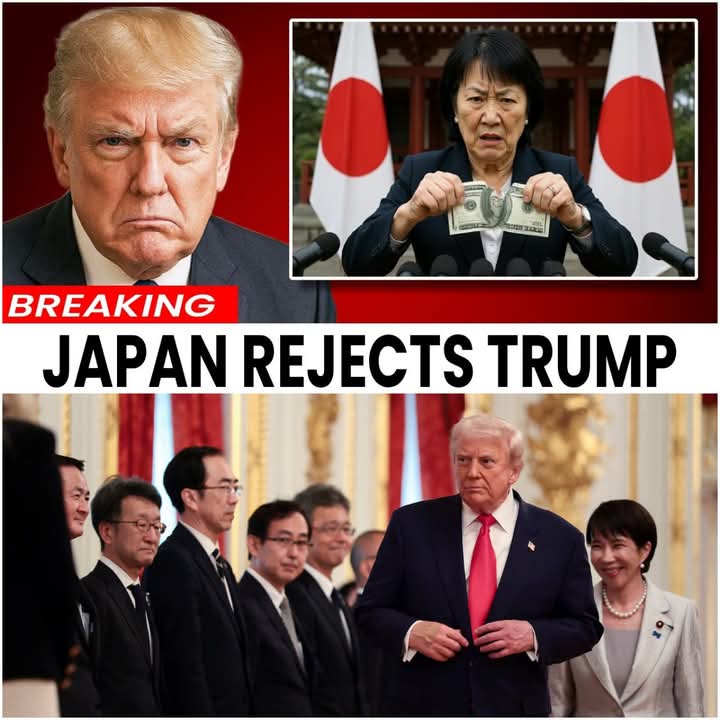
A deal once hailed as historic is now facing unexpected turbulence.
After being promoted by U.S. officials as the “biggest deal ever,” a proposed investment framework between the United States and Japan is showing visible cracks.
Leaders in Tokyo have quietly but firmly signaled limits on how Japanese funds would be controlled and deployed a move that’s sending ripples across the Asia-Pacific and raising fresh questions about the future of economic alliances.
What Was Supposed to Be a Landmark Agreement
The Trump camp framed the arrangement as a breakthrough a bold investment structure designed to deepen economic ties, strengthen supply chains, and counterbalance regional rivals.
But officials in Japan appear to be drawing clear boundaries.
According to analysts, Tokyo is wary of any framework that might compromise economic sovereignty or place excessive leverage in foreign hands.
In an era where trade is power, control matters.
Tariffs, Trust, and Tension
At the center of the debate is former President Donald Trump and his long standing hardline tariff strategy.
Supporters argue his approach forces stronger concessions from partners.
Critics say it strains relationships and introduces instability into otherwise strategic alliances.
Japan one of Washington’s most important Indo-Pacific allies has historically balanced cooperation with caution.
This latest hesitation underscores a deeper issue:
Are aggressive trade tactics strengthening alliances… or quietly eroding trust?
Asia Is Watching Closely
From Seoul to Singapore, policymakers are observing carefully. The Asia-Pacific region has become the focal point of global economic competition.
Investment flows, semiconductor supply chains, defense partnerships — all are deeply interconnected.
If Tokyo is signaling limits, it could influence how other regional powers approach negotiations with Washington in the future.
The Bigger Question
This episode is no longer just about one agreement.
It reflects a broader shift in global trade dynamics:
Are tariff-heavy negotiations sustainable long-term?
Will allies demand more balanced frameworks?
Is economic nationalism reshaping global partnerships?
The “biggest deal ever” may not be collapsing but it’s clearly evolving.
And as Japan recalibrates its stance, the message across Asia is unmistakable: even close allies are prioritizing sovereignty in an increasingly competitive world.
The next chapter in U.S.–Asia trade relations may depend not just on bold promises — but on trust, flexibility, and shared control.
Stay tuned. 🌏

WAIT… Today I am forced by my own heart to tell you something about President Trump’s Because these two photos just broke something open inside me. And I cannot keep it to myself. Click the link below

Something unusual is happening across the U.S… and it’s getting harder to ignore.

Seattle Mayor ADMITS “I Have Zero Experience” As The City Collapses Into Total Chaos

Breaking News: White House Confirms Passing of Beloved Former President, Nation Mourns a Historic Legacy. Tap for the full details

Duty Calls Current Status of Barron Trump (March 2026):No Military Service: As of March 2026, Barron Trump has not enlisted in the U.S. Military.

Starbucks CEO Brian Niccol Responds to NEW YORK After Shutting Down 42 Locations in the City – “We Had No Choice!” Tap the link to read exactly what the CEO said to New York

Just In : Israel STRIKES BACK – over 800 IDF air sorties, 16,000 munitions, and 5,000 terror targets exposed.read the full details

Trump really didn’t expect that his move to strike Iran would end up impacting his own country

Well… the experts are saying it out loud now. On CNN this morning: Iran would win.

Just In: Trump Signs Sweeping Executive Order to Tighten U.S. Election Security. See what happens next

2 minutes ago! Iran’s newest nuclear missile was launched, see what happened!
