
NEWS
BREAKING:Trump Frames Iran Strikes as ‘Fight for Freedom,’ Says Legacy Should Center on Liberation of Iranian People. Read more for details.

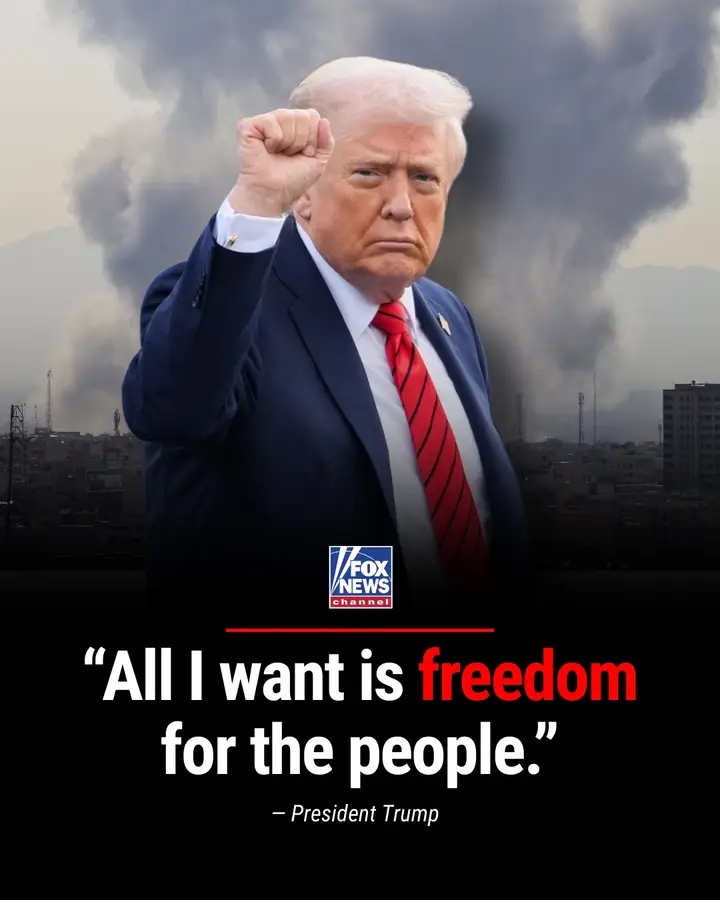
President Donald Trump said he hopes his legacy regarding recent military strikes and his broader stance toward Iran will be defined by what he calls a “fight for freedom” for the Iranian people.
Speaking about his administration’s policy approach, Trump indicated that the objective behind the strikes and his vocal opposition to Tehran’s leadership is not solely strategic or military, but ideological.
He argued that U.S. actions are intended to weaken what he describes as an oppressive regime while empowering ordinary Iranians who, in his view, have long been denied political and economic freedoms.
Trump has repeatedly criticized Iran’s ruling establishment, asserting that its policies destabilize the Middle East and suppress domestic dissent.
By tying his legacy to the idea of freedom, he signaled that he wants history to remember his administration’s actions as aligned with democratic aspirations rather than geopolitical rivalry alone.
The president’s comments come amid heightened tensions between Washington and Tehran.
Analysts note that discussions of regime change represent a significant escalation in rhetoric, as official U.S. policy in recent decades has often focused on behavioral change rather than outright transformation of Iran’s government.
Supporters of Trump’s stance argue that sustained pressure, including military deterrence and economic sanctions, is necessary to counter Iran’s regional influence and support the rights of its citizens.
Critics, however, warn that regime-change narratives can lead to prolonged instability and unintended consequences, pointing to historical precedents in the region.
For many Iranians, the situation remains complex.
While there have been periodic protests and calls for reform within the country, external intervention has historically been viewed with caution by segments of the population.
As the debate continues, Trump’s framing of the issue as a “fight for freedom” underscores the broader ideological lens through which he views U.S. foreign policy — one that blends national security concerns with an appeal to democratic principles.
Whether that framing ultimately shapes his foreign policy legacy will depend on both developments in Iran and the long-term regional impact of U.S. actions.

BREAKING: President Trump just ended the Cabinet meeting with a VERY bad warning for useless American “allies”

JUST IN: Donald Trump said Iran has formally agreed they will never have a Nuclear Weapon.

Trump is defunding the TSA until Congress restricts vote by mail.

NEWS POLL: President Trump’s approval rating dipped to 41% in March, and 59% of registered voters now disapprove of him — the highest disapproval of either of his terms.

Speaker Mike Johnson has the right idea. While hardworking Americans endure endless TSA lines stretching through airport terminals, the vote tally poster should be enlarged and displayed prominently in every single one.

Breaking News: Senator Cory Booker just let the truth slip out. While railing against the SAVE America Act, he warned that requiring proof of U.S. citizenship for federal voter registration would shrink the voter rolls by 5 to 10 percent.

Just In : Trump HUMILIATED as Security Guards DRAG Him Out of Mueller Funeral Live On Camera. see what happens next

Breaking News: Trump Drops Hammer on Iran: 15 Non-Negotiable Demands to End the Middle East Mess see the full details

Breaking News: Fox News Reports Update Involving Former President Joe Biden

BREAKING: Trump Reportedly Fell While Boarding Air Force One as Doctor Allegedly Hints at a Hidden Diagnosis “HE HAS FALLEN AGAIN!”click here to see what happens next

Breaking News: EXPLOSIVE: Trump Goes BALLISTIC After Pope Leo XIV Exposes His 1970 Wharton IQ Test LIVE — “Genius?” Trump Fires Back! Click here
