
NEWS
BREAKING:Trump Signs New Tariff Order Targeting Russia-Linked Security Threats. Read more.

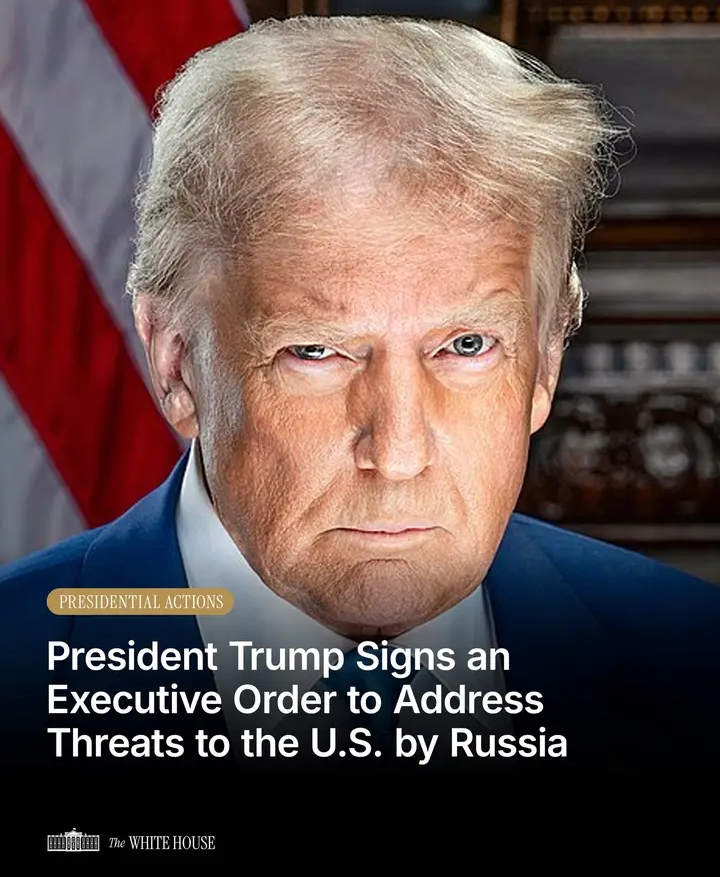
In a move aimed at reinforcing U.S. national security and reshaping global trade dynamics, President Donald J. Trump yesterday signed a new Executive Order modifying tariffs tied to threats linked to the Government of the Russian Federation.
The order, signed on February 6, 2026, builds on earlier emergency measures introduced in response to Russia’s actions against Ukraine and broader concerns over its impact on U.S. national security and foreign policy.
According to the White House, the decision is part of an ongoing effort to counter what officials describe as “an unusual and extraordinary threat” posed by the Russian government.
A key component of the new directive focuses on tariff adjustments involving India.
Previously, the United States had imposed an additional 25% duty on certain imports from India because of its continued importation of Russian oil.
However, the administration announced that India has now taken “significant steps” to address U.S. security concerns, including committing to halt direct or indirect imports of Russian oil and expanding long-term defense cooperation with Washington.
As a result, the Executive Order eliminates the extra 25% tariff on Indian goods, effective February 7, 2026, marking a notable shift in trade policy.
U.S. officials emphasized that the move reflects India’s alignment with American national security, foreign policy, and economic priorities.
Despite easing duties on India, the administration made clear that monitoring will continue.
The Department of Commerce, alongside other federal agencies, will track whether India resumes importing Russian oil.
Should that occur, the White House retains the option to reimpose tariffs or take further economic action.
The order underscores the Trump administration’s broader strategy of using tariffs and trade leverage as tools of geopolitical influence—rewarding allies who align with U.S. security objectives while maintaining pressure on governments viewed as threats.
With tensions surrounding Russia still shaping global diplomacy and energy markets, the new tariff adjustment signals Washington’s continued readiness to use economic policy as a central pillar of its national security approach.

Afternoon Update | America… right now… in the middle of this afternoon… while most of us are on lunch break… Karoline Leavitt just finished facing every camera and every difficult question in the world.click the link below

President Trump’s signature will be added to future U.S. paper currency, the Treasury Department announced Thursday

Breaking News: First $100 Bills Bearing Trump and Bessent Signatures Set for June Release click the link below

Just In : U.S. INTERCEPTED UKRAINE MESSAGES OF PLOT TO ROUTE MONEY TO BIDEN CAMPAIGN

Just In : Here’s the Average Social Security Benefit at Ages 62 to 80 — What You Can Expect at Every Stage

BREAKING: U.S President Donald Trump Has Just Been Confirmed… See More

Just In: “NO ONE UNDERSTOOD WHY Donald Trump PAUSED HIS SPEECH… UNTIL THE NEXT MORNING.”CLICK. THE LINK BELOW

REALITY CHECK IN WASHINGTON: A tense exchange has sparked fresh debate over the true cost—and purpose—of recent escalation.

Breaking News:Millions of Americans Receive Social Security Payments Today — Here’s Who Qualifies for March 25 Disbursement

News Update: Social Security Payments Scheduled for March 25, 2026 — Who Qualifies and What to Expect

BREAKING: President Trump just ended the Cabinet meeting with a VERY bad warning for useless American “allies”
