
NEWS
BREAKING:Trump’s Iran War Rhetoric Echoes Past U.S. War Justifications, Raising Alarms Over Familiar Script. Read more details.

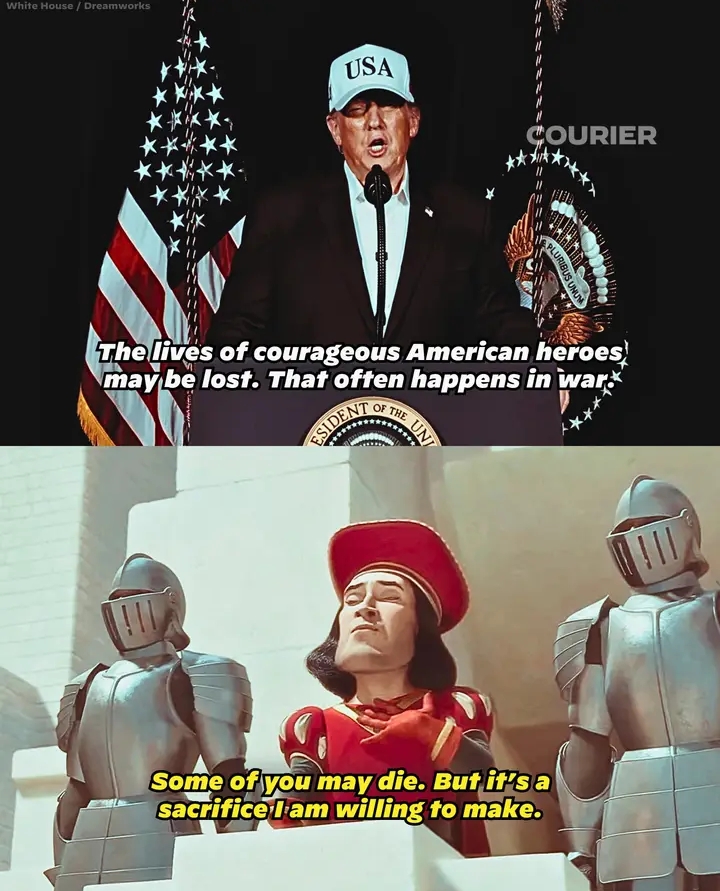
President Donald Trump’s recent statements about launching major military action against Iran have drawn immediate comparisons to historical U.S. war rhetoric, with critics and analysts noting that his framing bears striking resemblance to past justifications for military intervention — particularly those surrounding the 2003 Iraq War.
In addressing the nation and the world, Trump described the offensive, dubbed Operation Epic Fury, as a necessary measure to eliminate what he called “imminent threats” from Iran’s regime, including nuclear ambitions and regional destabilization.
His remarks paired stark military warnings with emotionally charged appeals to freedom and liberation for the Iranian people.
However, many observers have pointed out that the language used — framing an adversarial regime as an existential threat and positioning military action as the only viable path to safety and freedom — sounds eerily familiar to how U.S. leaders justified the invasion of Iraq nearly a quarter-century ago.
Then-President George W. Bush employed warnings about “grave danger” and alleged weapons of mass destruction to garner support for a conflict that later sparked years of debate and controversy.
Critics argue that drawing on this historical playbook — emphasizing crisis narratives, existential threats, and the moral imperative of intervention — risks repeating past mistakes where the foundational premises for war were later questioned.
The similarity in rhetoric has been cited in discussions of Trump’s recent State of the Union address and subsequent military announcements, where the threat from Iran was depicted in stark, uncompromising terms that left little room for diplomacy or nuanced analysis.
Supporters of the president counter that Trump’s strong language reflects the seriousness with which the U.S. views Iranian activities, including its missile development and alleged regional influence.
They assert that firm rhetoric and decisive action are necessary to deter future threats and protect both American interests and allies in the Middle East.
International response, however, has been mixed.
Allies and global institutions have reiterated calls for restraint and adherence to international law, even as military operations unfold.
Detractors worry that invoking familiar war narratives — particularly those that previously led to prolonged conflict — may undermine efforts to seek peaceful resolution and weigh heavily on global stability.
As debate continues over the legitimacy and long-term strategy of the current campaign, the echoes of past U.S. war rhetoric underscore the profound challenges and controversies that accompany decisions to engage in large-scale military action.
Whether history ultimately judges these statements and actions as necessary defense or a repetition of past missteps remains a central question in both domestic and international discussions.

REALITY CHECK IN WASHINGTON: A tense exchange has sparked fresh debate over the true cost—and purpose—of recent escalation.

Breaking News:Millions of Americans Receive Social Security Payments Today — Here’s Who Qualifies for March 25 Disbursement

News Update: Social Security Payments Scheduled for March 25, 2026 — Who Qualifies and What to Expect

BREAKING: President Trump just ended the Cabinet meeting with a VERY bad warning for useless American “allies”

JUST IN: Donald Trump said Iran has formally agreed they will never have a Nuclear Weapon.

Trump is defunding the TSA until Congress restricts vote by mail.

NEWS POLL: President Trump’s approval rating dipped to 41% in March, and 59% of registered voters now disapprove of him — the highest disapproval of either of his terms.

Speaker Mike Johnson has the right idea. While hardworking Americans endure endless TSA lines stretching through airport terminals, the vote tally poster should be enlarged and displayed prominently in every single one.

Breaking News: Senator Cory Booker just let the truth slip out. While railing against the SAVE America Act, he warned that requiring proof of U.S. citizenship for federal voter registration would shrink the voter rolls by 5 to 10 percent.

Just In : Trump HUMILIATED as Security Guards DRAG Him Out of Mueller Funeral Live On Camera. see what happens next

Breaking News: Trump Drops Hammer on Iran: 15 Non-Negotiable Demands to End the Middle East Mess see the full details
