
NEWS
BREAKING:U.S. Admiral’s Early Exit Sparks Controversy Over Deadly Caribbean Military Strikes.

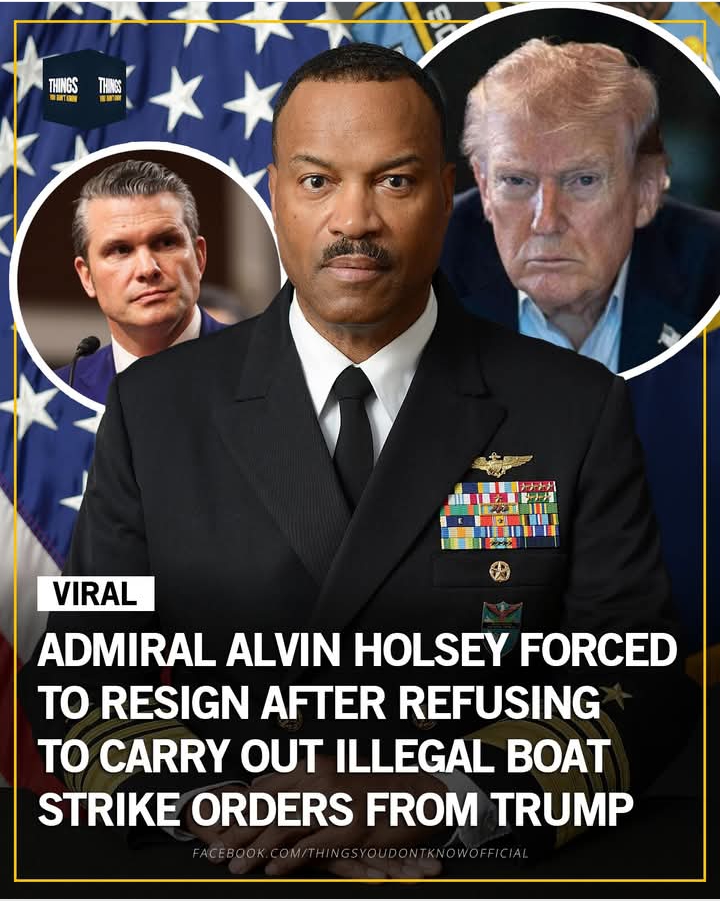
The abrupt retirement of Alvin Holsey, a 37-year U.S. Navy veteran and the first Black commander of U.S. Southern Command, has ignited controversy and raised serious questions about the conduct and legality of recent U.S. military operations in the Caribbean.
Holsey, who assumed leadership of Southern Command less than a year ago, stepped down two years earlier than expected following mounting tensions with U.S. Defense Secretary Pete Hegseth.
His departure came amid disagreements over a series of aggressive strikes targeting suspected drug-trafficking vessels near Venezuela.
According to multiple reports, Holsey had expressed concerns about the legality and scope of the operations, particularly the use of lethal force without clear congressional authorization or established rules of engagement.
These concerns reportedly placed him at odds with civilian leadership pushing for a more forceful military approach.
The strikes themselves have drawn international scrutiny. U.S. military actions in the region have resulted in dozens of deaths across multiple operations targeting suspected drug boats, with critics arguing that the campaign blurs the line between law enforcement and warfare.
Some lawmakers and legal experts have warned that such actions could violate both domestic and international law.
Holsey’s exit followed a tense internal dispute that culminated in a high-level Pentagon meeting in October 2025, where he offered to resign.
His retirement was formally announced shortly afterward, with officials providing little public explanation at the time.
The situation has since fueled broader debate in Washington.
Members of Congress have called for greater oversight and transparency regarding the military campaign, particularly as reports of civilian casualties and controversial directives continue to surface.
Supporters of the administration argue that the strikes are necessary to combat drug trafficking networks that threaten U.S. security.
However, critics maintain that the strategy risks setting a dangerous precedent by expanding military authority without sufficient legal backing.
Holsey’s departure underscores a deeper divide within the U.S. defense establishment—between adherence to legal constraints and the push for aggressive action in addressing transnational threats.
As investigations and political scrutiny intensify, the controversy is likely to remain at the center of national security discussions in the months ahead.

BREAKING:UK Grants U.S. Limited Access to Bases for Hormuz Operations Amid Rising Energy Crisis. Click the link for full detail.

BREAKING:Immigration, Power, and Pressure: Trump’s Airport Enforcement Threat Raises New Questions.

BREAKING:Viral Claim of U.S. Aircraft Carrier Downing Sparks Alarm — But Evidence Remains Unverified.

SHOCKING:Trump Issues 48-Hour Ultimatum to Iran, Threatens Strikes on Power Plants Over Hormuz Crisis.

BREAKING:U.S. Admiral’s Early Exit Sparks Controversy Over Deadly Caribbean Military Strikes.

BREAKING:Israel Confirms Killing of Iran’s Intelligence Minister Esmaeil Khatib in Targeted Airstrikes.

Breaking News: POLITICAL EARTHQUAKE: 47 REPUBLICANS BREAK RANKS AS TRUMP IMPEACHMENT SURGES TO 212 VOTES

Update: Simulation Chaos: Viral ARMA 3 Scenario Falsely Claims Destruction of U.S. Warships in Strait of Hormuz

Breaking News: Trump Breaks Down in Tears, Urges World to Stop Iran’s Attacks March 20, 2026

NEWSJust In: 2 Mins Ago! Sign from GOD? Biggest Tragedy JUST Happened in The USA! The World is Shocked and Scared Read the full story here:

Just In: 2 Mins! End Is Near? Biggest Tragedy JUST Happened in the USA! The Whole World is Shocked and Scared It happened fast—too fast for anyone to fully process,FULL DETAILS ABOUT BIGGEST TRAGEDY IN THE LINK BELOW
