
NEWS
Hot updates:Trump Warns Colombia’s President Petro to “Watch His A—,” Escalating Rhetoric Stirs Diplomatic Tension

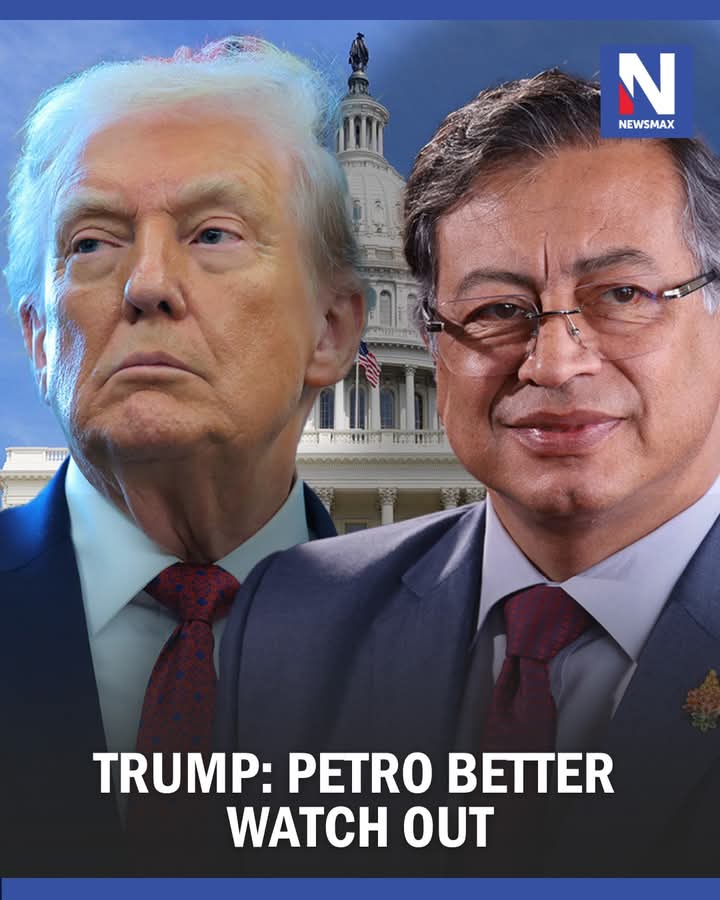
President Donald Trump has once again ignited controversy on the international stage after issuing a blunt warning to Colombian President Gustavo Petro telling him to “watch his a—” during remarks that quickly spread across media and social platforms.
The sharply worded comment has fueled concern among diplomats and analysts, raising fresh questions about the tone and direction of U.S.–Colombia relations.
A Provocative Message
Trump’s warning, delivered in his characteristically confrontational style, was interpreted by many as a personal and political rebuke of Petro, Colombia’s left-leaning president.
While the White House has not released a detailed explanation of the comment, observers believe it is tied to growing disagreements over regional security, foreign policy alignment, and Colombia’s recent diplomatic posture.
Even without a formal policy announcement, the phrasing alone sent ripples through diplomatic circles.
“At this level, language like that is never accidental,” said a former U.S. envoy to Latin America.
“It’s meant to signal displeasure—and possibly pressure.”
Why Colombia Matters
Colombia has long been one of Washington’s most important partners in Latin America, cooperating closely on counter-narcotics efforts, security assistance, and regional stability. Any public confrontation between the two presidents represents a notable shift from the traditionally close relationship.
Petro, however, has pursued a more independent foreign policy since taking office, occasionally challenging U.S. positions on drugs, energy, and regional alliances.
That divergence has increasingly placed Bogotá and Washington on different trajectories.
L
Reaction in Bogotá and Beyond
Colombian officials have so far avoided matching Trump’s tone, opting instead for measured responses emphasizing sovereignty and diplomacy.
Still, political leaders and commentators within Colombia described the remark as disrespectful and warned that it risks inflaming tensions unnecessarily.
Across Latin America, Trump’s words revived memories of heavy-handed U.S. rhetoric in the region, prompting calls for restraint and dialogue rather than public threats.
Rhetoric vs. Reality
Despite the heated language, there is no indication of concrete policy action or military steps accompanying Trump’s warning.
Analysts stress that such comments often function as political signaling rather than immediate strategy.
“Trump frequently uses verbal pressure as leverage,” one political analyst noted. “
The challenge is that allies don’t always know where rhetoric ends and action begins.”
What Comes Next
Whether the comment marks a brief flare-up or the beginning of a deeper diplomatic rift remains unclear.
What is certain is that the exchange underscores how quickly relations can be strained by rhetoric alone—especially in an era where off-the-cuff remarks travel globally within minutes.
As Washington and Bogotá navigate the fallout, both sides face a familiar test: can longstanding partnerships withstand the shockwaves of political brinkmanship, or will words once again reshape alliances before policy ever does?

JUST BREAKING: Some Retirees to Receive Over $5,000 Monthly in Social Security by 2026 — Eligibility Criteria Revealed

¡Esta es la extraordinaria valentía de Irán 🇮🇷! 🔥 9:00 am: “Toda una civilización terminará esta noche”, dijo Trump. 9:10 a. m.: La gente común de Irán ha formado una cadena humana en el puente blanco. 🔥🔥 Si no tienen miedo a morir, no pueden ser derrotados. ¡Qué coraje increíble! 🔥

Pro-Iranian accounts on Twitter are flooding the platform tonight with AI-generated videos mocking Trump, including one showing him stepping off Air Force One waving a white flag after announcing a ceasefire deal critics say was so bad he appeared to negotiate with himself.

A major political shockwave just hit Washington as 24 members of Congress declare an EMERGENCY and demand the UNPRECEDENTED removal of President Trump from office.

BREAKING: Trump’s Shocking Revelation Sparks Viral Frenzy and Raises Questions About His Political Future

Is “getting the job done” more important than having a “nice” president?

Just In :Trump Sends Clear Message to Iran as B-52 Bombers Lift Off from UK Bases. See what happens next

Breaking News:Trump Suspends Planned U.S. Strikes on Iran for Two Weeks Amid Diplomatic Push. Full details here
Today I witnessed something because of Trump that I will never forget for the rest of my life. And that is exactly why I want to show you Trump’s real face today. Click here for full details

At a Monday press conference, Trump brought up past comments by North Korea’s Kim Jong Un about Joe Biden while discussing US troop deployment in South Korea.

Breaking Claim Sparks Concern: Viral Report Alleges Attack on U.S. Warships Near Strait of Hormuz. See what happens next
