
NEWS
Just In Trump Proposes $1.5 Trillion Military Budget for 2027, Vows to Build a “Dream Military. Min

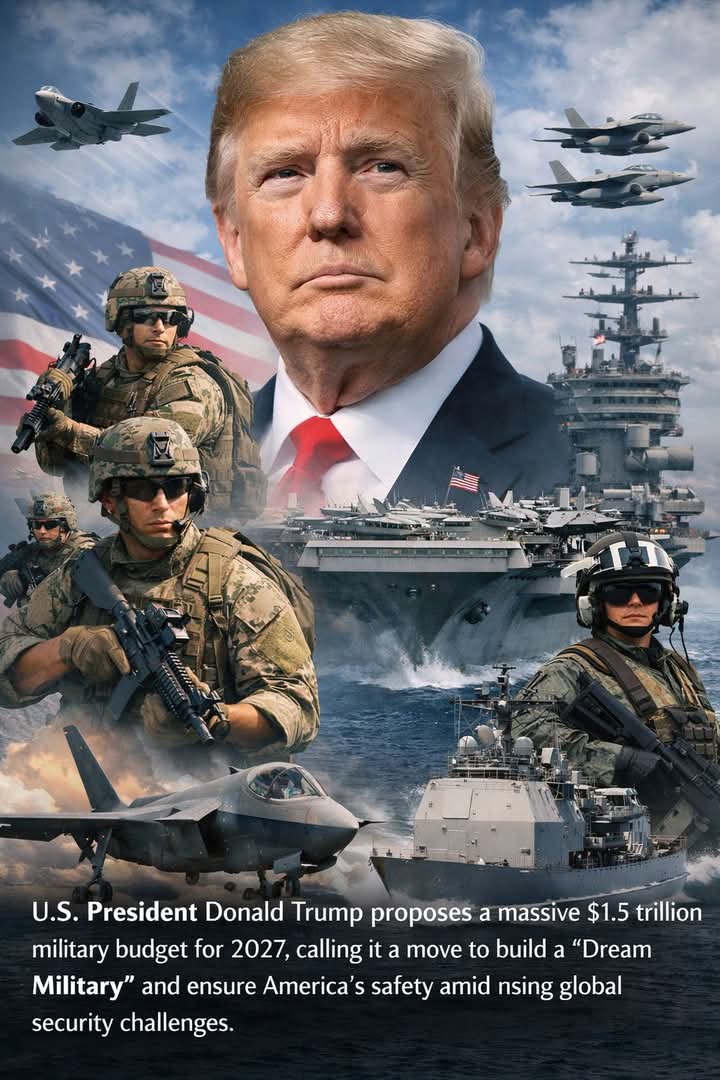
U.S. President Donald Trump has unveiled an ambitious proposal to allocate $1.5 trillion to the U.S. military in the 2027 federal budget, describing the plan as a bold step toward building what he calls a “Dream Military” capable of securing America in an increasingly dangerous world.
The proposal, if approved, would mark one of the largest defense budgets in U.S. history and signals Trump’s continued emphasis on military strength as a cornerstone of national security policy.
A Vision of Overwhelming Strength
According to Trump, the massive funding increase is necessary to ensure the United States maintains unquestioned military superiority amid rising global security challenges including geopolitical tensions, emerging technologies, and evolving threats from rival powers.
“We want a military that is so strong, so advanced, that no one even thinks about challenging us,” Trump said, framing the proposal as both a deterrent and a safeguard against future conflicts.
Where the Money Would Go
Administration officials and defense analysts say the proposed budget would likely focus on several key areas:
Modernization of weapons systems including next-generation aircraft, naval vessels, and missile defense
Cybersecurity and space capabilities, reflecting the changing nature of warfare
Pay, benefits, and readiness for service members
Expanded research and development in artificial intelligence, autonomous systems, and advanced surveillance
Supporters argue that such investments are essential to keep pace with rivals who are rapidly expanding their military capabilities.
Supporters Praise, Critics Push Back
Backers of the proposal say the spending plan reinforces deterrence and strengthens America’s ability to respond to crises anywhere in the world.
They argue that a robust military budget not only protects U.S. interests but also reassures allies who rely on American security commitments.
Critics, however, have raised concerns about the cost and priorities of the plan.
Some lawmakers question whether such a dramatic increase is fiscally sustainable, warning it could widen deficits and divert resources from domestic needs such as healthcare, education, and infrastructure.
Others caution that increased spending does not automatically translate into greater security.
Congress Holds the Key
The proposal now heads to Congress, where it is expected to face intense debate.
Defense spending has historically drawn bipartisan support, but the sheer size of the proposed budget ensures close scrutiny from both fiscal conservatives and progressive lawmakers.
Analysts say negotiations could significantly reshape the final figure, though Trump’s announcement has already set a high benchmark for defense discussions.
A Statement to the World
Beyond domestic politics, the proposed budget sends a clear message internationally.
By calling for unprecedented investment in military power, Trump is signaling that the United States intends to remain the world’s dominant military force, even as global competition intensifies.
Whether Congress embraces the full $1.5 trillion vision or pares it back, the proposal has already ignited a national conversation about security, spending, and America’s role in a rapidly changing worl and how far the nation is willing to go to protect itself.

JUST BREAKING: Some Retirees to Receive Over $5,000 Monthly in Social Security by 2026 — Eligibility Criteria Revealed

¡Esta es la extraordinaria valentía de Irán 🇮🇷! 🔥 9:00 am: “Toda una civilización terminará esta noche”, dijo Trump. 9:10 a. m.: La gente común de Irán ha formado una cadena humana en el puente blanco. 🔥🔥 Si no tienen miedo a morir, no pueden ser derrotados. ¡Qué coraje increíble! 🔥

Pro-Iranian accounts on Twitter are flooding the platform tonight with AI-generated videos mocking Trump, including one showing him stepping off Air Force One waving a white flag after announcing a ceasefire deal critics say was so bad he appeared to negotiate with himself.

A major political shockwave just hit Washington as 24 members of Congress declare an EMERGENCY and demand the UNPRECEDENTED removal of President Trump from office.

BREAKING: Trump’s Shocking Revelation Sparks Viral Frenzy and Raises Questions About His Political Future

Is “getting the job done” more important than having a “nice” president?

Just In :Trump Sends Clear Message to Iran as B-52 Bombers Lift Off from UK Bases. See what happens next

Breaking News:Trump Suspends Planned U.S. Strikes on Iran for Two Weeks Amid Diplomatic Push. Full details here
Today I witnessed something because of Trump that I will never forget for the rest of my life. And that is exactly why I want to show you Trump’s real face today. Click here for full details

At a Monday press conference, Trump brought up past comments by North Korea’s Kim Jong Un about Joe Biden while discussing US troop deployment in South Korea.

Breaking Claim Sparks Concern: Viral Report Alleges Attack on U.S. Warships Near Strait of Hormuz. See what happens next
