
NEWS
Just In: Trump Proposes $1.5 Trillion U.S. Military Budget for 2027, Sparking Debate Over Defense and Spending

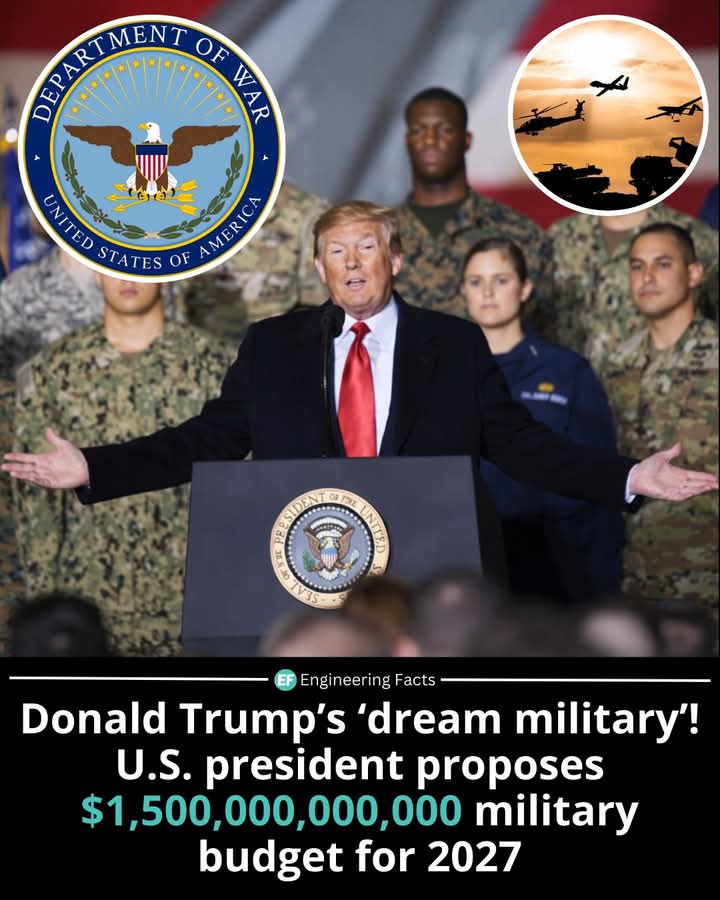
U.S. President Donald Trump has proposed setting the United States’ 2027 military budget at $1.5 trillion, a dramatic increase from the current level of roughly $1 trillion.
If enacted, the proposal would represent one of the largest defense budgets in American history and would significantly reshape the national conversation around military priorities, government spending, and global security.
According to Trump, the proposal emerged after discussions with lawmakers and senior national security officials, amid what he described as rising global threats and an increasingly unstable international environment.
He argued that the current pace of geopolitical competition requires a level of military investment that goes beyond traditional increases.
Building a “Dream Military”
Trump framed the proposed budget as essential to creating what he called a “dream military”one defined by maximum readiness, technological superiority, and overwhelming deterrence.
He emphasized that the additional funding would strengthen the U.S. armed forces across multiple domains, including conventional capabilities, advanced weapons systems, cyber defense, and emerging technologies.
“The goal is simple,” Trump said, according to aides familiar with the discussions.
“Strength that prevents war, readiness that deters adversaries, and a military that no nation dares to challenge.”
Supporters argue that such investment would help maintain America’s military edge at a time when rivals are rapidly modernizing their forces and expanding their global reach.
Tariffs and Revenue Claims
Trump also linked the proposed defense increase to higher government revenues generated through tariffs imposed on other countries, suggesting that trade policy could help offset the massive rise in military spending.
He has long argued that tariffs not only protect American industries but also generate funds that can be redirected toward national priorities such as defense.
Economists and budget analysts, however, remain divided on whether tariff revenues could sustainably support such a large and long-term expansion in military spending without increasing deficits or placing additional pressure on consumers.
Renewed Debate in Washington
The proposal has already reignited long-standing debates in Washington.
Supporters view the plan as a necessary response to global instability, pointing to conflicts, strategic competition, and emerging threats that they say demand unmatched military strength.
Critics, on the other hand, warn that a $1.5 trillion defense budget could come at the expense of domestic priorities such as infrastructure, healthcare, and education.
Fiscal conservatives have also raised concerns about long-term debt and the challenge of maintaining such spending levels year after year.
“This is not just a defense question—it’s a budgetary and strategic one,” said one policy analyst.
“How the money is spent matters as much as how much is spent.”
Global Implications
Internationally, the proposal is likely to draw close scrutiny. A U.S. military budget of this scale could influence global defense spending, prompting allies to reassess their own commitments and adversaries to accelerate their military programs.
Some analysts warn that such a move could intensify global arms competition, while others argue it would reinforce deterrence and stability by reaffirming U.S. military dominance.
What Comes Next
At this stage, Trump’s proposal remains a policy vision rather than an approved budget, and it would require congressional approval to move forward.
Lawmakers are expected to debate not only the size of the increase but also how the funds would be allocated and whether alternative approaches to national security might achieve similar goals at lower cost.
As discussions continue, the proposal has ensured that defense spending—and the role of American military power in the world—will remain at the center of U.S. political debate heading toward 2027.

FAIRNESS FIGHT: The International Olympic Committee announcing a groundbreaking change to protect female athletes and women’s sports as a whole — a ban on biological males competing in women’s events.

Breaking News: Trump Administration Moves to Add President’s Signature to U.S. Currency in Unprecedented Shift

Afternoon Update | America… right now… in the middle of this afternoon… while most of us are on lunch break… Karoline Leavitt just finished facing every camera and every difficult question in the world.click the link below

President Trump’s signature will be added to future U.S. paper currency, the Treasury Department announced Thursday

Breaking News: First $100 Bills Bearing Trump and Bessent Signatures Set for June Release click the link below

Just In : U.S. INTERCEPTED UKRAINE MESSAGES OF PLOT TO ROUTE MONEY TO BIDEN CAMPAIGN

Just In : Here’s the Average Social Security Benefit at Ages 62 to 80 — What You Can Expect at Every Stage

BREAKING: U.S President Donald Trump Has Just Been Confirmed… See More

Just In: “NO ONE UNDERSTOOD WHY Donald Trump PAUSED HIS SPEECH… UNTIL THE NEXT MORNING.”CLICK. THE LINK BELOW

REALITY CHECK IN WASHINGTON: A tense exchange has sparked fresh debate over the true cost—and purpose—of recent escalation.

Breaking News:Millions of Americans Receive Social Security Payments Today — Here’s Who Qualifies for March 25 Disbursement
