
NEWS
Just In:From Governor to Liability?” Minnesota Fraud Controversy Fuels Outrage and Demands for Accountability.

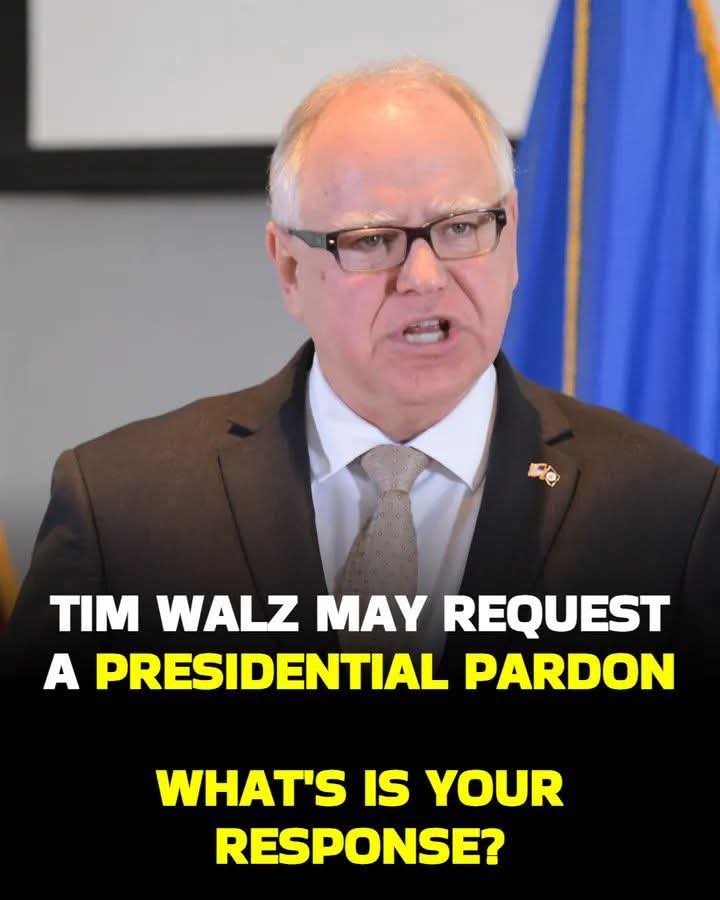
A wave of outrage is sweeping through political circles and social media following renewed focus on what critics are calling Minnesota’s fraud disaster under Governor Tim Walz with some voices now demanding prison time—not pardons—for those responsible.
The controversy has reignited fierce debate over leadership, oversight, and accountability in one of the largest alleged fraud cases tied to public funds in the state’s history.
The Crisis at the Center of the Storm
At the heart of the backlash are long-running allegations that massive fraud schemes—particularly involving federally funded aid programs—were allowed to flourish in Minnesota due to systemic oversight failures.
Critics argue that warnings were missed, red flags ignored, and enforcement delayed, allowing millions of dollars to be siphoned away while vulnerable communities were left unprotected.
While multiple individuals and organizations have already faced charges or convictions, attention is now shifting upward—toward state leadership and the question of who bears ultimate responsibility.
Walz Under Intensifying Scrutiny
Governor Tim Walz, once praised for steady leadership, is increasingly being portrayed by critics as a political liability rather than an asset.
Opponents argue that regardless of direct involvement, the scale of the fraud reflects a breakdown in governance that occurred on his watch.
“Leadership is about accountability,” one critic said.
“You don’t get credit when things go right and then disappear when they go wrong.”
Supporters of Walz counter that:
* The fraud was carried out by criminal actors, not the governor
* Investigations and prosecutions were ultimately pursued
* Oversight failures span multiple agencies and years
They warn against turning administrative failures into political scapegoating.
Prison, Not Pardon’: The Public Mood Hardens
What marks this moment as different is the tone of public anger.
Calls for reform have escalated into demands for punishment—not just for perpetrators, but for officials accused of negligence or cover-ups.
The slogan “prison, not pardon” has gained traction online, reflecting frustration with what many see as a two-tiered system of justice: harsh consequences for some, political insulation for others.
Analysts note that such rhetoric signals eroding trust in institutions.
“When people stop believing the system can police itself,” one political observer noted, “they demand consequences at the top.”
Legal Reality vs. Political Pressure
Legal experts caution that political responsibility does not automatically translate into criminal liability.
To date, there is no public evidence that Walz personally committed fraud, and any criminal case would require proof of intent or direct involvement.
However, politically, the damage may already be done.
The controversy is reshaping narratives around leadership competence, transparency, and trust—especially as national attention increasingly focuses on Minnesota.
A Broader Reckoning
Beyond any single figure, the scandal has sparked calls for:
* Stronger oversight of public funds
* Faster response to whistleblower warnings
* Clear lines of accountability within state agencies
Whether those reforms materialize—or whether the issue becomes a lasting political weapon—remains to be seen.
The Bottom Line
The Minnesota fraud disaster has become more than a legal case; it is now a symbolic battle over accountability in government.
For critics, Governor Walz represents a failure of leadership that demands consequences.
For supporters, he is being unfairly blamed for crimes committed by others.
What is clear is this: the public appetite for explanations—and accountability—is not fading.
And in an era of deep mistrust, the line between political liability and legal responsibility is under more scrutiny than ever.

BREAKING:UK Grants U.S. Limited Access to Bases for Hormuz Operations Amid Rising Energy Crisis. Click the link for full detail.

BREAKING:Immigration, Power, and Pressure: Trump’s Airport Enforcement Threat Raises New Questions.

BREAKING:Viral Claim of U.S. Aircraft Carrier Downing Sparks Alarm — But Evidence Remains Unverified.

SHOCKING:Trump Issues 48-Hour Ultimatum to Iran, Threatens Strikes on Power Plants Over Hormuz Crisis.

BREAKING:U.S. Admiral’s Early Exit Sparks Controversy Over Deadly Caribbean Military Strikes.

BREAKING:Israel Confirms Killing of Iran’s Intelligence Minister Esmaeil Khatib in Targeted Airstrikes.

Breaking News: POLITICAL EARTHQUAKE: 47 REPUBLICANS BREAK RANKS AS TRUMP IMPEACHMENT SURGES TO 212 VOTES

Update: Simulation Chaos: Viral ARMA 3 Scenario Falsely Claims Destruction of U.S. Warships in Strait of Hormuz

Breaking News: Trump Breaks Down in Tears, Urges World to Stop Iran’s Attacks March 20, 2026

NEWSJust In: 2 Mins Ago! Sign from GOD? Biggest Tragedy JUST Happened in The USA! The World is Shocked and Scared Read the full story here:

Just In: 2 Mins! End Is Near? Biggest Tragedy JUST Happened in the USA! The Whole World is Shocked and Scared It happened fast—too fast for anyone to fully process,FULL DETAILS ABOUT BIGGEST TRAGEDY IN THE LINK BELOW
