
NEWS
JUST IN:Reports Suggest Possible Shift in U.S. Strategy as Trump Considers Troop Deployment in Iran. Click the link for more story.

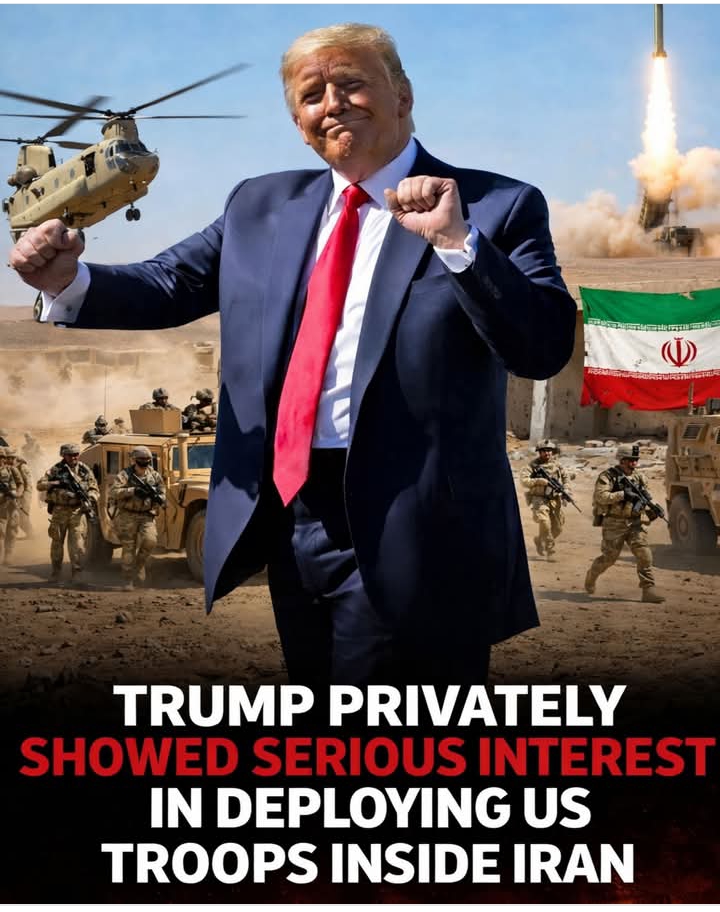
Rising tensions in the Middle East may be approaching a new and potentially dangerous phase following reports that President Donald Trump has privately expressed interest in deploying U.S. troops directly inside Iran—a move that would represent a dramatic escalation in the ongoing geopolitical standoff.
According to reports circulating in Washington policy circles, discussions within the administration have explored the possibility of limited ground operations.
While no official deployment has been confirmed, the speculation has intensified after a sudden decision by the United States Army to cancel major military exercises involving the headquarters of the elite 82nd Airborne Division.
The exercises, which were scheduled to take place at Fort Bragg, were abruptly halted, a move first reported by The Washington Post.
The cancellation has raised questions among military analysts and observers, many of whom see the decision as a potential sign that the rapid-response unit could be preparing for real-world operations.
The 82nd Airborne Division is one of the U.S. military’s most deployable forces, trained for immediate global response.
Its troops specialize in rapid deployment missions that often include emergency evacuations, securing key infrastructure, and stabilizing volatile areas in the early stages of military operations.
Because of the division’s unique role, any preparation involving the unit can signal significant shifts in military strategy.
Analysts note that if elements of the 82nd Airborne were mobilized for operations connected to Iran, it would suggest the possibility of limited but highly targeted ground missions rather than a full-scale invasion.
The potential shift comes amid heightened tensions between Washington and Tehran following a series of regional incidents involving drones, maritime security, and military posturing across the Persian Gulf region.
While the United States has traditionally relied on airpower, naval assets, and regional alliances to counter Iranian influence, direct troop deployments inside Iran would mark a major escalation.
Defense officials have not publicly confirmed the reports or the purpose behind the canceled exercises.
However, military experts emphasize that adjustments to training schedules can sometimes occur when rapid-response units are placed on heightened readiness.
For now, the situation remains uncertain.
But if discussions about troop deployments inside Iran move from speculation to reality, it could reshape the strategic landscape of the Middle East and carry significant global consequences.

Just In: Millions of Americans to Receive Social Security Payments on April 1, 2026 — Eligibility Details Revealed

Just In: New York Governor ERUPTS in Fury After Citigroup Announces Massive Move of 11,000 Jobs OUT of New York! York.Click the link to read the full explosive story, In a devastating

Governor Of California Goes BERSERK As Playboy LEAVES California For Miami After 70+ Years

Just In: FLORIDA MAN RISING: Vice President JD Vance remains the clear frontrunner in a hypothetical 2028 election, but Secretary of State Marco Rubio is on the rise, finishing second in the Republican nomination straw poll at CPAC.

U.S. F-15 First Strike — Cartel Drug Lab Wiped Off the Map in Seconds see what happens next

Just 6 Minutes Ago! Millions of US Troops Knelt and Surrendered—Look What Happened!

JUST IN : Here’s Who Will NOT Receive a Social Security Payment on Wednesday April 1 2006

Just 1 Minute Ago! 100,000 US Troops Surrendered and Fled—Look What Happened!

Just In: Donald Trump SLAMS Pope Leo XIV: “Sit down — you’re just a religious figure, mind your own business!” — But Pope Leo XIV’s response stunned the audience.full details

BREAKING: White House Press Secretary Karoline Leavitt said Iran will no longer have the ability to threaten the United States, signaling strong confidence from the administration about the impact of ongoing operations.

White No Kings protester tries to explain why there aren’t many Black people there… and it goes off the rails: She says:w
