
NEWS
U.S. Withdraws Policy Explicitly Barring Lending Bias Against Immigrants

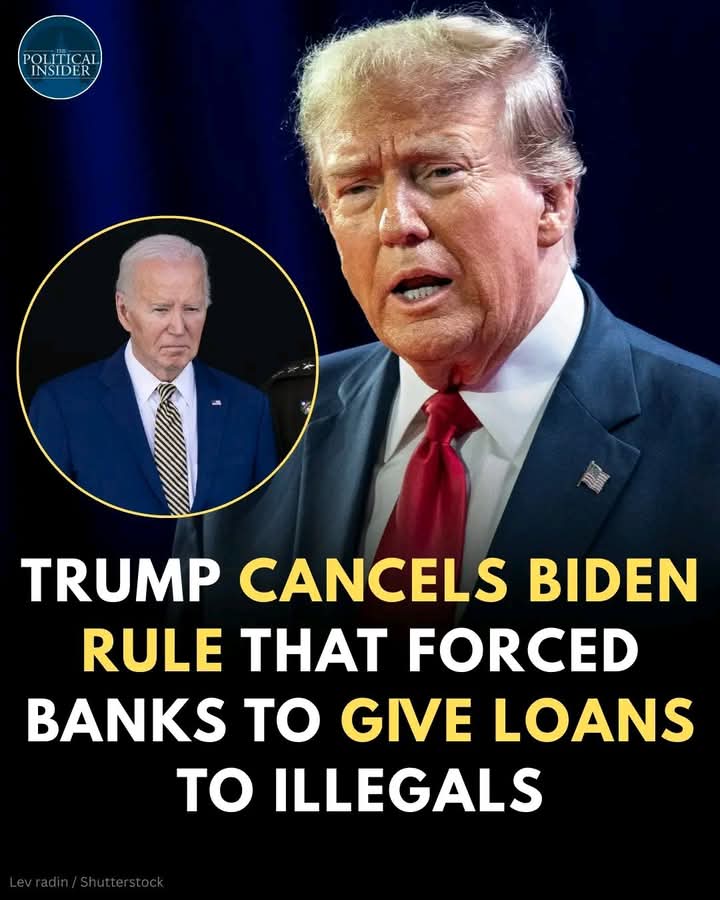
The United States government has withdrawn a long-standing policy that expressly prohibited lending discrimination based on a borrower’s immigration status, a move that is already sparking debate among lawmakers, consumer advocates, and the financial industry.
The policy, which had been used as guidance for banks and lenders, made clear that denying credit solely because an applicant was an immigrant—or because of their citizenship status—could constitute unlawful discrimination under federal fair-lending laws.
Its removal does not repeal existing civil rights statutes, but it does change how regulators formally interpret and enforce those protections.
What Changed
Federal officials confirmed that the guidance was rescinded as part of a broader regulatory review aimed at narrowing interpretations that, in their view, went beyond the original intent of fair-lending laws.
The administration argues that immigration status is not explicitly listed as a protected class under federal statute, and that lenders should retain flexibility to assess legal residency, work authorization, and repayment risk.
Supporters of the decision say the withdrawn policy created confusion for lenders trying to comply with both immigration law and financial regulations.
“This is about regulatory clarity,” one official said.
“Banks still cannot discriminate based on race, national origin, or ethnicity—but they must also be able to verify lawful status when required.”
Concerns From Advocates
Consumer advocates and immigrant rights groups see the move very differently. They warn that removing the explicit prohibition opens the door for de facto discrimination, even if existing laws remain on the books.
“Without clear guidance, immigrants—especially lawful residents and mixed-status families—could face higher barriers to credit, homeownership, and small-business loans,” said one housing advocate.
“This doesn’t change the law, but it changes the signal regulators are sending.”
Critics argue that immigration status has often been used as a proxy for national origin, making enforcement more difficult without explicit guardrails.
Impact on Borrowers and Lenders
In practical terms, the change may give lenders greater discretion to factor immigration-related considerations into lending decisions, such as visa duration or work authorization timelines.
Industry groups say this could reduce legal risk for banks that previously feared enforcement actions even when applying standard underwriting practices.
However, fair-housing experts caution that increased discretion could lead to inconsistent outcomes across states and institutions, particularly in communities with large immigrant populations.
Political and Legal Implications
The withdrawal fits into a broader political debate over immigration and regulation.
Supporters view it as a rollback of what they see as regulatory overreach, while opponents frame it as part of a pattern of policies that weaken protections for immigrants in everyday economic life.
Legal analysts note that courts—not agency guidance—ultimately decide discrimination case.
Still, agency interpretations often shape enforcement priorities and influence how aggressively violations are pursued.
What Happens Next
Advocacy groups are urging Congress to clarify fair-lending laws to explicitly address immigration status, while some states are considering their own protections to fill the gap.
Meanwhile, lenders are reviewing compliance policies to adapt to the new regulatory landscape.
As the debate continues, one thing is clear: the decision has shifted the balance of responsibility from regulators to courts and lawmakers, leaving millions of immigrant borrowers—and the institutions that serve them—watching closely to see how fair-lending protections will be applied going forward.

FAIRNESS FIGHT: The International Olympic Committee announcing a groundbreaking change to protect female athletes and women’s sports as a whole — a ban on biological males competing in women’s events.

Breaking News: Trump Administration Moves to Add President’s Signature to U.S. Currency in Unprecedented Shift

Afternoon Update | America… right now… in the middle of this afternoon… while most of us are on lunch break… Karoline Leavitt just finished facing every camera and every difficult question in the world.click the link below

President Trump’s signature will be added to future U.S. paper currency, the Treasury Department announced Thursday

Breaking News: First $100 Bills Bearing Trump and Bessent Signatures Set for June Release click the link below

Just In : U.S. INTERCEPTED UKRAINE MESSAGES OF PLOT TO ROUTE MONEY TO BIDEN CAMPAIGN

Just In : Here’s the Average Social Security Benefit at Ages 62 to 80 — What You Can Expect at Every Stage

BREAKING: U.S President Donald Trump Has Just Been Confirmed… See More

Just In: “NO ONE UNDERSTOOD WHY Donald Trump PAUSED HIS SPEECH… UNTIL THE NEXT MORNING.”CLICK. THE LINK BELOW

REALITY CHECK IN WASHINGTON: A tense exchange has sparked fresh debate over the true cost—and purpose—of recent escalation.

Breaking News:Millions of Americans Receive Social Security Payments Today — Here’s Who Qualifies for March 25 Disbursement
