
NEWS
Update Trump Declares Federal Recognition of Only Two Genders, Igniting Nationwide Debate

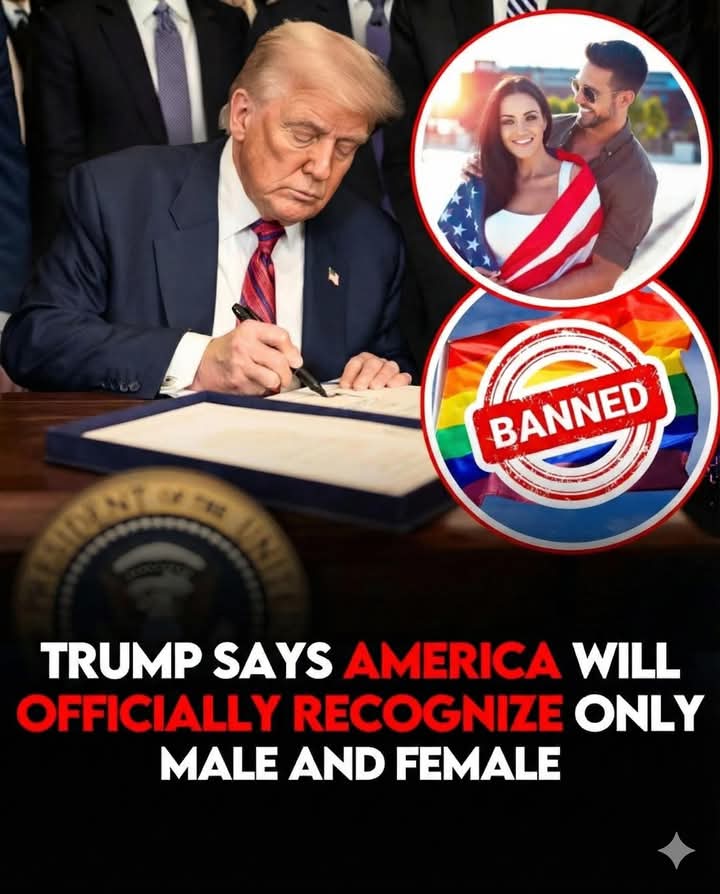
In his inaugural address on January 20, President Donald Trump announced a major shift in federal policy, declaring that the United States government will officially recognize only two genders: male and female.
The statement signaled a sharp change in how gender identity will be addressed across federal agencies and programs.
Trump also said his administration would move to end policies aimed at what he described as socially engineering race and gender into public and private life, framing the decision as a return to what he called biological and traditional definitions.
The announcement immediately sparked intense national debate, drawing strong reactions from supporters and critics alike.
A Clear Policy Shift
According to the president, the new approach is intended to limit the federal government’s role in cultural and identity-related matters.
Supporters argue the policy brings clarity and consistency to laws, regulations, and data collection, particularly in areas such as education, sports, and federal documentation.
“This is about simplicity and fairness,” supporters say, contending that the government should not redefine social concepts or compel institutions to adopt evolving definitions of gender.
The administration has indicated that federal agencies will begin reviewing existing policies, guidance, and regulations to align with the new stance.
Concerns Over Impact on Transgender and Non-Binary Americans
Critics warn that the decision could have far-reaching consequences for transgender and non-binary individuals, particularly in areas where federal recognition plays a critical role.
Advocacy groups have raised concerns about potential effects on:
* Healthcare access including coverage and medical protections
* Education especially regarding school policies and protections for students
* Workplace rights including anti-discrimination safeguards
*Legal identification, such as passports and federal records
Opponents argue that removing federal recognition risks erasing protections that many rely on and could expose vulnerable communities to discrimination.
“This is not just symbolic,” one civil rights advocate said.
“Federal definitions shape real lives.”
Political and Cultural Reactions
The announcement has reignited broader cultural and political debates over identity, inclusion, and the limits of government authority.
Conservative leaders largely praised the move as a pushback against what they view as ideological overreach, while progressive lawmakers vowed to challenge the policy through legislation and the courts.
Legal experts predict that the policy shift will likely face constitutional challenges, particularly where it intersects with existing civil rights laws and court precedents.
What Comes Next
As federal agencies begin implementing the new directive, questions remain about how broadly it will be applied and how conflicts with state laws, private institutions, and court rulings will be resolved.
What is clear is that Trump’s declaration has reopened one of the most contentious social debates in the country—forcing Americans to once again confront differing views on identity, rights, and the role of government in defining them.
As reactions continue to unfold, the decision marks a pivotal moment in the national conversation, one that is likely to shape policy, politics, and public discourse for years to come.

BREAKING:UK Grants U.S. Limited Access to Bases for Hormuz Operations Amid Rising Energy Crisis. Click the link for full detail.

BREAKING:Immigration, Power, and Pressure: Trump’s Airport Enforcement Threat Raises New Questions.

BREAKING:Viral Claim of U.S. Aircraft Carrier Downing Sparks Alarm — But Evidence Remains Unverified.

SHOCKING:Trump Issues 48-Hour Ultimatum to Iran, Threatens Strikes on Power Plants Over Hormuz Crisis.

BREAKING:U.S. Admiral’s Early Exit Sparks Controversy Over Deadly Caribbean Military Strikes.

BREAKING:Israel Confirms Killing of Iran’s Intelligence Minister Esmaeil Khatib in Targeted Airstrikes.

Breaking News: POLITICAL EARTHQUAKE: 47 REPUBLICANS BREAK RANKS AS TRUMP IMPEACHMENT SURGES TO 212 VOTES

Update: Simulation Chaos: Viral ARMA 3 Scenario Falsely Claims Destruction of U.S. Warships in Strait of Hormuz

Breaking News: Trump Breaks Down in Tears, Urges World to Stop Iran’s Attacks March 20, 2026

NEWSJust In: 2 Mins Ago! Sign from GOD? Biggest Tragedy JUST Happened in The USA! The World is Shocked and Scared Read the full story here:

Just In: 2 Mins! End Is Near? Biggest Tragedy JUST Happened in the USA! The Whole World is Shocked and Scared It happened fast—too fast for anyone to fully process,FULL DETAILS ABOUT BIGGEST TRAGEDY IN THE LINK BELOW
