
NEWS
Breaking: Come Get Me, Coward—I’m Waiting Here”: Petro Fires Back as Trump Sparks New Diplomatic Storm

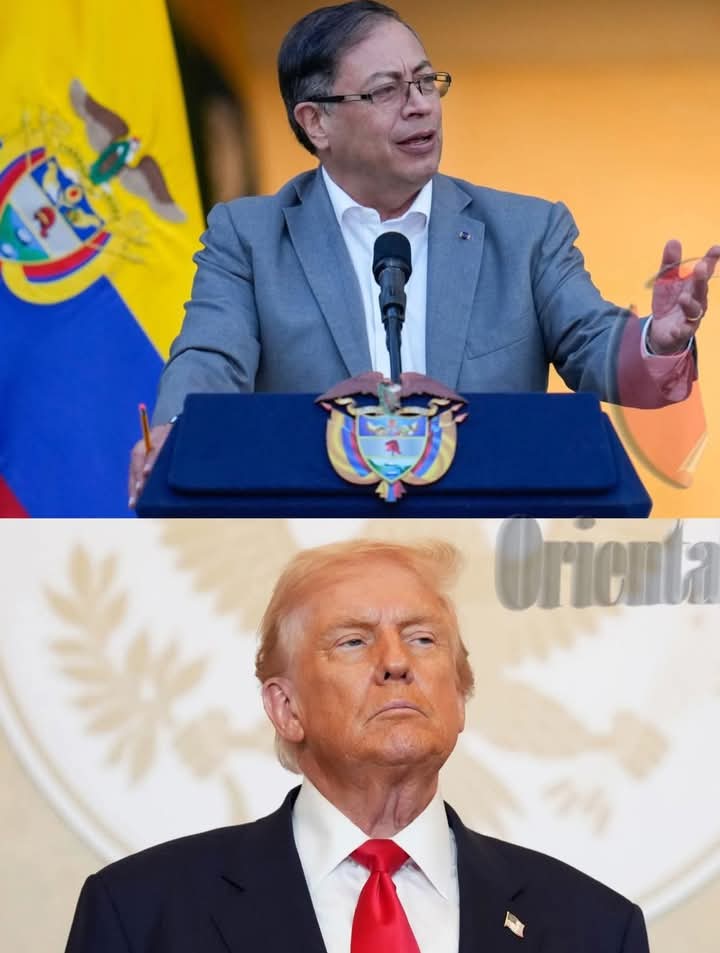
News: A fresh wave of geopolitical tension rippled across the Americas this week after Colombia’s President, **Gustavo Petro**, issued a defiant challenge to U.S. President Donald Trump following remarks attributed to Trump suggesting that Petro could be “next to be captured.”
The sharp exchange—laden with bravado, national pride, and political theater—has ignited debate over sovereignty, diplomacy, and the limits of presidential rhetoric in an already polarized global climate.
A Provocative Claim, A Fiery Response
According to reports circulating widely on social media and partisan outlets, President Trump made a provocative comment implying that Colombia’s leftist leader could be targeted next, following earlier controversial claims involving U.S. actions abroad.
While the precise context and intent of Trump’s words remain disputed, the reaction from Bogotá was swift and unmistakable.
President Petro responded with a bold public statement that has since gone viral:
> *“Come get me, coward. I’m waiting for you here.
The remark, widely interpreted as a direct dare, underscores Petro’s refusal to be intimidated and his insistence on Colombia’s sovereignty in the face of perceived foreign threats.
Petro’s Stand: Sovereignty Above All
Gustavo Petro, a former guerrilla fighter turned reformist president, has built much of his political identity on resisting foreign interference—particularly from Washington.
His administration has pursued independent stances on drug policy, regional alliances, and economic reform, occasionally placing him at odds with U.S. interests.
Supporters of Petro hailed his response as courageous and symbolic, framing it as a rare moment of a Latin American leader openly confronting what they view as U.S. political bullying.
“This is about dignity,” one Colombian commentator noted.
“Petro is telling the world that Colombia is not a playground for threats or intimidation.”
Trump’s Rhetoric and Rising Concerns
Critics, however, argue that Trump’s remarks—whether serious or rhetorical—risk inflaming tensions unnecessarily.
Diplomats and analysts warn that language suggesting the capture of a sitting foreign president crosses dangerous lines, even if made in jest or political exaggeration.
“This kind of rhetoric erodes diplomatic norms,” said a regional affairs analyst.
“It feeds instability and fuels anti-American sentiment in a region with a long memory of intervention.”
So far, the White House has not issued a formal clarification or response to Petro’s challenge.
Regional and Global Reactions
Across Latin America, reactions have been mixed but intense. Some leaders and activists praised Petro’s defiance as a stand against imperial overreach, while others urged restraint, calling for calm diplomacy rather than public confrontation.
On social media, hashtags related to the exchange trended rapidly, reflecting how modern geopolitics increasingly plays out in the digital arena—where bold statements can escalate faster than official policy.
—
What Happens Next?
Despite the heated language, most experts believe the standoff will remain rhetorical rather than operational.
Still, the episode highlights deeper fractures in U.S.–Latin American relations and raises questions about how far political leaders can go with confrontational speech before real-world consequences follow.
For now, Petro’s message is clear: Colombia will not back down easily. Whether Trump’s comments were a serious threat or political provocation, the response has already reshaped the conversation—turning a remark into a regional flashpoint.
As the world watches, one thing is certain: in an era of strongmen politics and instant communication, words alone can shake nations.

Just In : Jimmy Kimmel Deeply Offended and Demands Apology After Aaron Rodgers Jokes He’s on the Epstein List

Breàking News: In Honor of the King and Queen of the United Kingdom, who have just left the White House, soon headed back to their wonderful Country, I will be removing full details here!!

Just In : A FATHER. HIS CHILDREN. AND A MOMENT THAT DARED TO INTERRUPT THE SPOTLIGHT. The tension rose without

Just In : KEVIN HASSETT: IRAN’S ECONOMY IS “COMPLETELY ON THE ROPES” WITH HYPERINFLATION AND FOOD SHORTAGES AS TRUMP’S PRESSURE MOUNTS

Just In : Maxine Waters: “President of the United States is a killer. Full details here!!

Breaking News: “Total Shutdown: May 1 Protest Movement Urges Americans to Boycott Work, Spending, and Social Media”

Breaking News: Oprah Winfrey on George Floyd: “His family and friends say he was a gentle giant. His death has now shown us he had a giant soul. Read more

Just In: A Bond Forged Through Centuries: The King’s Powerful Tribute to a ‘Truly Unique’ Alliance in U.S. Congress”. Full details

Kathy Griffin: “I do not think that Donald won in a free and fair election. Something about it doesn’t smell right.” Full details here!!

Breaking News: Molly Ringwald Sparks Backlash with Controversial Remark About Trump Supporters. See what happens next

Just In : CNN Just ADMITTED Democrats Could LOSE California — For the First Time in 16 YEARS. Hit the link below
