
NEWS
Breaking News: “Total Shutdown: May 1 Protest Movement Urges Americans to Boycott Work, Spending, and Social Media”

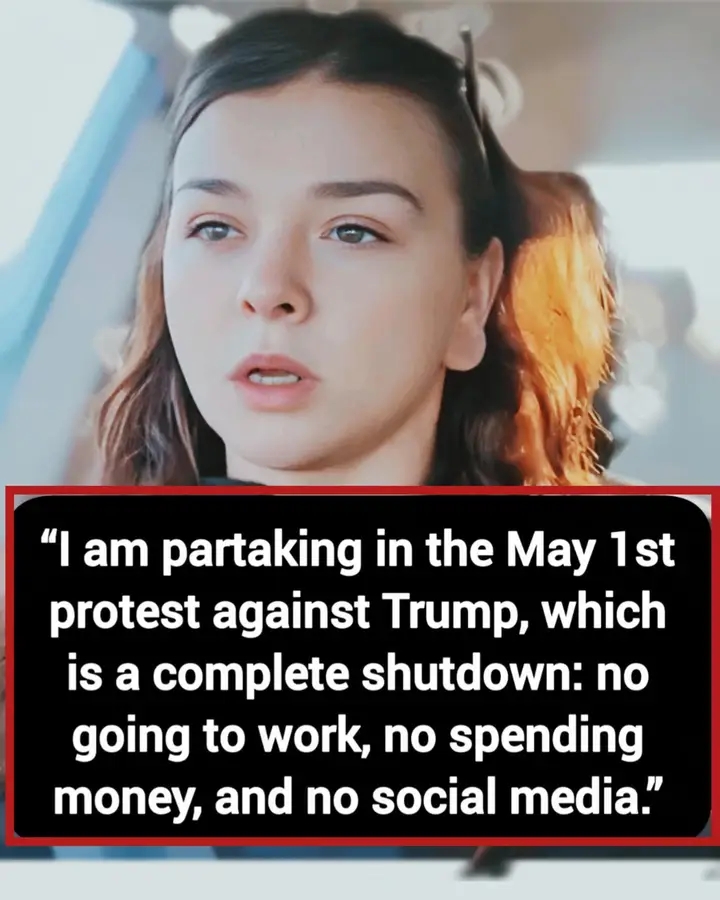
A new wave of anti-Trump protest is gaining traction as activists call for a nationwide “complete shutdown” beginning May 1.
Unlike traditional demonstrations that rely on rallies or marches, this movement is centered on withdrawal—encouraging participants to step away from work, avoid spending money, and disconnect from social media entirely.
Organizers describe the protest as a form of economic and digital resistance, designed to demonstrate the collective power of ordinary citizens.
By halting productivity and consumer activity, participants aim to send a message about dissatisfaction with former President Donald Trump’s continued political influence and the broader direction of U.S. politics.
One protester explained their motivation, stating: “I am partaking in the May 1st protest against Trump, which is a complete shutdown: no going to work, no spending money, and no social media.
” The statement reflects a growing sentiment among supporters who believe that disengagement can be as powerful as direct action.
The strategy echoes past economic boycotts and labor strikes, where disruption of daily systems was used to draw attention to political or social causes. However, the inclusion of a social media blackout marks a notable shift.
Activists argue that stepping away from online platforms not only disrupts advertising-driven revenue models but also prevents the dilution of the protest message through misinformation or performative engagement.
Critics of the movement question its practicality and inclusiveness, pointing out that not everyone can afford to skip work or delay essential spending.
Others argue that a one-day shutdown may have limited long-term impact without sustained organization or clear policy demands.
Supporters counter that the protest is less about immediate outcomes and more about visibility and unity.
They see it as a symbolic act meant to inspire broader civic engagement and spark conversations about economic power, political accountability, and the role of everyday choices in shaping national discourse.
As May 1 unfolds, the effectiveness of the “complete shutdown” remains to be seen. Whether it results in measurable economic impact or simply serves as a moment of collective expression, the protest highlights a growing appetite for unconventional forms of political participation in an increasingly polarized environment.

Just In : Jimmy Kimmel Deeply Offended and Demands Apology After Aaron Rodgers Jokes He’s on the Epstein List

Breàking News: In Honor of the King and Queen of the United Kingdom, who have just left the White House, soon headed back to their wonderful Country, I will be removing full details here!!

Just In : A FATHER. HIS CHILDREN. AND A MOMENT THAT DARED TO INTERRUPT THE SPOTLIGHT. The tension rose without

Just In : KEVIN HASSETT: IRAN’S ECONOMY IS “COMPLETELY ON THE ROPES” WITH HYPERINFLATION AND FOOD SHORTAGES AS TRUMP’S PRESSURE MOUNTS

Just In : Maxine Waters: “President of the United States is a killer. Full details here!!

Breaking News: “Total Shutdown: May 1 Protest Movement Urges Americans to Boycott Work, Spending, and Social Media”

Breaking News: Oprah Winfrey on George Floyd: “His family and friends say he was a gentle giant. His death has now shown us he had a giant soul. Read more

Just In: A Bond Forged Through Centuries: The King’s Powerful Tribute to a ‘Truly Unique’ Alliance in U.S. Congress”. Full details

Kathy Griffin: “I do not think that Donald won in a free and fair election. Something about it doesn’t smell right.” Full details here!!

Breaking News: Molly Ringwald Sparks Backlash with Controversial Remark About Trump Supporters. See what happens next

Just In : CNN Just ADMITTED Democrats Could LOSE California — For the First Time in 16 YEARS. Hit the link below
