
NEWS
Breaking News: Rising Tensions at Sea: Russia Threatens Strike on U.S. Ship After Tanker Seizure

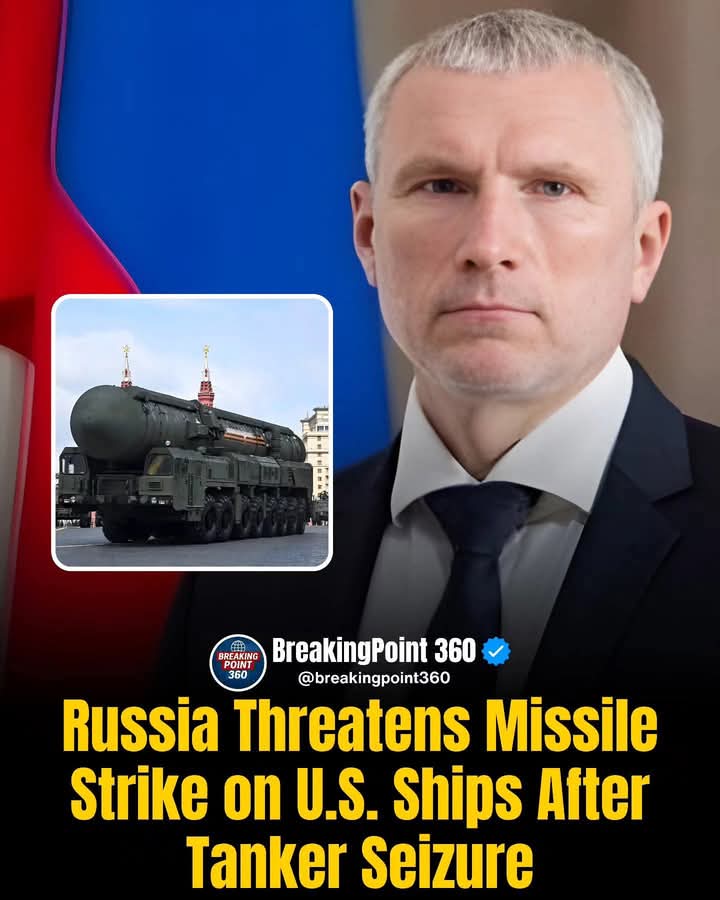
Global tensions escalated sharply after Russia issued a stark warning following the U.S. seizure of an oil tanker with Moscow reportedly threatening possible military action against an American naval vessel involved in the operation.
The incident marks one of the most dangerous moments in recent maritime confrontations between the two powers, raising fears of miscalculation in already strained U.S.–Russia relations.
The Incident That Sparked the Crisis
The confrontation stems from a U.S. operation to seize a tanker suspected of violating international sanctions reportedly linked to sanctioned oil flows involving Venezuela and Russia.
U.S. officials maintain that the seizure was lawful and part of broader efforts to enforce sanctions aimed at cutting off revenue streams used to finance destabilizing activities.
Russia, however, has condemned the action as illegal piracy” arguing that the tanker was operating under legitimate flag protections and accusing Washington of abusing its naval power in international waters.
Moscow’s Warning
In an unusually forceful response, Russian officials warned that any further attempts to interfere with vessels connected to Russian interests could trigger direct consequences including strikes against U.S. ships.
While no immediate military action has been confirmed, the language used by Moscow signals a willingness to escalate beyond diplomatic protests.
Analysts say the threat itself is significant. “Even without shots fired, this kind of warning raises the risk profile dramatically,” said one security expert.
“Naval forces operate in close proximity, and rhetoric like this narrows the margin for error.”
Washington Stands Firm
U.S. officials have not backed down, reiterating that sanctions enforcement is non-negotiable and that American forces will continue to operate in accordance with international law.
Pentagon sources emphasized that U.S. ships remain on high alert but are committed to avoiding unnecessary escalation.
At the same time, Washington has reportedly communicated through diplomatic channels to prevent the situation from spiraling out of control.
A Dangerous Maritime Flashpoint
The episode underscores how sanctions enforcement has moved from courts and banks to the open seas turning oil tankers into geopolitical flashpoints.
With Russia increasingly willing to deploy naval assets to protect energy shipments, and the U.S. determined to disrupt sanctioned trade, the risk of confrontation is growing.
This standoff also reflects a broader trend: global rivalries once confined to proxy conflicts and economic pressure are now playing out directly in international waters where rules are contested and power is projected visibly.
What Happens Next
For now, both sides appear to be testing limits rather than seeking outright conflict. But experts warn that continued seizures, escorts, and threats could normalize brinkmanship at sea—making future incidents harder to defuse.
As diplomatic channels work quietly in the background, the world is watching closely.
A single tanker has become a symbol of a much larger struggle one that blends energy security, sanctions, and military power—and carries consequences far beyond the waves where it began.

Just In : Questions Mount Over Alleged $250M Fraud Case in Rep. Ilhan Omar’s District. Full details here!!

Just In : Trump Promises Lower Gas Prices and Inflation in the Months Ahead

BREAKING: Iran Rejects Talks Under Threats, Signals New Military Options if Diplomacy Fails

Breaking News:Trump DOJ Drops Hammer on Detroit: Demands 865,000 Ballots to Expose Potential Fraud. See what happens next

Trump’s willingness to confront Iran head-on sends a clear message: America will no longer tolerate terrorist regimes that threaten our interests and destabilize the Middle East.

DONALD TR.UMP MAKES A THUNDEROUS DECLARATION OF AMERICAN DESTINY: “I WILL LEAD AMERICA INTO A NEW GOLDEN ERA OF GROWTH AND STRENGTH THE LIKES OF WHICH THE WORLD HAS NEVER SEEN BEFORE IN ALL OF HUMAN HISTORY!”

RETIRED MARINE JOEY JONES: DEMOCRATS CRY ‘ESCALATION’ — TRUMP IS FOLLOWING THE TRUMP DOCTRINE WITH COBRA POSTURE TO FORCE IRAN TO SUBMIT

Just In : The House passed the Deporting Fraudsters Act to remove non-citizens who steal from American taxpayers through welfare fraud. Common sense. Long overdue. Every single Republican voted yes.

Boycott: People on the Left are threatening to leave red states for New York City to live under Zohran, boycott Trump supporters, and financially hurt the states they’re leaving behind.

Breaking News: Here’s the Average Social Security Benefit at Ages 62 to 80 — What You Can Expect at Every Stage

UNREAL. The debate is heating up over Iran, energy prices, and national security. Americans are being told to weigh short term pain at the pump against long term global stability. 🇺🇸
