
NEWS
Justin: Can the United States Face China? A Strategic Reality Check.

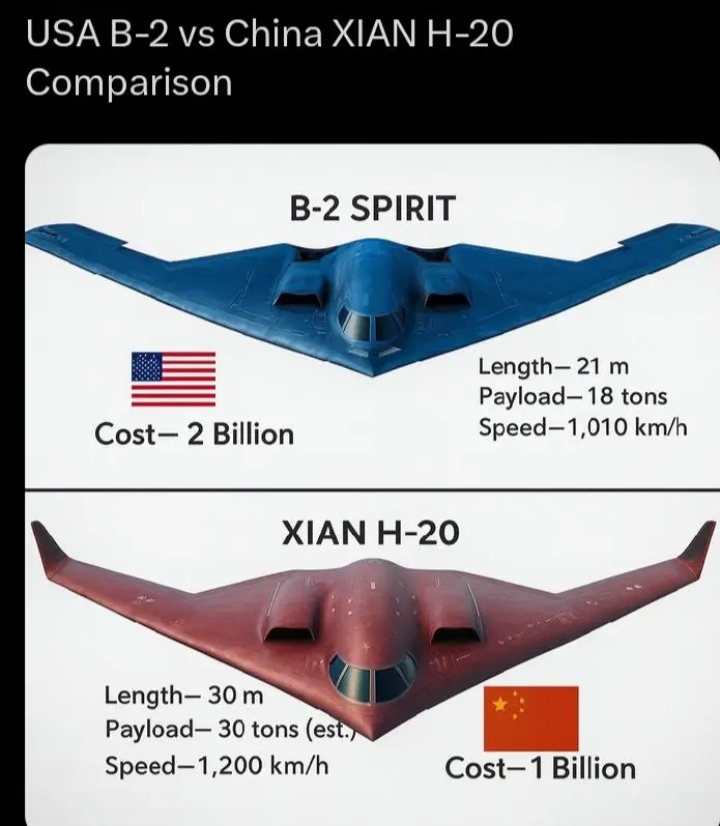
The question of whether the United States can “face” China has become one of the most defining issues of 21st-century global politics.
It is not merely about military confrontation, but about economic competition, technological dominance, diplomatic influence, and competing visions of global order.
The answer is complex: the United States can face China, but doing so requires long-term strategy, alliances, and careful management to avoid catastrophic conflict.
China’s rapid rise over the past four decades has transformed it into a near-peer competitor to the United States.
It is the world’s second-largest economy, a manufacturing powerhouse, and an increasingly assertive military actor, particularly in the Indo-Pacific region.
Beijing’s ambitions—from the Belt and Road Initiative to its claims over Taiwan and the South China Sea—have challenged U.S. influence and raised concerns among Washington and its allies.
Militarily, the United States still holds a significant advantage in global power projection, advanced weaponry, and combat experience.
Its network of alliances, including NATO, Japan, South Korea, Australia, and the Philippines, remains one of its strongest assets.
China, however, has rapidly modernized its armed forces, investing heavily in naval expansion, missile technology, cyber warfare, and space capabilities. While China may not yet match U.S. global military reach, it poses a serious challenge within its own region.
Economically, the relationship is one of deep interdependence and rivalry.
The U.S. and China are tightly linked through trade, supply chains, and financial markets.
At the same time, Washington has grown increasingly wary of China’s state-driven economic model, intellectual property practices, and dominance in critical industries.
Trade wars, export controls, and efforts to “de-risk” supply chains reflect U.S. attempts to reduce strategic dependence without fully severing economic ties.
Technology has emerged as a central battleground.
From semiconductors and artificial intelligence to 5G networks and green energy, both nations view technological leadership as essential to national power.
U.S. restrictions on advanced chip exports to China signal a willingness to use economic tools to slow Beijing’s technological progress, while China continues to push for self-reliance and innovation.
Diplomatically, the contest is global. China has expanded its influence across Africa, Latin America, and parts of Asia through infrastructure investment and economic partnerships.
The United States, in response, has sought to re-engage allies and promote alternative development frameworks. The competition is as much about values—democracy versus authoritarian governance—as it is about power.
However, “facing” China does not necessarily mean seeking confrontation.
Most policymakers recognize that direct military conflict between the world’s two largest powers would be devastating, not only for them but for the entire world.
Climate change, global health, nuclear nonproliferation, and economic stability require some level of cooperation, even amid rivalry.
In reality, the United States is already facing China across multiple fronts. The challenge lies in doing so effectively—balancing deterrence with diplomacy, competition with cooperation, and strength with restraint.
The outcome of this rivalry will shape global politics for decades, but how it is managed will determine whether it leads to stability or conflict.

HIS HAND WAS TREMBLING” — THE MOMENT Donald Trump AND Melania Trump FROZE 80,000 PEOPLE IN SILENCE

BREAKING:“The President Who Never Sleeps?” Pilot’s 30-Year Claim Reveals a Different Side of Donald Trump.

Just In: The betrayal cuts deep—watching career Democrats like Pelosi whisper with their next generation while America burns.

AOC warned the South that “the North” is about to pull up.

When Donald Trump was five years old, his father Fred would wake him at dawn on Saturdays, hand him a paper bag with a bologna sandwich, and drive him to a construction site in Brooklyn. Full story

Faith Is Our Foundation”: JD Vance Calls for National Renewal Through Prayer at ‘Rededicate 250’ Event.

SPEAKER JOHNSON DEFENDS ‘IN GOD WE TRUST’ AND NATIONAL REDEDICATION AGAINST SEPARATION CRITICS

BREAKING: Lindsey Graham Warns Republicans — Opposing Donald Trump Could End Political Careers

Just In : Gates made the comments during an interview regarding his book How to Avoid a Climate Disaster.

Just In : Trump and Netanyahu Hold Urgent 30-Minute Call as Intel Warns Iran May Be Buying Time for War. See what happens next

BREAKING NEWS:Trump Issues Stark New Warning to Iran as Regional Tensions Escalate.
