
NEWS
JUSTIN:Early Warning Signs for World Cup 2026 as Thousands of U.S. Hotel Bookings Are Canceled. Details below.

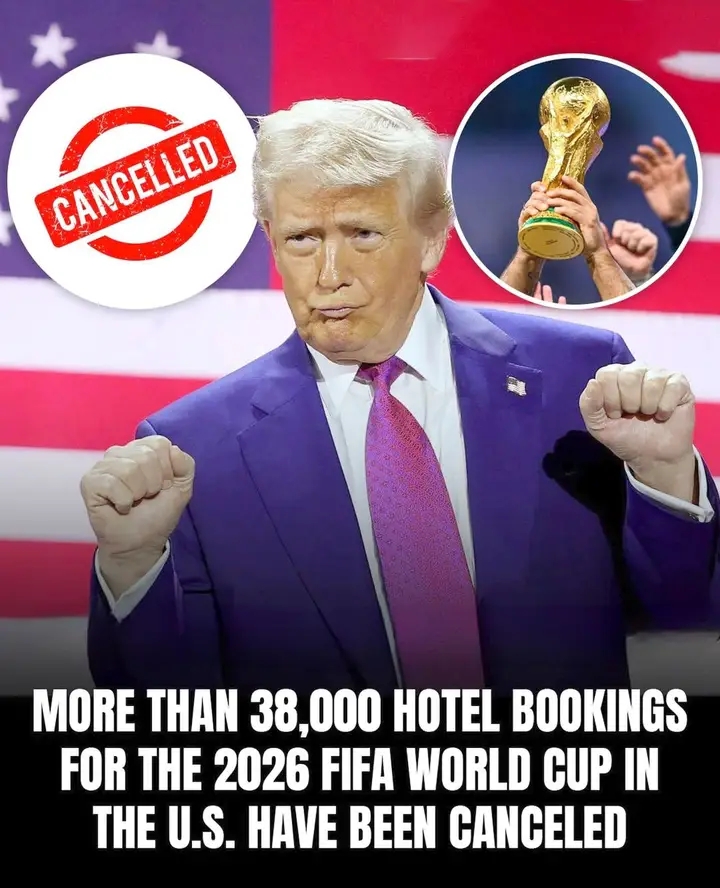
More than 38,000 hotel bookings linked to the 2026 FIFA World Cup in the United States have reportedly been canceled months ahead of the tournament, raising fresh concerns within the global travel and hospitality industry.
While the figures have not yet been officially confirmed by FIFA or U.S. authorities, industry insiders say the trend is significant enough to warrant close attention.
According to analysts and travel-sector sources, several factors may be driving the cancellations.
Chief among them are sharply rising accommodation prices in host cities, high overall travel costs, and uncertainty surrounding visa approvals for international fans.
For many prospective visitors, the combined expense of flights, lodging, and match tickets appears to be prompting a reassessment of early travel plans.
Visa restrictions and immigration-related concerns have also emerged as a potential deterrent.
Some international supporters are reportedly hesitant to commit months in advance amid fears of delayed or denied visa applications, as well as uncertainty over entry requirements and border procedures.
Political considerations and broader immigration debates in the United States may be adding to that caution.
Logistical challenges further complicate the picture.
The 2026 FIFA World Cup, co-hosted by the United States, Canada, and Mexico, will be the largest in the tournament’s history, featuring an expanded field of teams and matches spread across multiple cities.
Coordinating travel between host cities and across national borders is expected to be complex, and lingering questions around transportation and scheduling may be contributing to booking volatility.
Tourism experts warn that if the cancellation trend continues, it could have serious economic implications for host cities that have invested heavily in preparation, infrastructure, and promotional campaigns.
Hotels, restaurants, transport operators, and local businesses were counting on a surge in international visitors to drive revenue and job creation.
Despite the reported cancellations, industry leaders caution against drawing definitive conclusions too early.
Demand could rebound closer to the tournament if prices stabilize, visa processes become clearer, and confidence improves among international fans.
Still, the early signs serve as a reminder that managing costs, communication, and logistics will be critical to ensuring the 2026 World Cup delivers on its promise as a global celebration of football and a major economic boost for its hosts.

HIS HAND WAS TREMBLING” — THE MOMENT Donald Trump AND Melania Trump FROZE 80,000 PEOPLE IN SILENCE

BREAKING:“The President Who Never Sleeps?” Pilot’s 30-Year Claim Reveals a Different Side of Donald Trump.

Just In: The betrayal cuts deep—watching career Democrats like Pelosi whisper with their next generation while America burns.

AOC warned the South that “the North” is about to pull up.

When Donald Trump was five years old, his father Fred would wake him at dawn on Saturdays, hand him a paper bag with a bologna sandwich, and drive him to a construction site in Brooklyn. Full story

Faith Is Our Foundation”: JD Vance Calls for National Renewal Through Prayer at ‘Rededicate 250’ Event.

SPEAKER JOHNSON DEFENDS ‘IN GOD WE TRUST’ AND NATIONAL REDEDICATION AGAINST SEPARATION CRITICS

BREAKING: Lindsey Graham Warns Republicans — Opposing Donald Trump Could End Political Careers

Just In : Gates made the comments during an interview regarding his book How to Avoid a Climate Disaster.

Just In : Trump and Netanyahu Hold Urgent 30-Minute Call as Intel Warns Iran May Be Buying Time for War. See what happens next

BREAKING NEWS:Trump Issues Stark New Warning to Iran as Regional Tensions Escalate.
