
NEWS
BREAKING:ICE’s Involvement in Milan-Cortina Winter Games Security Sparks Debate.

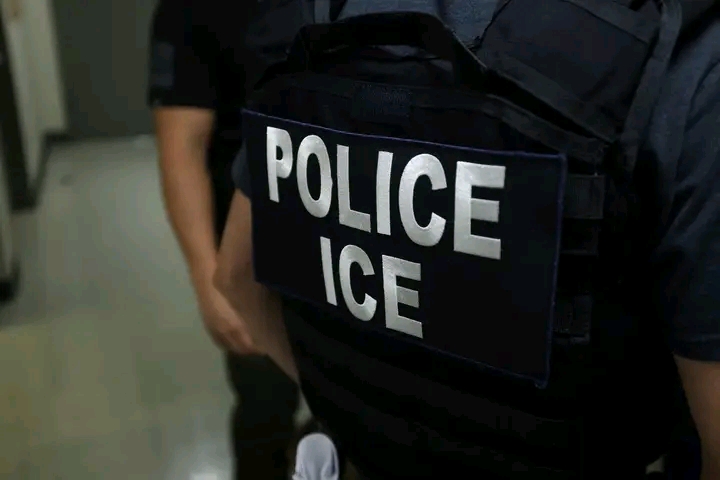
U.S. Immigration and Customs Enforcement (ICE) agents are set to play a security role during the 2026 Milan-Cortina Winter Olympics, according to multiple sources at the U.S. Embassy in Rome and confirmed by The Associated Press.
While the deployment has raised eyebrows internationally, officials emphasize that ICE will not be conducting immigration enforcement operations in Italy.
Instead, federal ICE agents — particularly from its investigative arm, Homeland Security Investigations (HSI) — are expected to support diplomatic security details for the U.S. delegation and assist in assessing and mitigating risks posed by transnational criminal organizations during the Games.
ICE’s participation in Olympic security isn’t entirely unprecedented: multiple U.S. federal agencies have traditionally assisted the U.S. Department of State’s Diplomatic Security Service at global events to protect U.S. officials and interests abroad.
However, the announcement has stirred controversy in Italy, particularly in the host city of Milan, where ice sports events will be held from Feb. 6 to 22, 2026.
Milan’s mayor, Giuseppe Sala, explicitly criticized the decision, labeling ICE as unacceptable and not aligned with Italian democratic approaches to public safety.
Italian political responses have varied. Some officials, such as Interior Minister Matteo Piantedosi, appeared to downplay concerns — characterizing the situation as routine and not problematic — while also acknowledging that the formal makeup of U.S. security teams remains fluid.
On the U.S. side, the planned delegation to open the Winter Games will include Vice President J.D. Vance, Second Lady Usha Vance, and Secretary of State Marco Rubio, underscoring the high diplomatic profile of the event for the United States.
The decision to involve ICE highlights the broader challenges of security planning for major international sporting events, where coordination between host nations and visiting delegations must balance operational needs with diplomatic sensitivities.

HIS HAND WAS TREMBLING” — THE MOMENT Donald Trump AND Melania Trump FROZE 80,000 PEOPLE IN SILENCE

BREAKING:“The President Who Never Sleeps?” Pilot’s 30-Year Claim Reveals a Different Side of Donald Trump.

Just In: The betrayal cuts deep—watching career Democrats like Pelosi whisper with their next generation while America burns.

AOC warned the South that “the North” is about to pull up.

When Donald Trump was five years old, his father Fred would wake him at dawn on Saturdays, hand him a paper bag with a bologna sandwich, and drive him to a construction site in Brooklyn. Full story

Faith Is Our Foundation”: JD Vance Calls for National Renewal Through Prayer at ‘Rededicate 250’ Event.

SPEAKER JOHNSON DEFENDS ‘IN GOD WE TRUST’ AND NATIONAL REDEDICATION AGAINST SEPARATION CRITICS

BREAKING: Lindsey Graham Warns Republicans — Opposing Donald Trump Could End Political Careers

Just In : Gates made the comments during an interview regarding his book How to Avoid a Climate Disaster.

Just In : Trump and Netanyahu Hold Urgent 30-Minute Call as Intel Warns Iran May Be Buying Time for War. See what happens next

BREAKING NEWS:Trump Issues Stark New Warning to Iran as Regional Tensions Escalate.
