
NEWS
BREAKING NEWS:UN on the Brink: Funding Crisis Pushes Global Body Toward Financial Collapse.Read the full story!

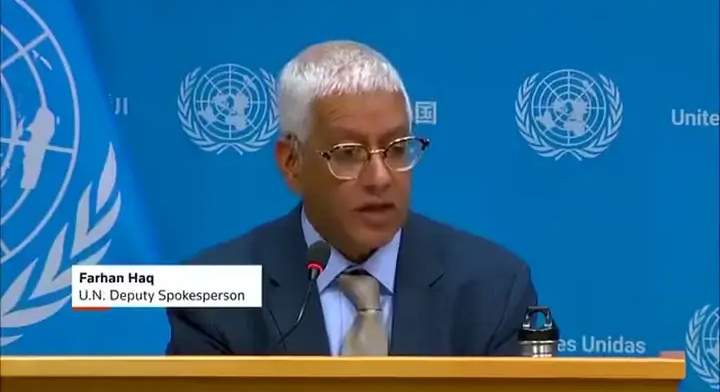
The United Nations is facing one of the most serious crises in its nearly eight-decade history, with senior officials warning that the organization is edging toward financial collapse as funding dries up—most critically from the United States.
In a stark warning, UN Secretary-General António Guterres said the organization is on an “unsustainable trajectory,” driven by a widening gap between expected contributions and actual payments from member states.
At the center of the crisis is the potential loss or reduction of U.S. funding, which accounts for approximately $2.2 billion of the UN’s regular budget.
Despite having more than 190 member nations, the UN ended 2025 with a record $1.56 billion in unpaid dues, more than double the shortfall recorded the previous year.
The figure has raised alarms inside the organization, exposing deep structural weaknesses in how the UN is financed and managed.
Deputy Spokesperson Farhan Haq explained that the crisis is being fueled by two compounding problems: widespread non-payment of assessed dues by member states and a financial rule that forces the UN to return budgeted funds it cannot spend due to delayed or missing payments.
“The Secretary-General has repeatedly made clear the problem of non-payment of dues by member states,” Haq said.
“There is also the related problem of the UN being forced to repay member states for budget money that it does not spend—often because the funds were never received in the first place.
These two factors have put us on an unsustainable trajectory.”
While more than 150 countries reportedly paid their dues last year, the scale of outstanding debt has overwhelmed those contributions.
According to Haq, unless overdue payments are made—or existing financial rules are reformed—the organization faces a “real danger of running out of money.”
The funding crisis has reignited criticism from skeptics who argue that the UN has grown bloated, inefficient, and overly dependent on a small number of major donors—chief among them the United States.
Without American taxpayer dollars, critics say, the organization has no viable financial path forward under its current structure.
As debates intensify over reform, accountability, and the future role of the UN on the global stage, one thing is clear: the world’s most prominent international body is facing a financial reckoning that could reshape—or severely weaken—its ability to operate.
Today I witnessed something because of Trump that I will never forget for the rest of my life. And that is exactly why I want to show you Trump’s real face today. Click here for full details

At a Monday press conference, Trump brought up past comments by North Korea’s Kim Jong Un about Joe Biden while discussing US troop deployment in South Korea.

Breaking Claim Sparks Concern: Viral Report Alleges Attack on U.S. Warships Near Strait of Hormuz. See what happens next

Trump’s Playful Jab at Melania Steals the Show with Heartland Egg Farmers President Donald Trump turned on the charm and humor Monday during an outdoor event with egg farmers and their families, playfully introducing First Lady Melania Trump as the glamorous outsider who left Hollywood behind for real America.

BREAKING: Donald Trump is in the Hospital as we speak, though its not confirmed of his conditions.

BREAKING NEWS:Trump’s Stark Remark on Iran Raises Concerns Over Escalation.

JUSTIN:Defense Secretary Hegseth Issues Stark Warning to Iran Amid Rising Tensions. Click for complete story.

JUSTIN:Trump Remarks About Son at Investment Summit Draw Public Attention 🇺🇸.

BREAKING:VP Vance Commends U.S. Military After Daring Rescue of Downed Airman in Hostile Territory.

BREAKING:High-Risk Rescue Mission Highlights U.S. Commitment to Service Members, Sparks Debate on Leadership Style.

According to multiple reports, Donald Trump said Monday that the U.S. could “take out” Iran in one night and suggested that “might be tomorrow night,” escalating fears of a wider war as his deadline over the Strait of Hormuz nears.
