
NEWS
BREAKING:Trump Claims U.S.–Nigeria Operation Eliminated “World’s Most Active Terrorist” in Precision Strike.

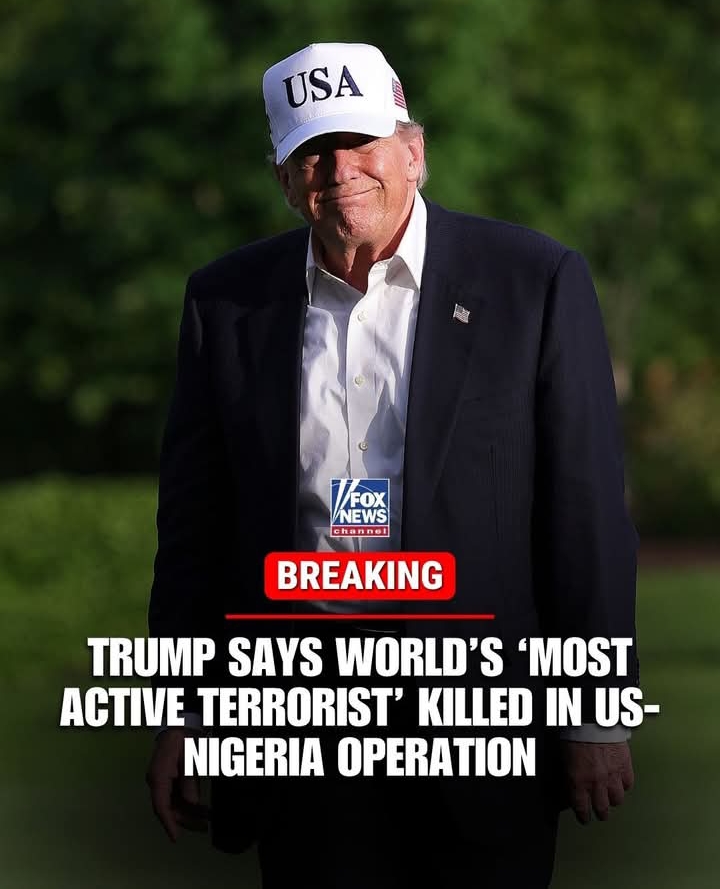
Donald Trump has announced that a joint military operation between the United States and Nigeria has successfully eliminated Abu-Bilal al-Minuki, a senior ISIS figure he described as “the most active terrorist in the world.”
In a late-night post on Truth Social, Trump said the operation was the result of extensive intelligence gathering and coordination between U.S. forces and Nigeria’s military.
According to his statement, al-Minuki—believed to be ISIS’s global second-in-command—had been operating from Africa while continuing to oversee extremist activities.
“[He] thought he could hide in Africa,” Trump wrote, adding that intelligence sources had been closely tracking the militant leader’s movements.
The president emphasized that the mission was “complex” and required precision planning to ensure its success.
Security sources suggest the operation took place in a region long associated with insurgent activity linked to ISIS-affiliated groups, particularly in areas surrounding the Lake Chad Basin.
While full operational details remain limited, the strike is being described as a significant moment in ongoing counterterrorism efforts across West Africa.
The reported killing of al-Minuki marks a major development in the fight against ISIS, especially as the group has sought to expand its footprint beyond the Middle East into parts of Africa.
Analysts believe removing a figure of his influence could temporarily disrupt operational planning and coordination within the network.
However, experts also caution that extremist organizations often adapt quickly following leadership losses, reorganizing and appointing successors to maintain momentum.
Despite this, the operation underscores the increasing level of cooperation between Washington and Abuja in addressing shared security threats.
As global attention turns to the aftermath of the strike, the development highlights both the evolving nature of terrorism and the continued reliance on international partnerships to confront it.

BREAKING:Trump Claims U.S.–Nigeria Operation Eliminated “World’s Most Active Terrorist” in Precision Strike.

BREAKING:Global Attention Turns to Abu-Bilal al-Minuki After Reported Death in Joint U.S.-Nigeria Operation.

BREAKING:Trump Announces Joint U.S.-Nigeria Operation That Killed ISIS Deputy Leader Abu-Bilal al-Minuki.

JUST BREAKING: Millions of Americans Will NOT Receive a Social Security Payment on Wednesday, May 20, 2026. Full details

Unfortunately, no one has answered this question: Are you willing to pray for our military? But if you are, please click the link below and say Amen!

Just In: January 17, 2020 became one of those strangely quiet moments in modern American history that looked ordinary on television but carried the weight of an era already beginning to change. Read full

BREAKING: Donald Trump Says Xi Jinping Offered to Help Reopen the Strait of Hormuz Amid Explosive Iran Tensions. Read more

Just In: STUNNING SCENES From Temple of Heaven Are Captivating the World — Beijing’s Ancient Wonder Takes Center Stage

BREAKING: Xi Jinping Reportedly Told Donald Trump “Whatever You Need” to Help End the Iran Conflict — Global Shockwaves Follow

POLITICAL EARTHQUAKE: Calls to Remove Zohran Mamdani Explode as Massive Petition Movement Shakes New York City

BREAKING: Iran Declares China Could Replace the United States as the World’s Dominant Superpower. Full details here!!
