
NEWS
Geopolitical Tension in the Arctic: Trump, Denmark and the Future of Greenland

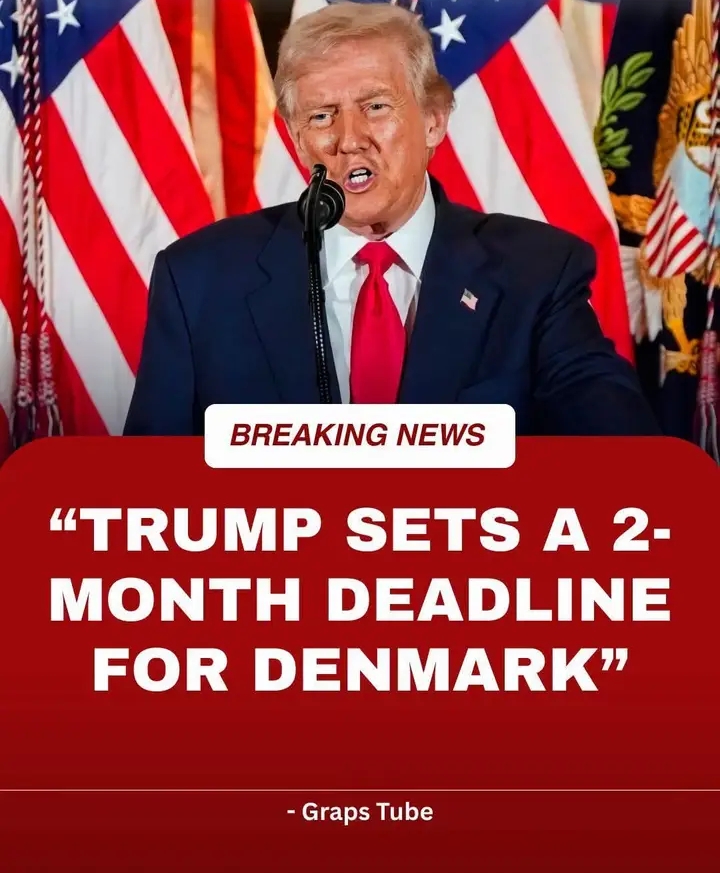
Recent online posts claim that former U.S. President Donald Trump has issued a “two-month deadline” for Denmark — a dramatic statement that has been widely circulated but has not been confirmed by major international news outlets or official statements.
However, there is clear evidence of escalating diplomatic friction between the United States and Denmark over Greenland’s status — a dispute that has captured global attention in recent days.
Background: What’s Behind the Dispute
Greenland — the world’s largest island — is an autonomous territory within the Kingdom of Denmark and a member of the North Atlantic Treaty Organization (NATO). Its strategic location in the Arctic, along with abundant natural resources and emerging sea routes due to climate change, have made it the focus of global powers’ interests.
In recent years, Donald Trump has repeatedly expressed strong interest in Greenland, at times suggesting the United States should either purchase or exert greater control over the island for what he describes as national security reasons, including defense against Russia and China.
Escalation in 2026: Renewed Rhetoric
In early January 2026, tensions intensified again:
Trump’s Statements
Trump reiterated that the United States “absolutely” needs Greenland for defense in a published interview.
Danish officials said this rhetoric felt like a renewed challenge to Danish sovereignty.
Diplomatic Reactions
Denmark’s Prime Minister Mette Frederiksen denounced the idea of seizing Greenland, emphasizing that Green landers want to make their own decisions and the U.S. has *no right to annex the territory.
Frederiksen warned that if the U.S. attacked a NATO ally — such as Greenland — “everything would stop,” indicating how seriously Denmark views the matter.
European Support
France and other European leaders have publicly reaffirmed their support for Denmark’s sovereignty and territorial integrity, rejecting any notion of forced territorial change.
NATO allies including Latvia, Estonia and others have also rallied around Denmark and Greenland in diplomatic statements.
Meanwhile, Danish leaders have described Trump’s interest as an unacceptable threat to a long-standing alliance and stressed that cooperation with the U.S. should respect international law and self-determination.
What This Means for International Relations
While claims of a formal two-month ultimatum from Trump remain unverified and should be treated with caution, the developments reflect a broader diplomatic strain:
Allies are vocalizing support for Denmark’s sovereignty.
Denmark is reinforcing NATO commitments and Arctic defense.
Greenland’s leadership continues to reject annexation or forced control.
Analysts say such disputes — even in rhetoric — can influence NATO dynamics, Arctic geopolitics, and the broader balance of power between the U.S., Europe, and Russia/China in high-north strategic considerations.
Conclusion
At present, there is no official record from credible news agencies confirming that Donald Trump has given Denmark a specific two-month deadline.
Instead, what is verifiable is a renewed diplomatic conflict centered on Trump’s public comments about Greenland, Denmark’s firm rejection of those ideas, and mounting support from European and NATO allies for Denmark’s sovereignty.
For accurate understanding of evolving geopolitics, it’s crucial to rely on confirmed reporting and official government statements — especially in situations with high stakes for international security.

JUST BREAKING: Some Retirees to Receive Over $5,000 Monthly in Social Security by 2026 — Eligibility Criteria Revealed

¡Esta es la extraordinaria valentía de Irán 🇮🇷! 🔥 9:00 am: “Toda una civilización terminará esta noche”, dijo Trump. 9:10 a. m.: La gente común de Irán ha formado una cadena humana en el puente blanco. 🔥🔥 Si no tienen miedo a morir, no pueden ser derrotados. ¡Qué coraje increíble! 🔥

Pro-Iranian accounts on Twitter are flooding the platform tonight with AI-generated videos mocking Trump, including one showing him stepping off Air Force One waving a white flag after announcing a ceasefire deal critics say was so bad he appeared to negotiate with himself.

A major political shockwave just hit Washington as 24 members of Congress declare an EMERGENCY and demand the UNPRECEDENTED removal of President Trump from office.

BREAKING: Trump’s Shocking Revelation Sparks Viral Frenzy and Raises Questions About His Political Future

Is “getting the job done” more important than having a “nice” president?

Just In :Trump Sends Clear Message to Iran as B-52 Bombers Lift Off from UK Bases. See what happens next

Breaking News:Trump Suspends Planned U.S. Strikes on Iran for Two Weeks Amid Diplomatic Push. Full details here
Today I witnessed something because of Trump that I will never forget for the rest of my life. And that is exactly why I want to show you Trump’s real face today. Click here for full details

At a Monday press conference, Trump brought up past comments by North Korea’s Kim Jong Un about Joe Biden while discussing US troop deployment in South Korea.

Breaking Claim Sparks Concern: Viral Report Alleges Attack on U.S. Warships Near Strait of Hormuz. See what happens next
